
What does it mean for me to be an American patriot when the President of the United States announces that he hates me? (Or at least hates the people I voted for?) I used to mistake patriotism for the pure pride I felt as a kid in 1976, sporting red, white, and blue bell bottoms and waving a flag at the 4th of July parade. The bicentennial was also the year I memorized the preamble to the Declaration of Independence and still took for granted my right to life, liberty, and the pursuit of happiness, when I still believed the flag really did stand for a nation with liberty and justice for all. But patriotism, I have come to realize, is more than a swell of emotion.
The reason the President gave for hating Democrats was that we hate America, but he’s wrong about that. I love this country: its natural beauty, the diversity and energy of my fellow citizens, our long history of fighting for freedom. (Though not exclusively) I love American food, music, movies, and literature, and to this day a unique rush still sweeps through me in that moment before a baseball game when I stand and doff my cap for “The Star Spangled Banner.” As with any friend, however, I acknowledge this country’s shadow while also honoring what I love about it.
Our original sins of genocide and slavery, largely unconfessed and yet to be redeemed, cast a long shadow indeed, dark not just with the anguish and fury of the aggrieved but also the defensive entrenchment of those who want to believe no harm was done, want to believe that soldiers who massacred Lakota people at Wounded Knee deserve Medals of Honor and that a photo depicting an enslaved man’s scars should be removed from the Smithsonian because it reflects “corrosive ideology.” Yet even as I shiver in this shadow and wonder about reparations, the stain of our sins doesn’t erase all that I admire about my country. I love that our crown jewels aren’t displayed in a tower or museum. They are the national parks open to all, our civil rights guaranteed in the Constitution. Is it a stretch to say that in acknowledging the worth and dignity of the human person, the Bill of Rights is a formal, political way of expanding the golden rule, that fundamental guideline most of us learned in kindergarten? Found across world religions, in the Christian tradition it’s part of Jesus’s Sermon on the Mount: do to others as you would have them do to you.
My first promise to myself after the 2024 election was to be a citizen witness – to pay attention to what is happening even when it makes me weep or terrifies or outrages me. Like a nuclear technician with a Geiger counter, I exercise cautious discipline in my news consumption and try to set aside the newspaper or podcast before the tidings reach toxic levels. Likewise social media: I haven’t blocked the friends who disagree with me, but I am strict about checking each platform no more than once a day. Even this level of witnessing exacts a cost, no doubt familiar to you, dear reader: not just an emotional toll but also moral injury. To replenish my reservoir, I fill it with the antidotes I wrote about in “Coping with Chaos and Calamity:” perspective, nature, community, and joy in the everyday pleasures that come my way.
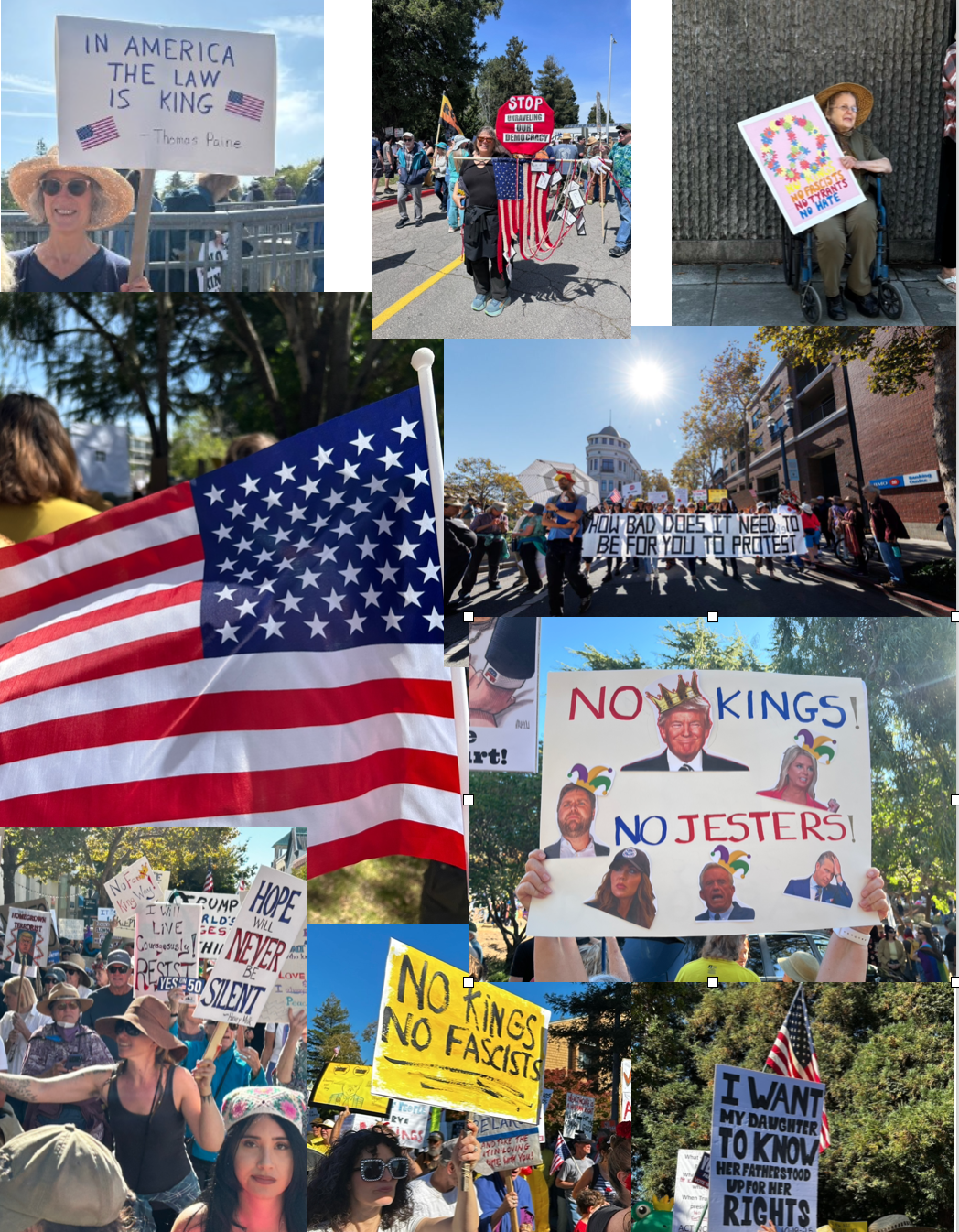
My commitment to be a citizen witness is moving me towards patriotism as a practice rather than a feeling. In hindsight, the first and maybe most important responsibility of a patriot I’ve actually been fulfilling since I was 18: voting. Other steps folded into the routine of my daily life: obeying the law, paying taxes, teaching college students how to find and evaluate information, trying to love others as myself. This year of broken promises and disregard for the Constitution has demanded more action. Along with millions of my fellow citizens, it has called me to the public square in nonviolent protest. The people I march with, friends but mostly strangers, come from various faiths or no faith at all. Our sundry signs carry different slogans but have a common theme: dismay at repeated and callous violations of the golden rule.
Lately I’ve been noticing more US flags at protests. Some are upside down, a traditional signal of distress, and many are right side up, a sign of patriotism and a reminder that the flag doesn’t belong to MAGA any more than the cross does. I have never loved my country more than I do now that I see a democracy I took for granted slipping away. Maybe part of growing my patriotism is reclaiming the cross and the flag.
When I looked up the symbolism of the Stars and Stripes, I found this quote from Ronald Reagan: “The colors of our flag signify the qualities of the human spirit we Americans cherish. Red for courage and readiness to sacrifice; white for pure intentions and high ideals; and blue for vigilance and justice.” I don’t know yet how much courage I will need or what sacrifices I might have to make, but my intentions are pure. The qualities President Reagan mentioned are the values I want to carry with me in my determination to honor and defend what I love about my country.
 The Kingdom of Enough