In a crazy, consumer culture that is busy bombarding us with demands and desires, how do we touch the peace that reigns in the cave of every heart?
Author: Mary Camille Thomas
Mary Camille Thomas is a native of Santa Cruz who is grateful to make her home on the California coast once more after living internationally and on the road. She studied comparative literature at UC Davis and received a master’s degree in library science from UCLA, which gave her a way to earn a living while making a life among books. Her poetry and essays have appeared in the Monk in the World Guest Post Series, Moving Force Journal, Presence, Porter Gulch Review, Second Wind, Sisters Singing, and The New Story, and she has completed a novel called What Lies Buried about a man reckoning with his family’s Nazi past.
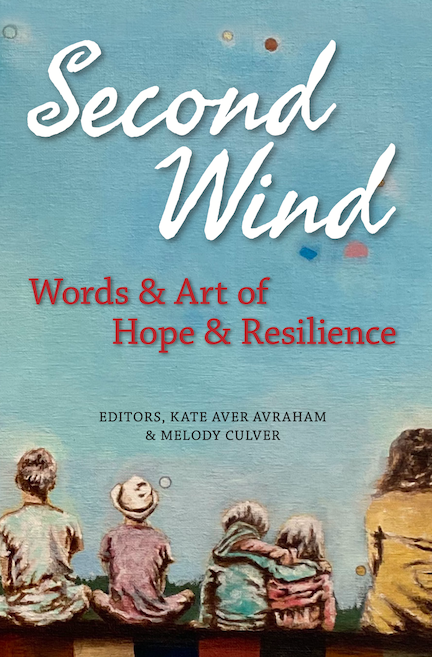
What gets you through adversity? Last spring my friends Kate Aver Avraham and Melody Culver decided to answer that question by gathering diverse voices to share prose, poetry and art that speaks of how we get through 2020, make the most of our changed lives, and move toward a meaningful future. The resulting book, Second Wind, has just been published, and I’m honored that it includes a few of my poems, including this one I began my blog with five years ago. As we face a pandemic and a divided nation, I look forward to finding hope and resilience in this lovely book.
Copies of Second Wind are available at Bookshop Santa Cruz and on Amazon, and all sale profits will go to the Santa Cruz County Community Foundation Covid-19 Relief Fund.
A Map to the Kingdom
Let me draw myself a map
out of the world of scarcity
into the kingdom
where everyone has enough.
The map I’m talking about
requires a subtle yet revolutionary algorithm
to rewrite the neuronal pathways of my brain.
Let my ears hear the soft call to prayer
from the cave of my heart
instead of the 21st-century symphonic blast
begging me to worship at the altar of the mall
and buy more apps for my iPhone.
The promise of productivity
and the buzz of news and games
want to trick me into believing
they can fill me up and give me purpose.
But no.
Rewire the neurons.
Let me rejoice in the gift of each moment
instead of fretting about what I don’t have time for.
Then I can find the cartographers
who will collaborate with me
in mapping our way to the kingdom of enough.
In that place time is the currency,
and communion is all we want to buy.
What does the kingdom look like? This week I had a chance to share my reflections on the parable of the ten virgins with Deacon Joe DePage of Holy Cross Church.
My Grandma Sammie knew many psalms by heart and could quote them chapter and verse. Maybe she’s the one who inspired me one day almost twenty years ago to learn Psalm 63 (the first nine verses anyway). I studied it carefully to imprint the words on my memory. When I came to the line, so I have seen you in your sanctuary, beholding your power and glory, I pictured my place of worship, Holy Cross Church, with its high ceiling and sunlight streaming through the stained glass windows.
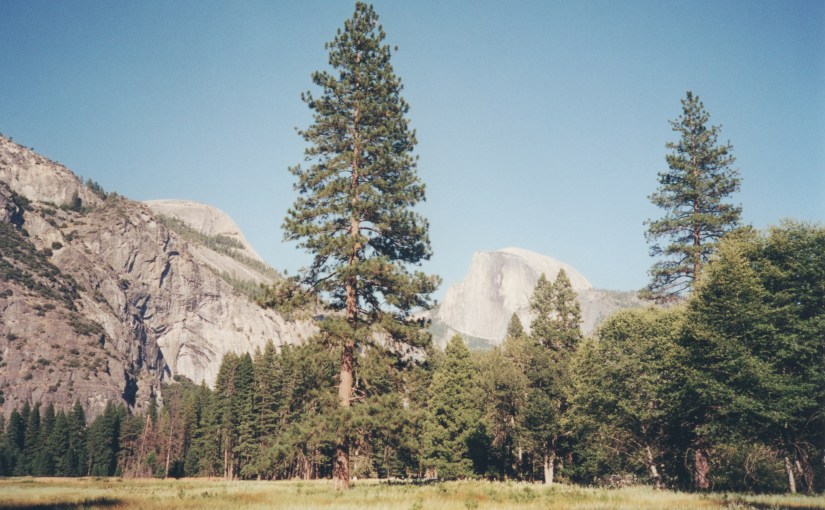
Then, to my surprise, my imagination leapt out of the building and into Yosemite Valley with the distinct curve of Half Dome and the craggy heights of El Capitan soaring above me. Yet maybe it shouldn’t have been a surprise. Isn’t nature as much the home of the Divine as my dear parish church? John Muir called the Sierra Nevada the range of light, and I visited those mountains every summer. Why wouldn’t my mind latch onto Yosemite as the sanctuary of the Holy One? Psalm 63 itself begins with sensual longing: my body pines for you like a dry, weary land without water. It set me up to conflate God with the earth.
I returned to the mental exercise of memorizing the psalm. My soul shall be filled as with a banquet … Now came another image to mind, the morning of December 21, 1999, the last winter solstice of the millennium.
That day I went out before dawn for a walk along the ocean cliffs in Santa Cruz. What was purported to be the brightest full moon in a hundred years was setting in the west, swathed in swirling mist. For forty-five minutes it was my beacon and companion, and I was in awe. Finally, just as I reached my turning point, it dipped below the horizon. Show’s over, I thought sadly and turned around to start for home. What I saw then nearly took my breath away: a gorgeous sunrise had stolen up behind my back and was now in full bloom across the bay. I had only to turn around to see fresh beauty on the horizon. Here was the generosity of the Beloved on full display, sun and moon playing with the earth in a wild dance that seemed a secret shared between them and at the same time a wanton display for all us creatures to see.
Before King David composed the psalms, we were given nature as a scripture. Praying Psalm 63 is a way for me to celebrate the written Bible and the book of creation at the same time. Both help me find my way into the cave of my heart. At a time when I no longer take clean air or our democracy for granted, this is not a small thing. It might seem like escapism, and yes, it is a respite — like a walk along the ocean is — but the intention is to return to face COVID, the fight against racism, and wildfires with a hope and compassion I don’t have on my own.
Merced River, Yosemite Valley
Where do you perceive the Divine? What invites you into the cave of your heart? These are deeply personal questions, but if you feel like sharing what gives you hope in troubled times, please reply in the comments.
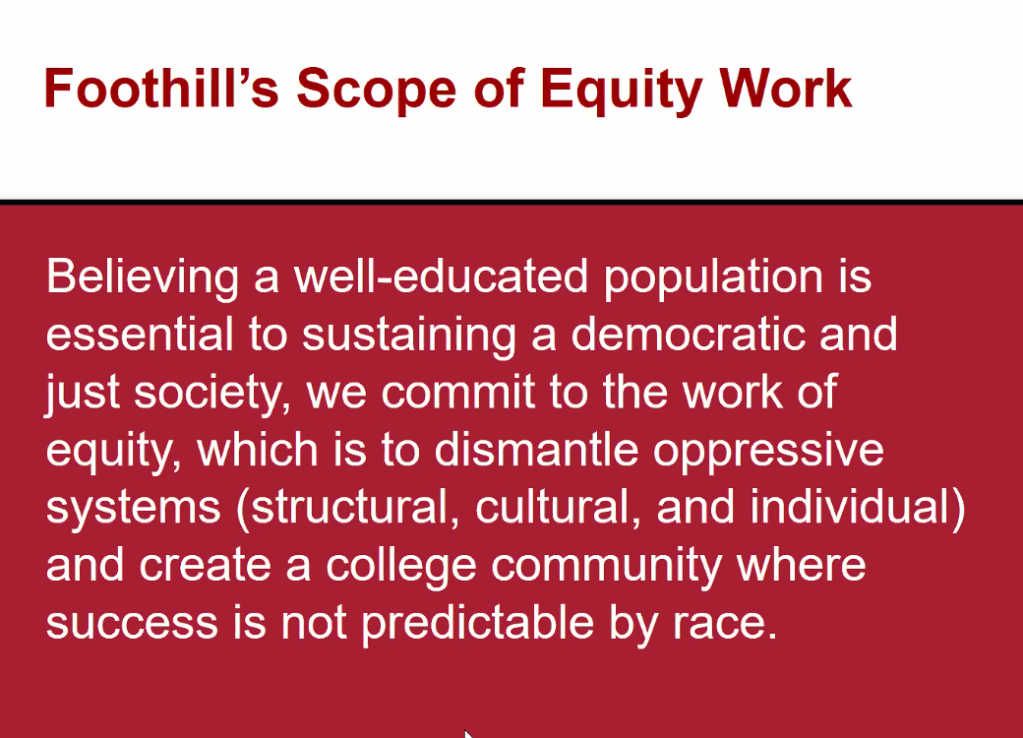
This is how Foothill faculty and staff describe academic year 2019-20
On the Friday before fall classes start at Foothill College faculty and staff come together for “Opening Day” to prepare for the new academic year. This year a panel of student leaders became our teachers and offered us a two-hour training on equity, focusing on implicit bias, privilege, and racism in higher education, including at Foothill. For our last activity at the end of the session we were invited to write a poem in which each line begins with the words “I am” to help us see our diversity and our unity.
I was almost too heartbroken by the death of Ruth Bader Ginsburg to share this poem, but the students who asked us to “Listen, Learn, and Level Up” inspire me to live up to RBG’s legacy and work for a just and democratic society. Please take ten minutes to write your own I Am poem and share it in the comments.
This morning I’m remembering the candlelight vigil in Mission Plaza Park on the night of 9/11 and the interfaith service that followed in Holy Cross Church. After the final hymn concluded, in the moment of silence after the organ notes faded but before the rustling of departure began, a single spontaneous voice began to sing “God Bless America.” A few others joined in, Sister Barbara promptly took it up on the organ, and then we were all singing. It has become a cliché since then, a requisite but routine badge of patriotism, as satisfying and thoughtfree as the seventh inning stretch and singing “Take Me Out to the Ballgame,” but that night it was pure and heartfelt.
I want to reclaim that prayer for the land that I love, now threatened in so many more ways from within and without than it was even on that awful day.
Stand beside her, O Beloved, and guide her through the night – through this COVID-19 pandemic, our fight to end racism, wildfires burning from the mountains to the oceans white with foam. Shed your light from above to show us our common ground. God bless America.
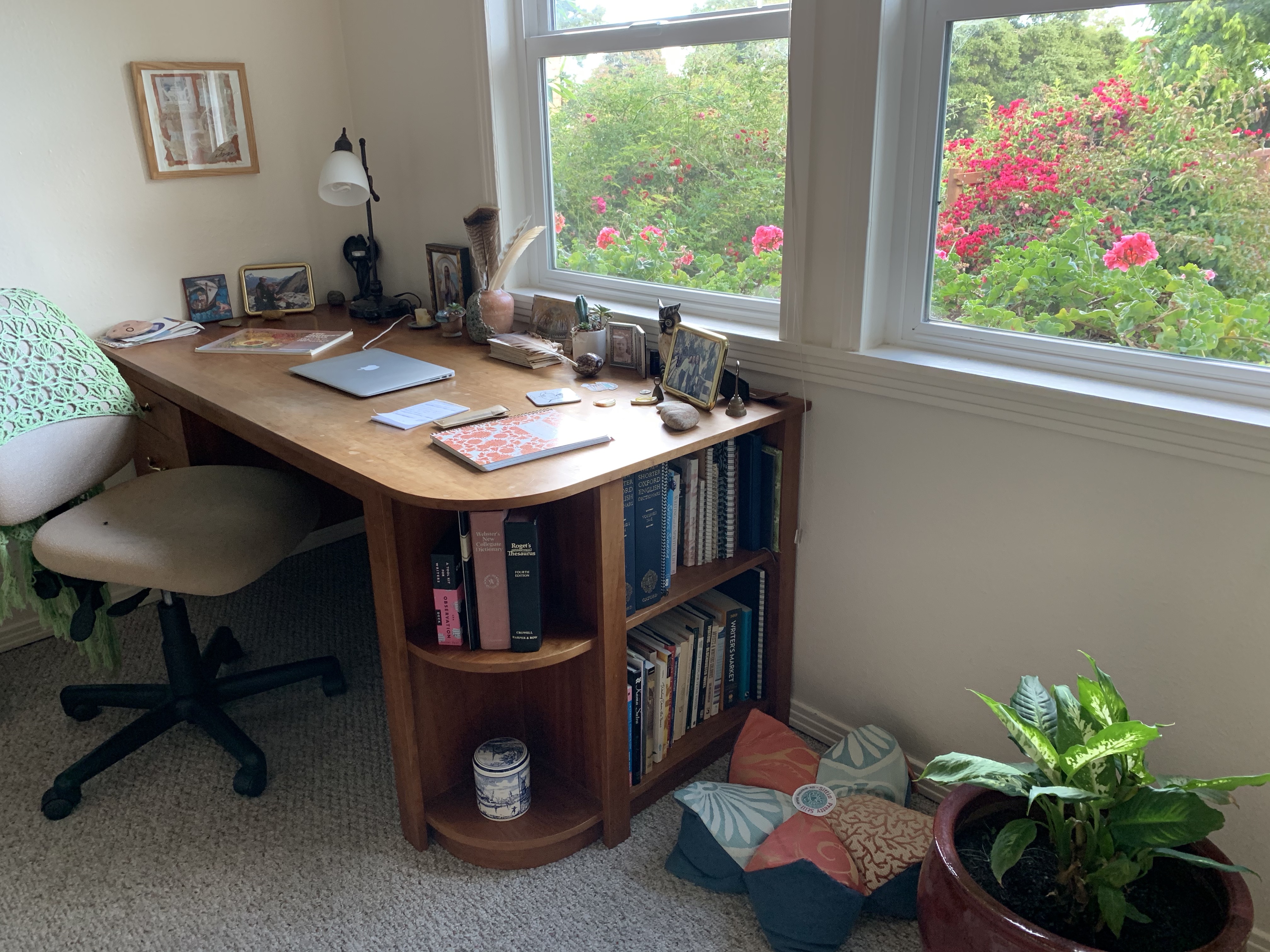
“Sit in your cell as in paradise,” St. Romuald tells monks in his brief rule. My desk may be the closest thing I have to a monastic cell.
I loved it from the beginning, the ample size and solid feel of it, the sensuous curved corner that saves it from being stodgy or businesslike. In a concession to technology a discreet hole in the top allows power cords to pass through, but it is otherwise entirely organic. Waves and whorls in the grain of the cherry wood surface hint at a tree’s life story. Water stains tell of use, twenty years of a writer working (and eating and drinking) on this silky surface.
My ex-husband, an amateur woodworker, built it for me when I got tired of writing at the kitchen table. If I couldn’t have a room of my own in the apartment we shared, I wanted at least a desk of my own, and he designed it to my specifications: 66 inches wide and 32 inches deep with two drawers and built-in shelves. Since he was a self-taught furniture maker, he had to think through each step as he went, and the way he figured out to make the desk stand up was to build it into a corner, screwed to the walls to form two of its sides and give it stability.
Not long after the desk was finished, I put away the loosely autobiographical novel I’d written about navigating infertility as an expat in the Netherlands and started an adventure love story that I hoped might actually be publishable. When we divorced, I got to keep the desk and luckily the apartment of which it had become part and parcel. When my new sweetheart and I bought a house together eight years ago, I didn’t see how I could bring the desk with me, but he carefully detached it, marveling at the ingenuity of its construction, and brought it to the corner where I’m writing today at a window looking out on the garden.
In a marriage of the quotidian with the sublime, my laptop and to-do list sit surrounded by candles and icons, feathers and stones, succulents in a handmade ceramic vase. A turkey feather lies atop the letters my grandfather wrote home from World War II, the addresses he scrawled in pencil unfaded after seventy years though the once-white envelopes are ivory now. Behind them are two black-and-white photos of my parents when they were small, and on opposite ends of the desk are photos of me with my sisters and my sweetheart. A painted wooden owl reminds me of my writing teacher and the other beloved women who gathered for a ritual to celebrate my fiftieth birthday.
My desk, I see, has become a sort of altar. Like Joan Didion,”I write entirely to find out what I’m thinking, what I’m looking at, what I see, and what it means,” and this piece of furniture is a home for that thinking and meaning making. I sit here as in paradise.
What is your favorite spot for thinking? If you’re a writer, where do you like to write? Please reply in the comments!
From trellises and branches the gray-haired woman hangs bells shaped like birds throughout the garden – not because she wanted to cross an item off her to-do list, but because the breeze on this foggy June afternoon called her outdoors, because the boysenberry vine craved an ornament, and the bower flower wanted company.
It took her a long time to learn that you don’t need a spreadsheet of garden chores or a master calendar of when to fertilize and mulch, that it’s better to study leaf color, light, and rain. Yet she has a compassionate fondness for the younger self that planted those roses by the book and nourished that baby bougainvillea after a rough transplanting. Who knew roots could be so delicate, so fragile?
The woman’s hands know the soil in her garden now, the clay where the oxalis thrives and the soft earth under the old bougainvillea fed by its own fuschia-colored bracts fallen year after year. She has dug deep, so she knows the roots and burrows too. She abandoned her spreadsheet long ago, for the calendar is in her head now, in the angle of sunlight and the arrival of shadow.
“America is broken,” a Canadian visitor observed four years ago on a trip to California, and I bristled. Wasn’t that an overreaction? In spite of everything – homelessness, school shootings, racism, and all our other problems – the comment seemed harsh to me. We had come through the great recession, we had a black president, I felt hopeful.
Then 46% of my fellow voting citizens chose a man we all knew to be an egomaniacal, lying, cheating, racist bully to be our president. More homeless people appeared on the streets of my town. A gunman with a semi-automatic rifle shot and killed 17 students at Marjory Stoneman Douglas High School and injured 17 more. Botham Jean was shot and killed in his own home by a white police officer, and then Atatiana Jefferson was too. The pandemic hit, and African-American and Latinx citizens are getting sick and dying at rates higher than their proportion of the population. Our national government failed to respond to the coronavirus like leaders of a first-world country with access to science, but even if they had, our brothers and sisters of color would still have been disproportionately affected. The pandemic merely exposed a racial divide that existed long before coronavirus arrived on our shores.
And then on Memorial Day a white police officer knelt on the neck of a black man named George Floyd for 8 minutes and 46 seconds until he was dead. I’m finally ready to concede what I couldn’t four years ago.
America is broken.
This week I turned to poetry, as I often do when I’m trying to counter the specters of panic and despair that lurk at my side since the 2016 election, and I found my way to a poem by Langston Hughes, “Let America Be America Again.” The poem walks a lyrical line between “the dream the dreamers dreamed” and “the rape and rot of graft, and stealth, and lies” that were a reality in our country in 1935 when it was written and still are, the title itself a retort from the past to “make America great again.” It is a powerful poem, but it is more about economic oppression than racism, and there’s a danger in conflating the two, in not acknowledging the ongoing injustice rooted in our history of slavery, segregation, and oppression of black people. As a privileged white woman I appreciate Hughes’ inclusiveness: “I’m the one who left dark Ireland’s shores,” he wrote. But the fact is, I am not affected by the misery my Irish ancestors suffered under the English the way that African Americans today are affected by their brutal history in this country. To pretend that the past is over and done with is worse than naïve. It’s dangerous. Ask any black man who goes out of his way to seem non-threatening when he’s among white people.
Langston Hughes reminded me that there are two separate evils to confront: one is the corruption in American government that has dismantled whatever checks we had on capitalism and allowed wealth and power to accumulate in the hands of a few, and the other is racism. To fight the first evil, we must work for campaign finance reform to restore some semblance of representative government. Then we can tackle climate change, equitable opportunities for education, affordable housing, jobs with a living wage and health care for all.
But at the very same time that we’re recovering from a pandemic and trying to save our planet and bring about economic justice, we also have to fight the scourge of racism. Enough is enough. Why did Americans take to the streets this week? One by one we must root out and remove the reasons for their righteous rage. As President Obama said, “Change will not come if we wait for some other person or wait for some other time. We are the ones we’ve been waiting for.”
So what can I, one white American woman, do right now?
First, I can examine my conscience for my own racism, a legacy of the culture I grew up in. But how do I recognize what is hidden from myself? This work will no doubt take the rest of my life, but to begin I will take a hidden bias test and read How To Be an Antiracist by Ibram X. Kendi. (It has to be an ebook, though, if I want to read it now. This title and several others on racism are backordered at Bookshop Santa Cruz and on Amazon, thank God.) Second, I will welcome opportunities for conversation about racism wherever I find them. Third, I will donate to Black Lives Matter. Fourth, I will create a guide for students at Foothill College (where I am a librarian) on antiracism and civil disobedience.
This is just a start, and I welcome your suggestions. America didn’t break in 2016. Genocide of the indigenous people and slavery broke it before it even began. What can we do to repair it?