Portable Convent

(On Leaving New Camaldoli)

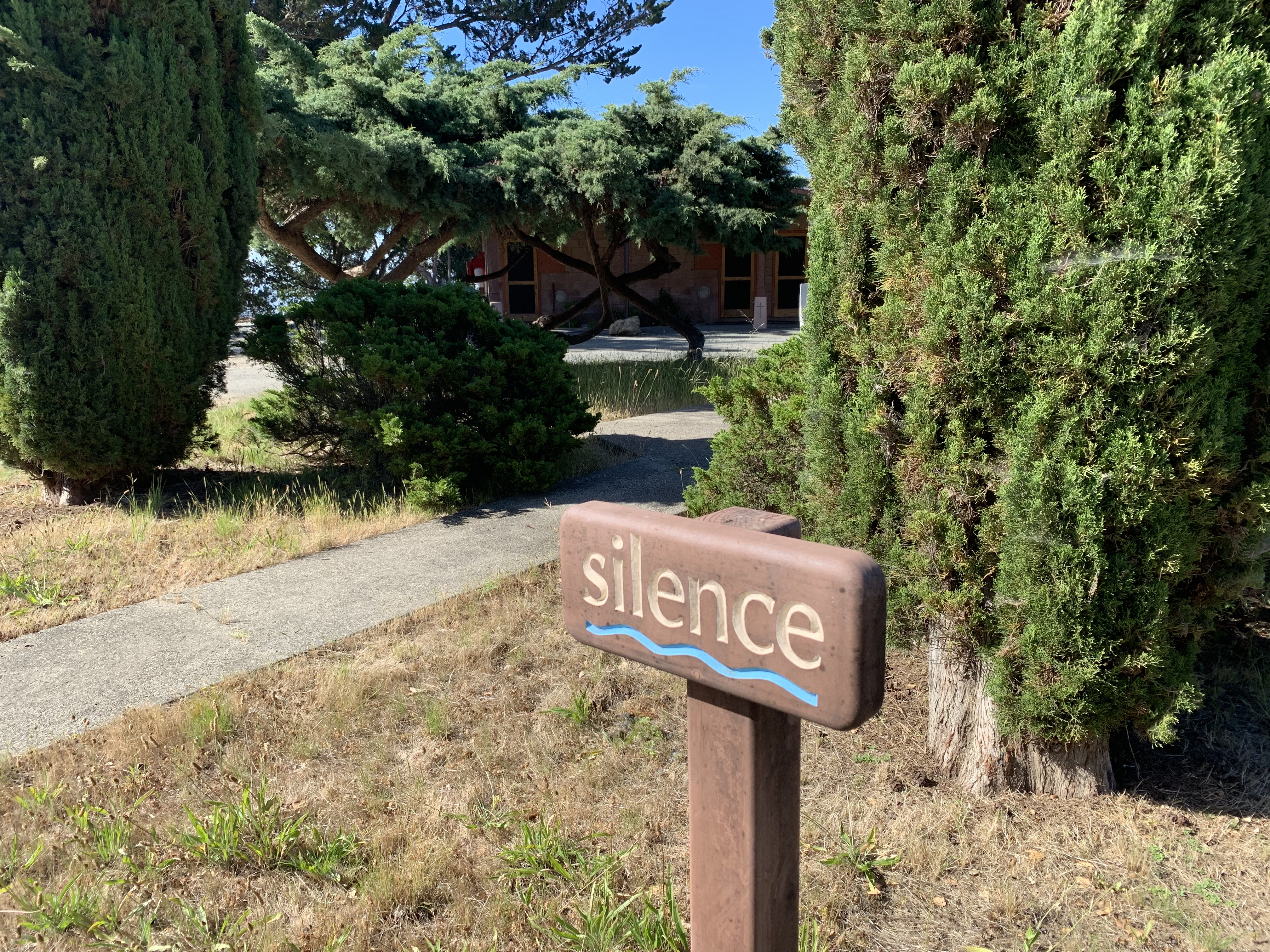
Sign with the word silence

Let me take the silence

of this cell with me

when I go,

not as armor

but a spring inside me

fed by ever melting snow.

May it ripple and reverberate,

contained in the perfect

acoustics of my heart.

I want to hear it in the world,

and if people sense a certain something

when I do, let them wonder what it is.

I will let it spill out –

I can be profligate –

it is an everlasting flow. 

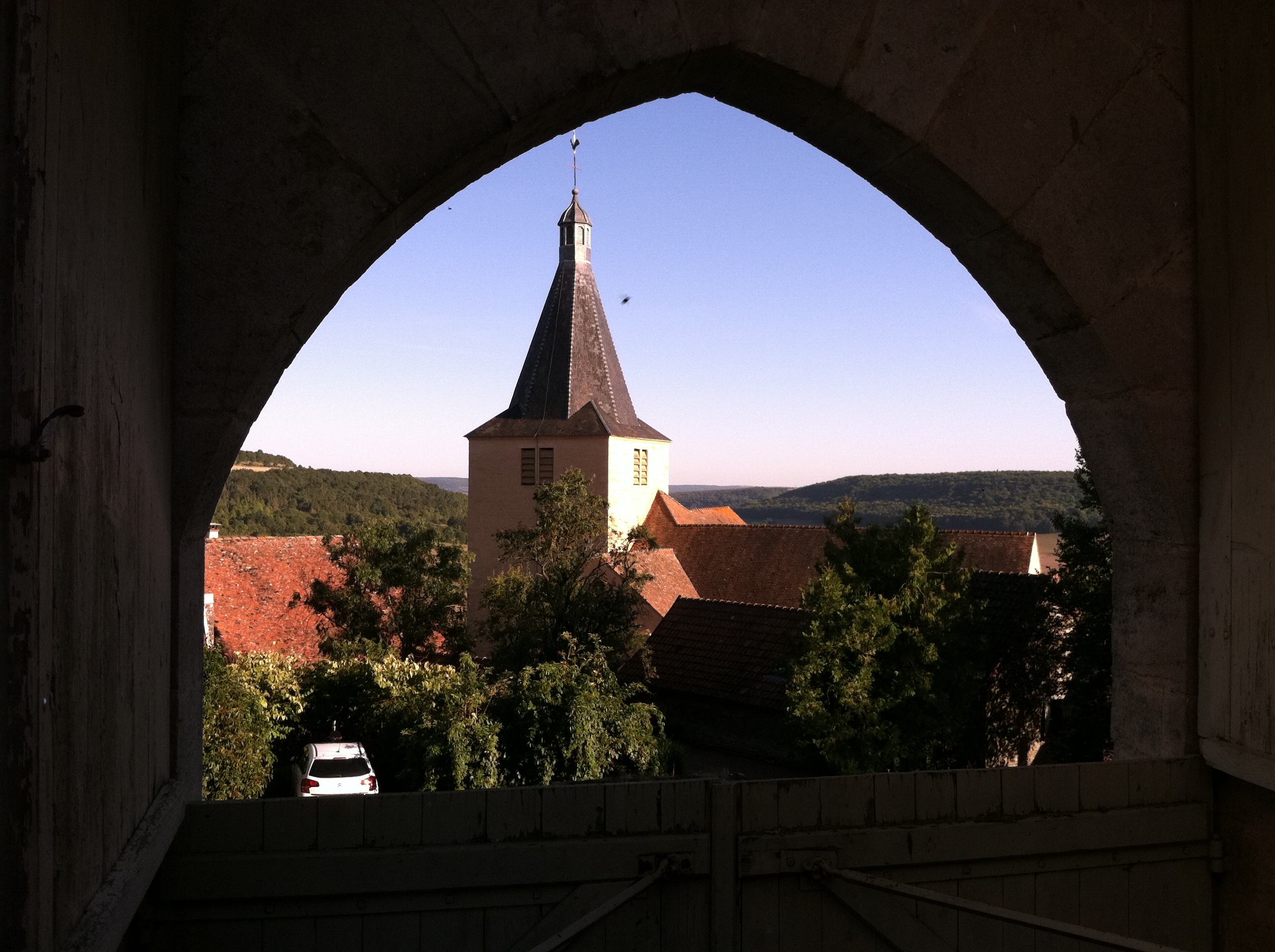
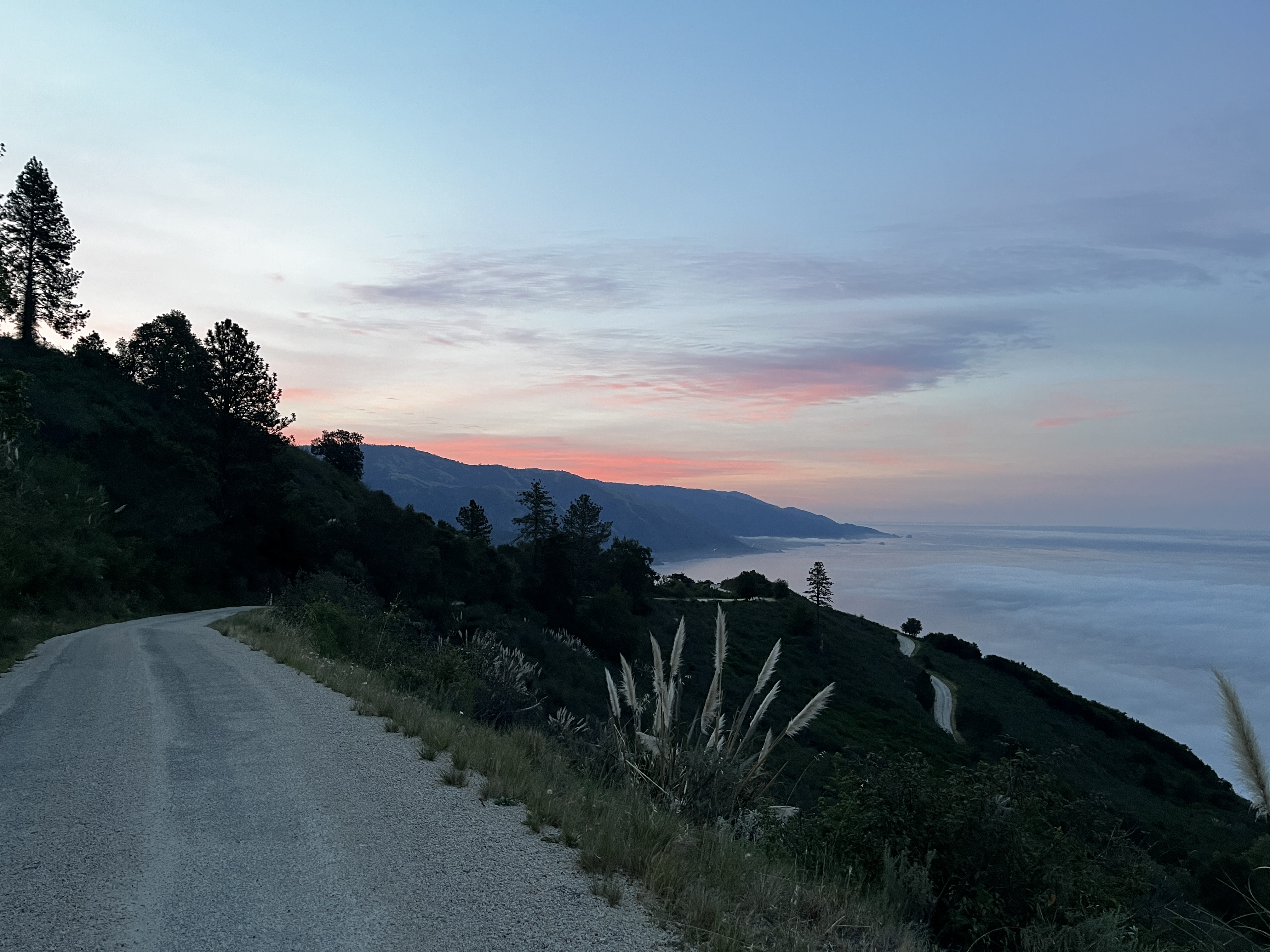
Sunset from the road to New Camaldoli Hermitage

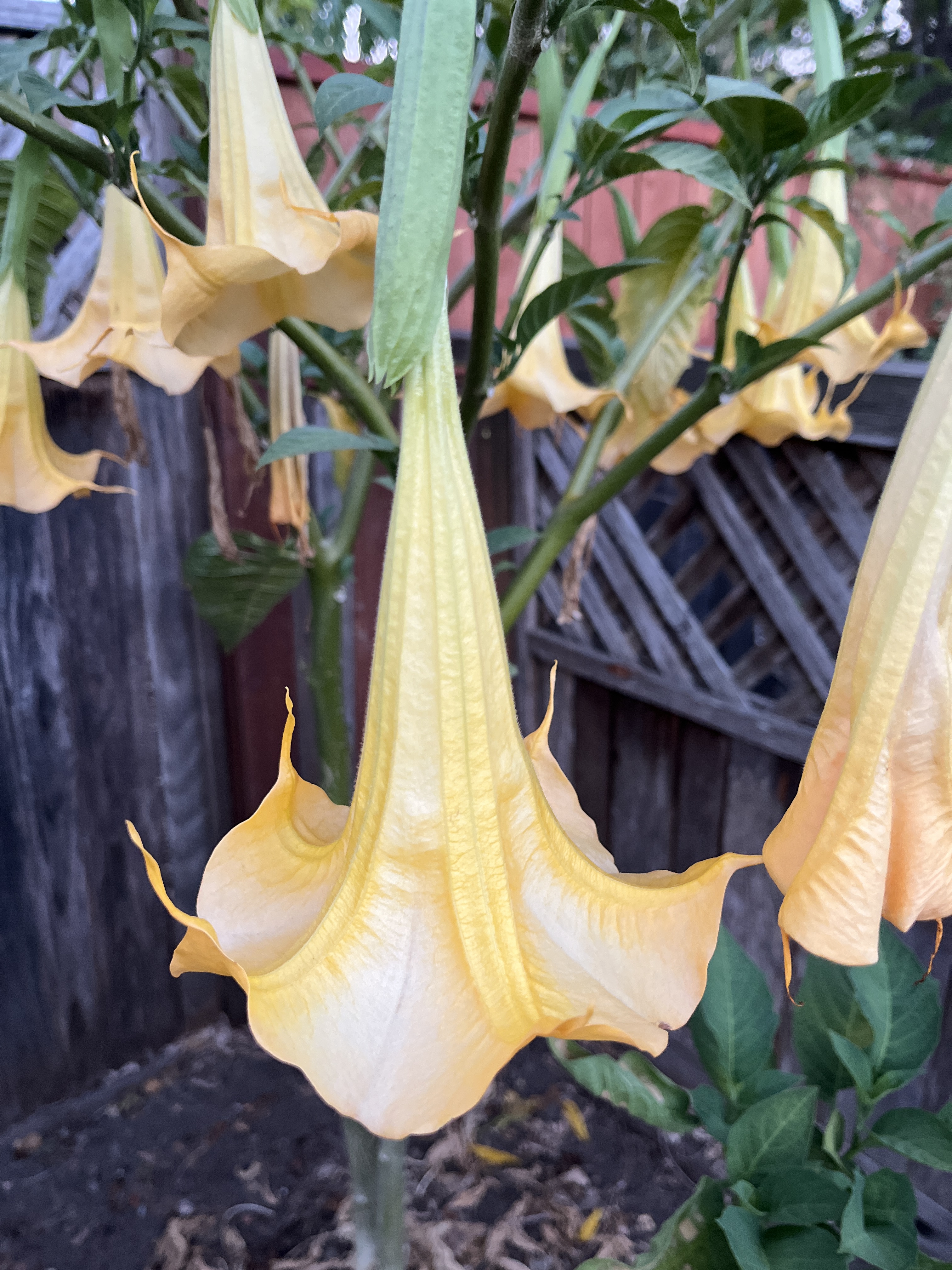
Angel’s Trumpet

At the corner of the garden

brash blossoms as big as my head

fill the sprawling datura.

Are those exuberant upside-down flutes

yellow or orange? I don’t know –

they’re sunshine, egg yolks,

fresh churned butter

from a happy, meadow-grazing cow. 

All day long they hang like unrung bells

till setting sun coaxes a farewell,

cascades of perfume flowing 

over the garden as if a band of angels

had been keeping vigil just to trumpet

this sun-washed scented goodbye —

no desire to hold darkness at bay,

instead, a vespers explosion

of thank you,

bless us, adieu.

Come moon, come stars now,

roses and rhubarb await their rest,

kohuhu and calla lilies too.

Come, my love, to our pillows and bed.

The window stands open,

my arms await you.

So you think angels are fiction;

come sail on their fragrance

into sleep with me anyway.

Let your REM-induced

atheist reveries mingle

with my hermit dreams

and what we both believe in,

roses and rhubarb,

kohuhu and calla lilies,

the garden we tend

and that tends us too.

Dichotomy

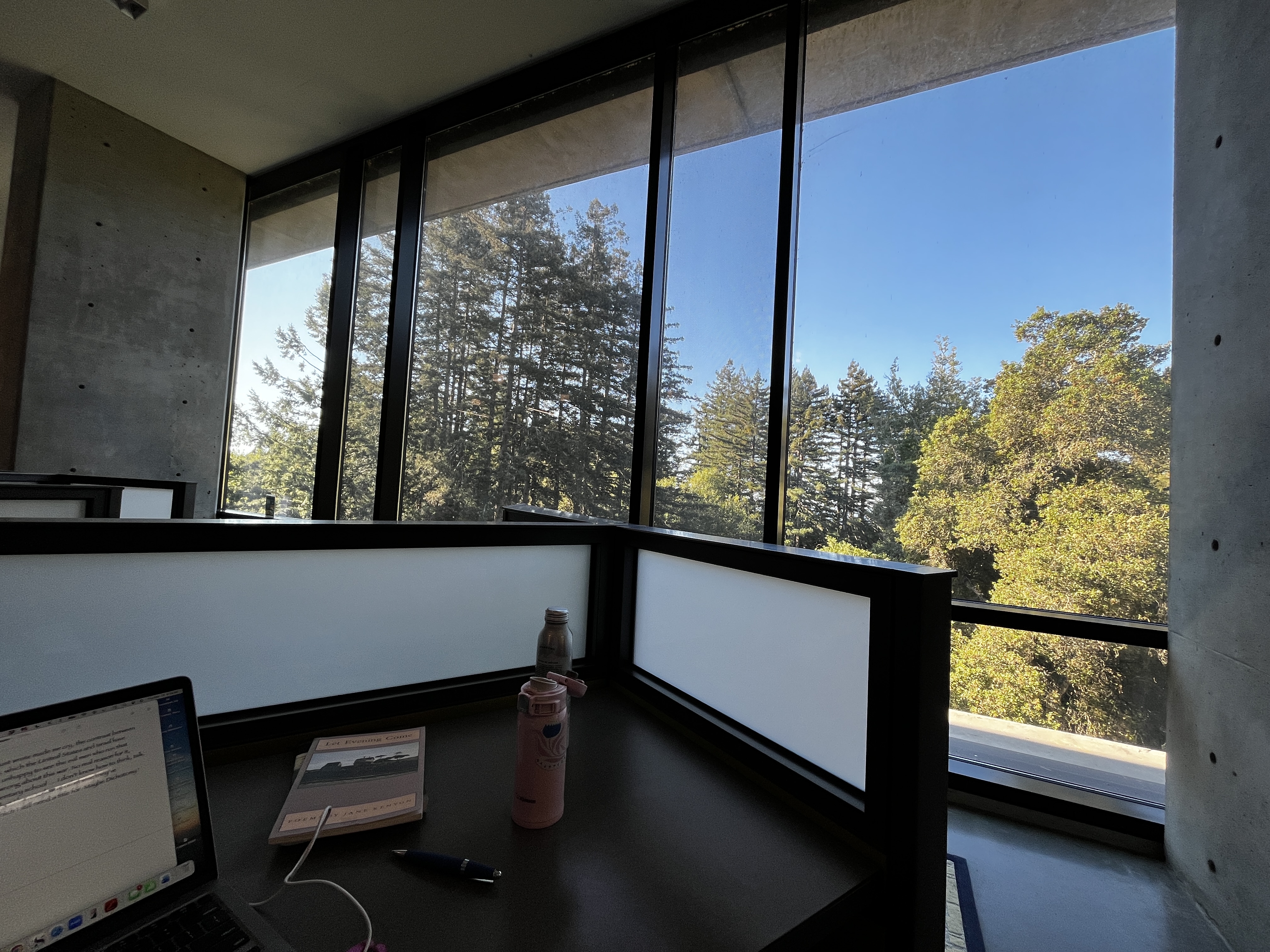
Sitting in this quiet library,

looking out at redwoods

taller than its four stories,

it’s hard to imagine 

bombs falling on Tehran,

blood and rubble,

the terrified cry of a new orphan.

Harder perhaps for her

to picture this —

crows instead of missiles

flying across blue sky,

a town so lovely

monarch butterflies

choose to winter here,

mothers and fathers

like mine

who grow old.

Fire Doesn’t Lie

Born from friction

or sun or lightning kindled,

it is warmth in winter,

light in the darkness.

It is the great destroyer too,

burning the old

to make way for the new.

Given oxygen, given fuel,

it burns as it will,

always burns true.

Seek that flame.

It lives inside of you.


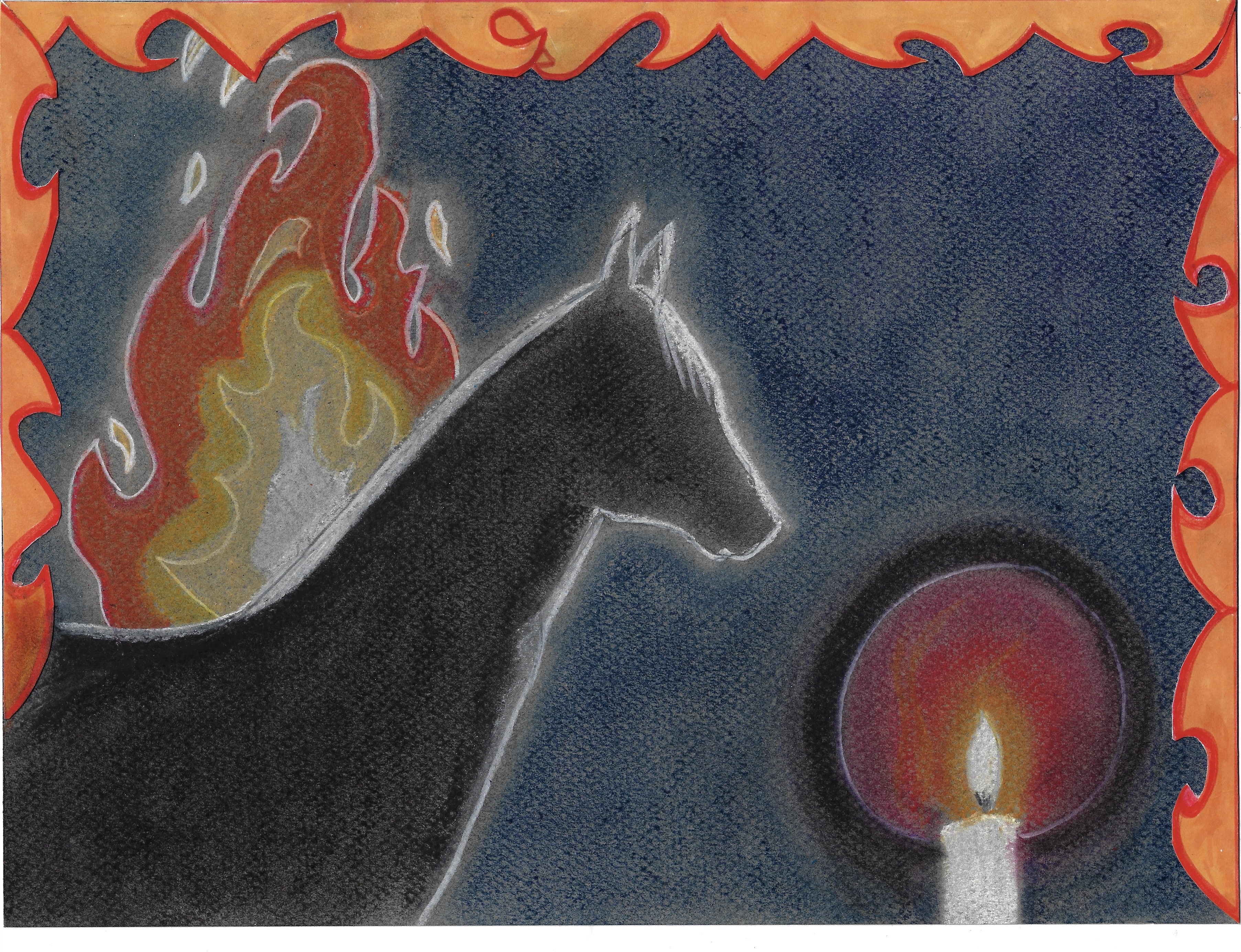
Image courtesy of Sarojani Rohan, “Year of the Fire Horse”

Refuge

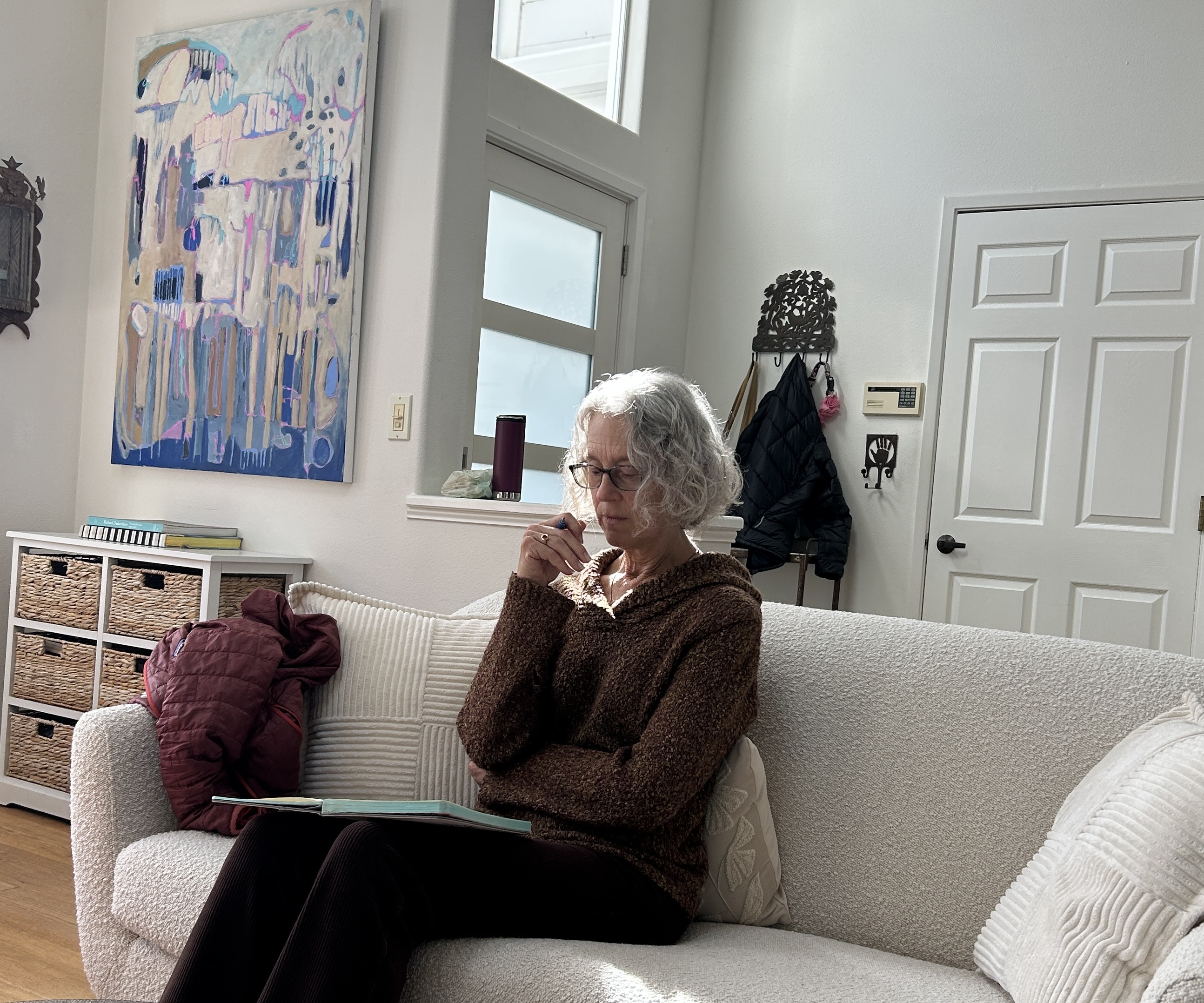
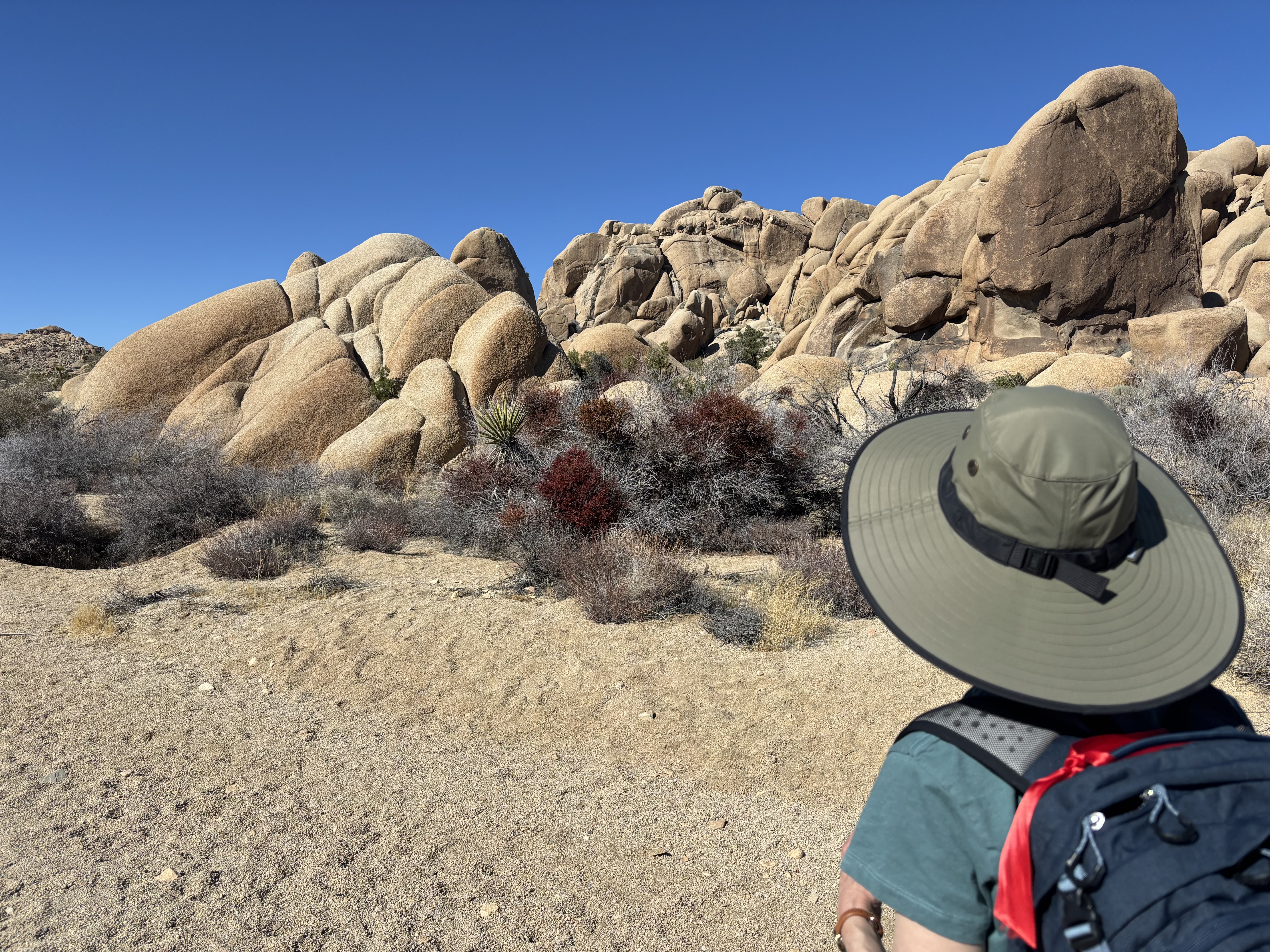
Author looking at rocks in the desert

Ask for one wild word,

A portable convent.

In the desert what seems empty is actually full.

Can I let what isn’t essential or nourishing wither?

A portable convent —

What if I were as quiet and spacious as the desert?

Let what isn’t essential or nourishing wither,

Honor the gifts.

What if I were as quiet and spacious as the desert?

In the desert what seems empty is actually full.

Honor the gifts.

Ask for one wild word.


This poem was inspired by an invitation to create a pantoum in the book Give Me a Word: The Promise of an Ancient Practice to Guide Your Year by Christine Valters Paintner. She explains that the “French pantoum is a poetic form with a circular structure that comes from the ordered repetition of lines.” Following her suggestion, I re-read my journal for the month of December and copied down lines that shimmered for me, then put them together according to her template, so this is in a way a found poem — like a mandala made of driftwood collected on the beach.

When Despair for the World Grows in Me

After “The Peace of Wild Things” by Wendell Berry

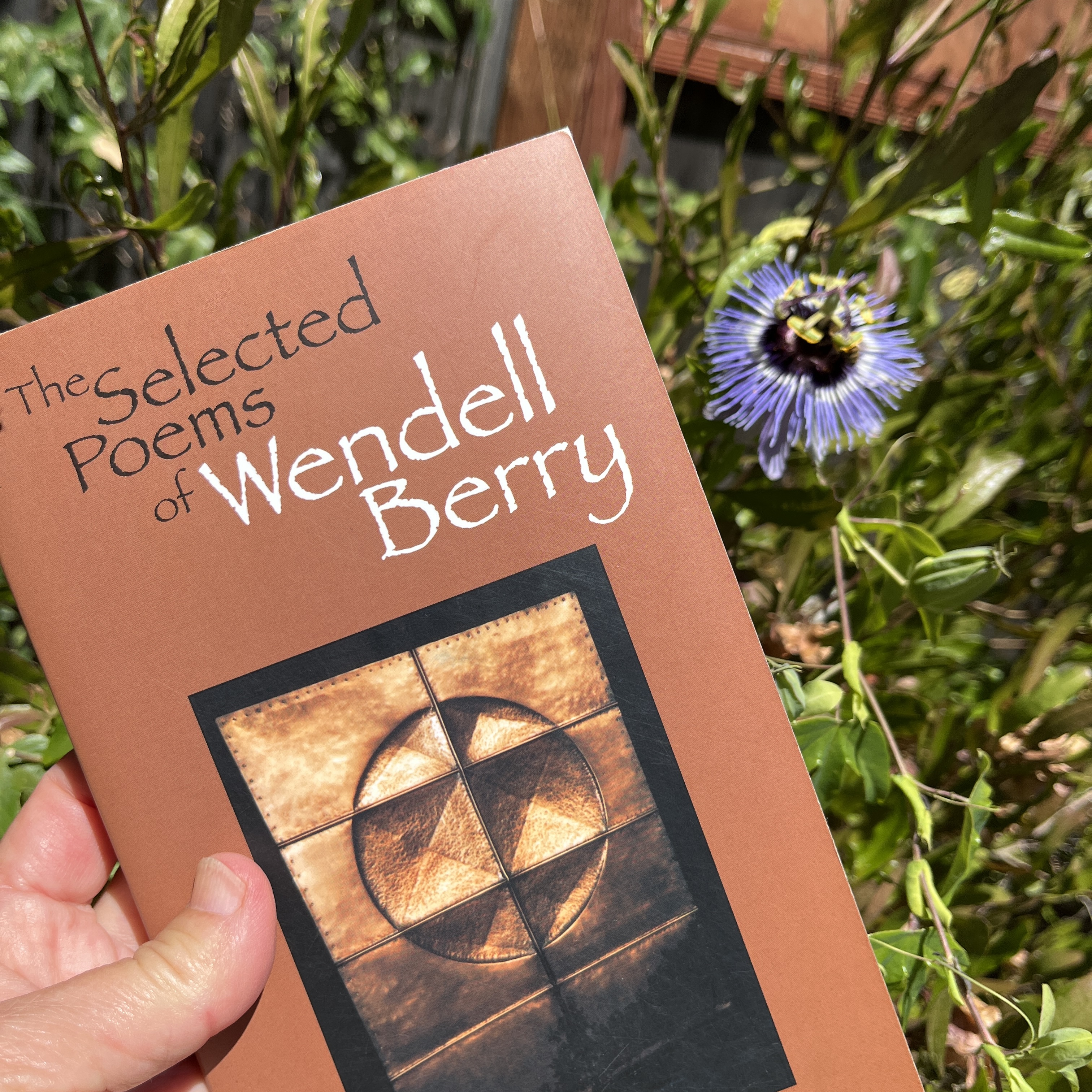
Photo of book The Selected Poems of Wendell Berry next to a passionflower

Living in town, far from wood drake

and heron, where can I go

in the middle of the night to seek

the peace of wild things?

Could I lie down in the cushiony redwood mulch

in my backyard,

never mind the bits of bark that will later cling

to hair and clothes?

Wouldn’t the crickets make room for me

and the bats pass over

as if I were a fallen tree?

Plants and trees have sleep cycles too;

vines are resting from their labors

growing squash, ripening tomatoes,

popping out passion flowers.

Why shouldn’t I?

My own garden,

traversed by possums and raccoons,

presided over by moon and stars, 

is wild enough.

There is no tonic like going outdoors.

No bed or chaise lounge can take the place

of the earth beneath my body,

yet no matter the clothes and comforts

I cushion it with, this body

hosts a feral universe; it has 

rhythms and demands beyond my ken and control.

When fear stalks in the night

to rob me of rest, let my soul

return to my body, let me remember

that I too am a wild thing.

Doubt

After “Fear” by Raymond Carver

yellow rose vine

Doubt the button I sewed on Tom’s sweater will hold

or that my cooking is good enough for company.

Doubt that I can see, when I prune them,

how the roses really want to grow.

Doubt when I speak to the new widow

that I will know what to say

or avoid useless cliché.

Doubt I’ll ever be cool, but now

I’m old enough I doubt it matters.

Doubt that I’ll ever stop

being stupefied by spring

or startled in a silent house

by the muted plink of a petal

dropping from its bouquet.

Doubt there will ever be a better way

than in Tom’s arms to start the day.

Doubt I have the wisdom,

as an unchecked autocrat 

drops bombs on a whim,

to be a patriot and a peacemaker.

Doubt that the vulnerability

of this fragile world can be borne.

Doubt that I will ever stop bearing it.

Sailor Without a Port

nautical navigation tools

For a sailor without a port no wind is favorable. — Seneca


I may as well throw out my to-do list.

Those old tasks have no point now.

Lost, I don’t know

where I’m going, let alone

how to get there.

I’d like to fly away home,

but the ships in the harbor are burning.

The whole city is on fire,

books packed tightly

on their shelves

feel the lick of the flame.

Still, I know where I came from,

and even if the hollow eyes

of the monsters who lit the match

are glowing in the darkness,

I am not alone.

In the flickering light

I see you too.

The Holy Uninvited

After Psalm 138

henbit dead nettle

The weeds that withered and the ones I pulled

are risen in a flurry of flowers —

floods of maroon-tipped white ramping-fumitory

and meadows full of sunbright yellow oxalis.

Amidst last winter’s lettuce, henbit deadnettle flaunts

small purple velvet blooms

unfurling

yet smaller

speckled petals.

The beauty of what I call weeds

startles me into gratitude,

and I sing praise to the earth.

I name you, holy uninvited —

nettle and broom,

thistle and vinca –

and bow before your tenacious ingenuity,

for you glorify the Author of Life

in your surging greenness.

When I looked out my window, 

you showed me your loveliness;

your bounty reminded me of our plenty.

All the fearful would surely recognize abundance

if they could see the unstoppable

flowering in this garden,

if they only breathed in the aromas of 

sweet peas and angel’s trumpet.

Though the Beloved dwells in paradise,

She cares for the nettle and broom

as much as the jasmine and rose;

both planted and uninvited

are holy in Her sight.

Though I fear scarcity,

you fill this plot with hurtling life.

You offer enough to feed us all,

more than enough to save us. 

The earth will make good her purpose for me;

O Sacred Earth, your greening endures forever;

do not abandon the fruits of your flowering.


Audio version of The Holy Uninvited

a bouquet of weeds/wildflowers next to the book Psalms for Praying

A note about this poem: In January I started reading the book Understorey: A Year Among Weeds by Anna Chapman Parker, and it inspired me to pay attention to the weeds in my garden. Although oxalis dominates with its neon yellow flowers, when I set out to explore the verdant greenery currently burgeoning in my backyard, I identified twenty other species— many of which I would have considered wildflowers if I’d discovered them on a hike. And now that I know another name for oxalis is Bermuda buttercup, how could I not want to make peace with it?

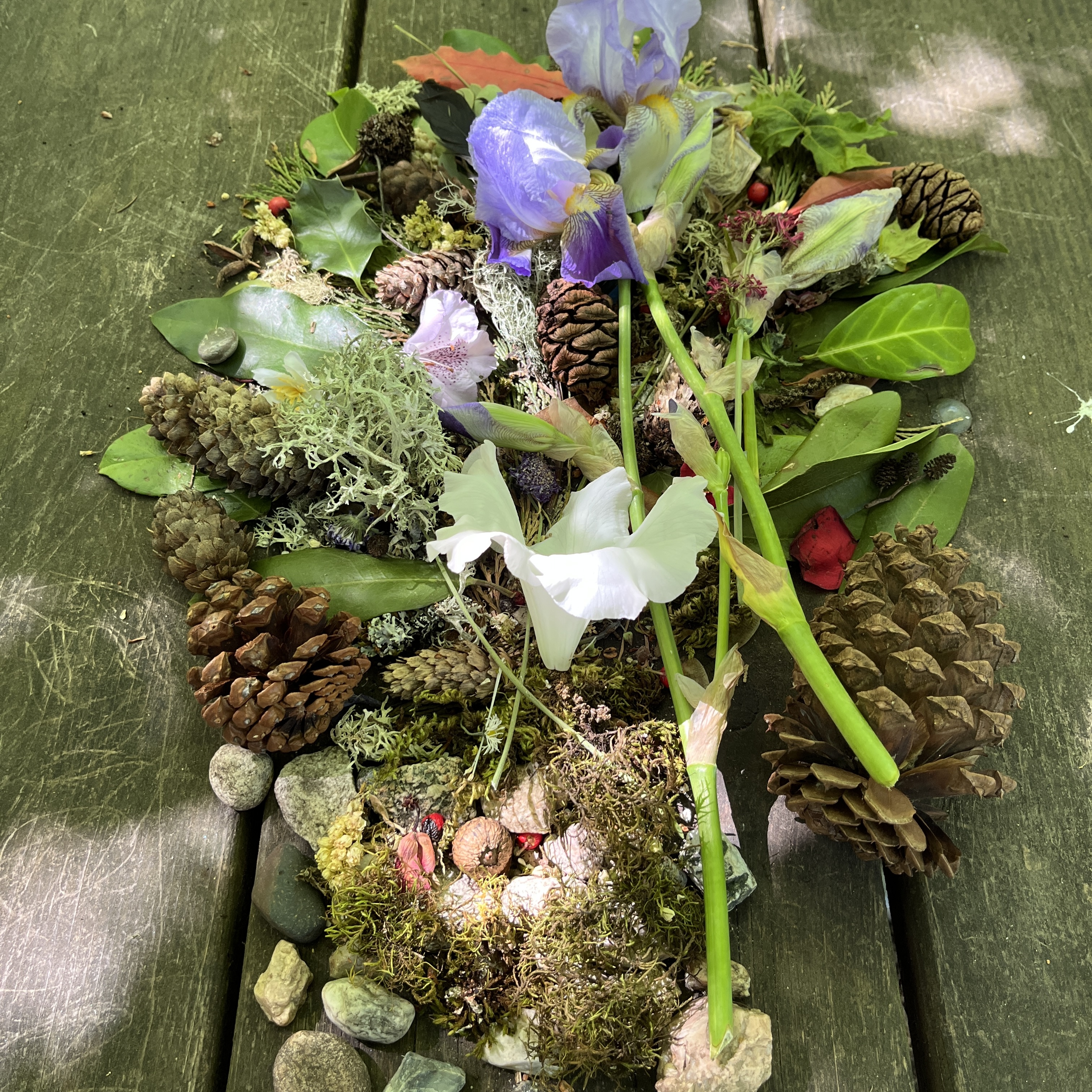
Then last week, for an online retreat through Abbey of the Arts called Earth Psalter: Writing Psalms for the Anthropocene, I was asked to “bring an object from an outdoor place that is meaningful to your experience of your ecosystem.” Minutes before I was supposed to show up on Zoom, I raced out to the still dewy backyard with my clippers and put together a small bouquet of weeds/wildflowers that inspired this song of praise and gratitude.

Thank you to Abbey of the Arts for this new approach to the psalms!

Resistance

Oxalis in the author's garden

I slip my spade through the weedy tangle

and slice into the earth,

dig as deep as the blade will go

to come up under the root mass,

and tug an entire oxalis from soil

where lilies and echevaria want to grow.

Sometimes the garden yields its invader,

bulbs clinging to white tendrils

as I pull them gently from the dirt,

then toss them

without ceremony or remorse 

into my bucket.

But mostly the roots go deep,

and bulbs remain

nestled in their secret places,

sucking sunlight and water

meant for the bird of paradise.

In this little square of earth

under my neighbor’s redwood,

I want to be the American army liberating Paris,

but I am only one humble partisan,

and this looks to be a long battle.