The Holy Uninvited

After Psalm 138

henbit dead nettle

The weeds that withered and the ones I pulled

are risen in a flurry of flowers —

floods of maroon-tipped white ramping-fumitory

and meadows full of sunbright yellow oxalis.

Amidst last winter’s lettuce, henbit deadnettle flaunts

small purple velvet blooms

unfurling

yet smaller

speckled petals.

The beauty of what I call weeds

startles me into gratitude,

and I sing praise to the earth.

I name you, holy uninvited —

nettle and broom,

thistle and vinca –

and bow before your tenacious ingenuity,

for you glorify the Author of Life

in your surging greenness.

When I looked out my window, 

you showed me your loveliness;

your bounty reminded me of our plenty.

All the fearful would surely recognize abundance

if they could see the unstoppable

flowering in this garden,

if they only breathed in the aromas of 

sweet peas and angel’s trumpet.

Though the Beloved dwells in paradise,

She cares for the nettle and broom

as much as the jasmine and rose;

both planted and uninvited

are holy in Her sight.

Though I fear scarcity,

you fill this plot with hurtling life.

You offer enough to feed us all,

more than enough to save us. 

The earth will make good her purpose for me;

O Sacred Earth, your greening endures forever;

do not abandon the fruits of your flowering.


Audio version of The Holy Uninvited

a bouquet of weeds/wildflowers next to the book Psalms for Praying

A note about this poem: In January I started reading the book Understorey: A Year Among Weeds by Anna Chapman Parker, and it inspired me to pay attention to the weeds in my garden. Although oxalis dominates with its neon yellow flowers, when I set out to explore the verdant greenery currently burgeoning in my backyard, I identified twenty other species— many of which I would have considered wildflowers if I’d discovered them on a hike. And now that I know another name for oxalis is Bermuda buttercup, how could I not want to make peace with it?

Then last week, for an online retreat through Abbey of the Arts called Earth Psalter: Writing Psalms for the Anthropocene, I was asked to “bring an object from an outdoor place that is meaningful to your experience of your ecosystem.” Minutes before I was supposed to show up on Zoom, I raced out to the still dewy backyard with my clippers and put together a small bouquet of weeds/wildflowers that inspired this song of praise and gratitude.

Thank you to Abbey of the Arts for this new approach to the psalms!

Resistance

Oxalis in the author's garden

I slip my spade through the weedy tangle

and slice into the earth,

dig as deep as the blade will go

to come up under the root mass,

and tug an entire oxalis from soil

where lilies and echevaria want to grow.

Sometimes the garden yields its invader,

bulbs clinging to white tendrils

as I pull them gently from the dirt,

then toss them

without ceremony or remorse 

into my bucket.

But mostly the roots go deep,

and bulbs remain

nestled in their secret places,

sucking sunlight and water

meant for the bird of paradise.

In this little square of earth

under my neighbor’s redwood,

I want to be the American army liberating Paris,

but I am only one humble partisan,

and this looks to be a long battle.

Imagine

I wrote this poem last October in a writing salon with Patrice Vecchione at Gabriella Café in Santa Cruz, where her art show Imagination Migration was on display, a flock of hand-colored birds carrying flowers, maps and pencils in their beaks. I didn’t guess then how much I would need imagination to move into my next chapter, our next chapter.

For me, today is a day for remembering the courage and wisdom of Martin Luther King, Jr. “We must forever conduct our struggle on the high plane of dignity and discipline,” he admonished in his “I Have a Dream” speech. “We must not allow our creative protests to degenerate into physical violence.” Although he was talking specifically about civil rights for black Americans, his sagacity transcends the March on Washington in 1963. Dignity, discipline, and nonviolence are his guidelines, and just as important, “We cannot walk alone.”

Today I’m also remembering the four freedoms Franklin Delano Roosevelt articulated in his State of the Union address on January 6, 1941: the freedom of speech, the freedom of worship, the freedom from want, and the freedom from fear. Today I call on our collective creative energy to imagine a future of freedom and justice for all. 

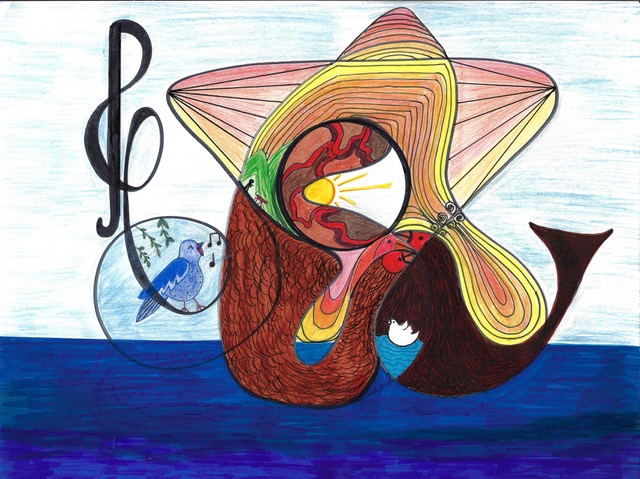
drawing of birds

Imagination

I swallow sunlight with each persimmon

bite, and juicy sweetness quenches 

fear, feeds in me the flame 

that wants to burn

like the persimmon did 

when it plumped into roundness

and swam into its deepening orange.

Oh, that fire wants to burn bright. 

Something greater than me kindled

my flame, the same something

that coaxes birds into flight

and taught the persimmon to long

for orange. I swallow sunlight,

and birds fly through my pen

onto the page. They are cooing

and warbling, hooting and squawking.

They love this page, and it loves

them back, so fiercely it gives 

up its claim to gravity, and really

it turns out there’s no defiance

quite like flight.


*Drawing courtesy of Sarojani Rohan

Enter the Sanctuary

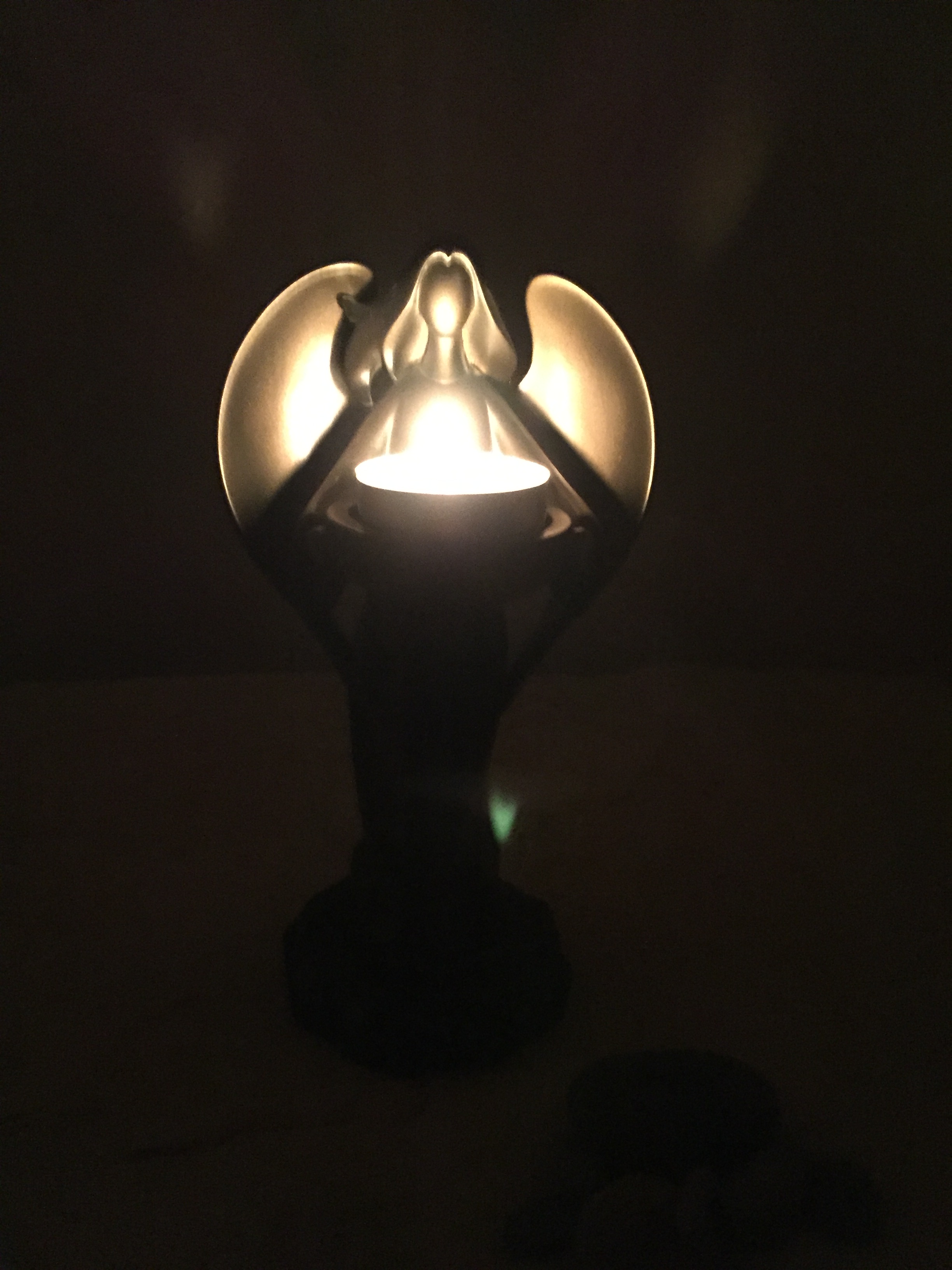
Angel sculpture holding candle

It’s all mist and veils to start with – 

except for the title,

a line lifted from another poem,

a flame to which I touch

the wick of my small candle.

Carried to the blank page,

it flickers in currents of air

exhaling the breath of so many spirits.

I cup my hands around it

till fire takes hold

of wick and wax,

and I see the opening,

take my first step into the labyrinth.

Though mist still shrouds

the circuits and turns,

candlelight shows

where to set my foot —

and no more.

How this roundabout

twisting-on-itself path

will lead to the center

I do not know,

nor can I yet fathom

what I will find there.

Sometimes the way is overgrown

with brambles and gorse,

thickets so tall and tangled

they hide the center.

I carry no machete,

no pruning hook or shears,

only bare hands

to unravel thorny vines.

Do not shun your doubt and fear.

Be patient. Be humble.

Taste the blood on your torn finger

and heed the spiderweb

as you slip past its dark weaver.

Curious and awestruck

audacity

will take you

where you want

to go.


Dear reader, at this time of winter darkness, about to light the fourth candle on the Advent wreath, watching for the return of light heralded by the winter solstice, and admittedly overwhelmed by the consumerist frenzy that hijacks Christmas in our culture, I wish you sanctuary — your own pool of light in the labyrinth — and a pathway to hope in the New Year.

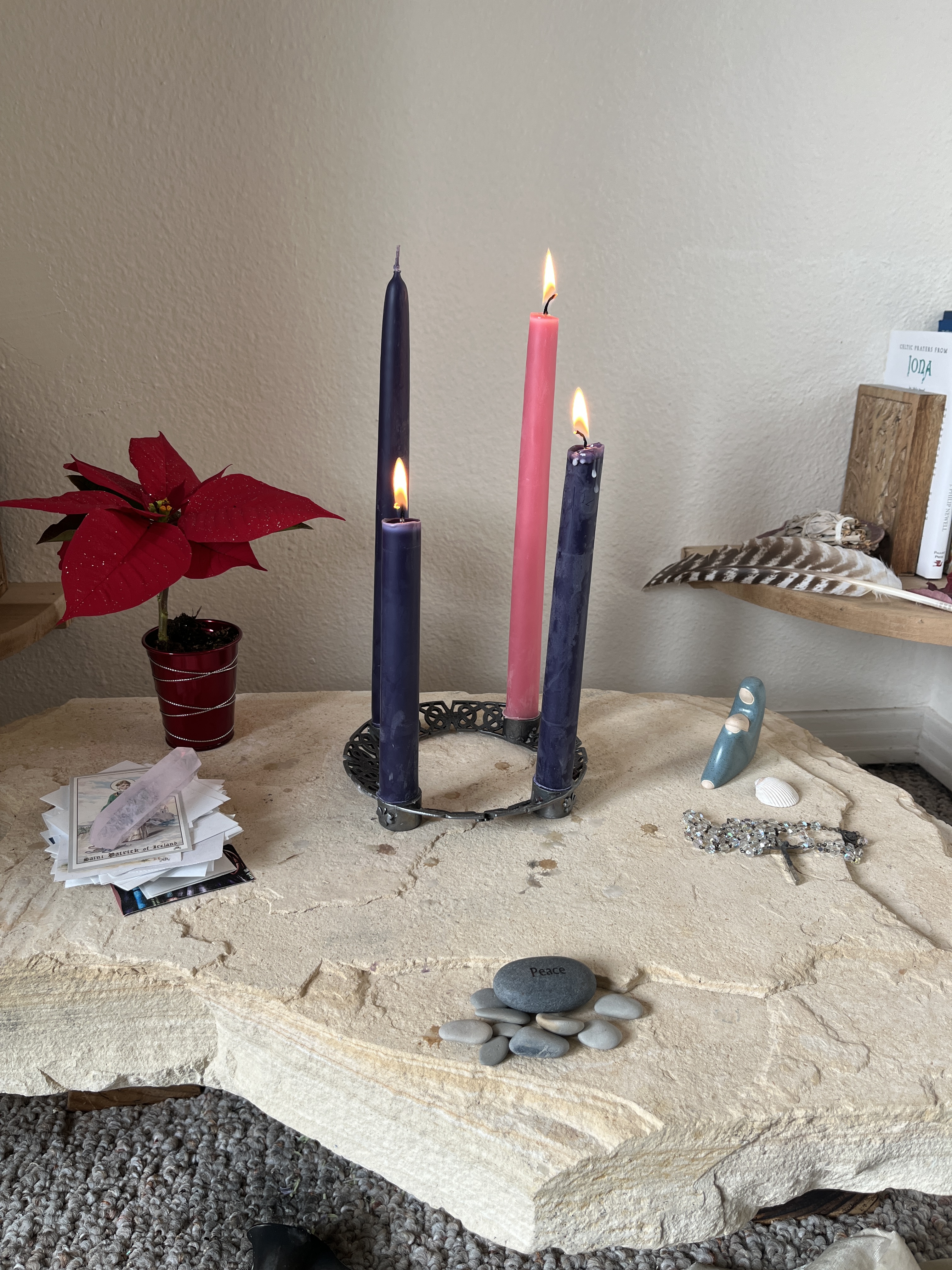
Advent wreath with three candles lit

The Body Is a Sacrament

Notebook and a copy of Anam Cara on a desk and window looking out on a garden and the ocean

What hidden grace

does this flesh and blood temple

make manifest?

I mirror the universe

outside my window,

star jasmine and juniper,

feathery fountain grass,

salvia’s royal velvet thrust.

The far horizon draws my gaze

across Mother Pacific

and up to Father Sky,

wisps of white like angels’ eyelashes

and prophets’ beards

splashed across the blue palette.


My hazel eyes offer passage

for the inner

and the outer light,

soul windows that reflect beauty

and shine forth my own glow

from the cave of my heart.

Grace it is to know

the Beloved lit the flame.


I wrote this poem four years ago while on retreat at New Camaldoli Hermitage in Big Sur, CA. Readers of Anam Cara by John O’Donohue may recognize my title as a quote from the book and some of the ideas it inspired in me.

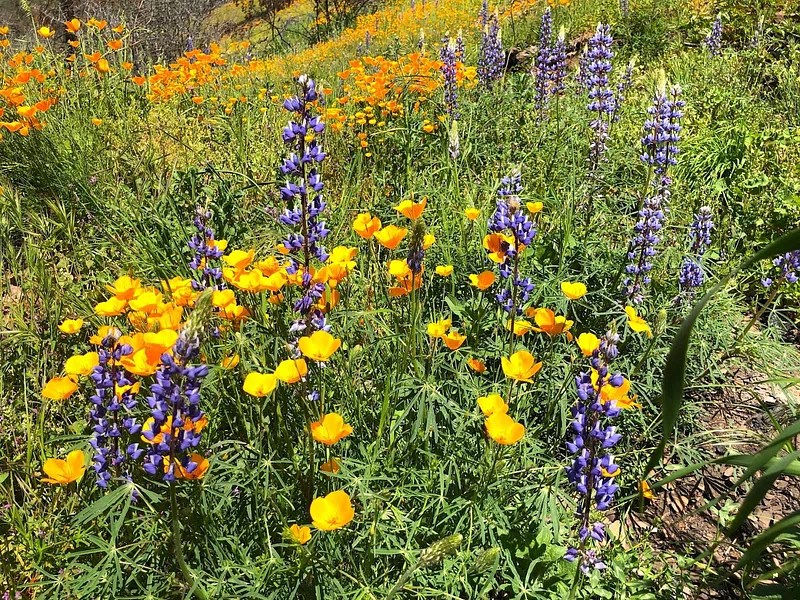
Poppies and Lupine

A long El Niño winter filled rivers

and drained the sky into a palette

of whites and grays, but now above is flush

with blue, and in November’s stubble fields

wild grasses grow chest high. Gnats

and apple blossoms glow in the morning sun,

and in California meadows

poppies and lupine mingle

as if they’d invented the color wheel,

like friends who love bold

fashion and go shopping together,

noontime and midnight meeting for drinks.

How can I blaze like they do,

exuberant and heedless of burning out?

Step out your door

and seek your shadow.

Savor and serve it all,

mystic and hedonist,

hostess and hermit,

the good daughter and the performer

who’s only acting the part.

For every purpose under heaven

there is a time —

for yes, for no,

for beholding beauty

and for giving it away. 

O poppies, o lupine,

I want to kiss the world.

Teach me how to flaunt orange,

show me how to dare purple!


With appreciation to all my writing friends who helped me make this a better poem

I Will Always Remember

man holding a mug of tea

A drizzly morning thirty years ago.

I rush along a path of dripping oaks

from coffeehouse to early morning class.

Across the quad (it seems so far away)

a man much older than I  rakes wet leaves.

My coffee steams as I stop now to sip

and in the distance see a girl approach

the gardener, holding out a cup of tea.

He shakes his head, polite but firm, no thanks.

The mist and space between us cloak the two,

a snow globe or a silent movie scene.

Again the girl entreats and lifts the cup.

It’s almost eight, I may be late for class,

but I remain. How will this story go?

At last the man accepts the cup, he nods,

she smiles, nothing left for them to say.

Who gave a gift to whom that winter day?

Let My Soul Sing

dog playing on the beach

I light a candle at dawn and invite

my soul to sing with the angels –

which means that I sit my body down

and repeat a mantra in my head to hush

the buzz of plans, desires, and worries.

The soul knows the secret

riffs and melodies

you forgot when you were born

and delights in her play among them

as a dog racing across the sand

to the scent of the sea delights

endlessly in the game of fetch.

The master-tossed ball

arcs across the sky

in a marriage of mass and motion,

and the dog chases and fetches,

chases and fetches.

So, I release my soul

to play on the beach

and beg the Holy One,

open my ears to hear the verses

You are singing to me.

Open my lips to join the chorus.

Sleepytime Tea

box of sleepytime tea next to a teapot on a stove

Seductive valerian and maidenly chamomile,

same herbs my great

great grandmother snipped and brewed,

summer garden wrapped in tissue,

insomniac’s aphrodisiac,

you promise I’ll wake in the morning

like wood sorrel opening

its neon yellow flowers

to the first

touch of the sun.

Come, blessed leaves,

soak in this boiling bath;

release slithers of scent

into steam if you must,

but save every single soporific cell

of sleep-inducing power

for me.

O liquid lullaby,

soother of worry

and dream enticer,

drift away with me

into a nightlong

river of rest.