My Recipe for Waking Up to an Ideal Day

Ingredients

A good night’s sleep

Solitude

Contemplation

Note: One can’t plan this day ahead of time because it can only begin after a good night’s sleep. This is the first required ingredient. The others are solitude and contemplation, both to taste. Optional ingredients are up to the cook’s imagination – mine include a mocha, forest bathing, and a good book – but vital to the recipe is a balance between work and rest, indoors and outdoors. Finessing this balance is different each time; you can’t rely on what worked before.

Directions

Rise at dawn — or stay in bed if blessed with euphoric sleep or if you are having one of those drowsy delirious dreams that will make you smile all day. Be gentle with yourself at this threshold, offering a light caress to the nighttime you are departing and an open palm to the invitation of the day. I aspire to slip from sleep as easily and reverently as I dip my fingertips into holy water. There is a small opening now which, David Whyte warns, “closes the moment you begin your plans.” Do not make plans. Only assess whether you have the required ingredients of solitude and a good night’s sleep.

Now comes a tricky bit. Without scalding the morning or burning your reverie, peek at your calendar, the one in your head or on your phone. You are not planning now, just taking the quickest of looks to see if you have any obligations today. A wide-open day free of appointments is best, but that is an optional ingredient as it is rarely ready at hand in the pantry. Besides, a commitment can add that je ne sai quois that will be the perfect unexpected spice for your day, the crack in the bowl which the day itself will repair.

Dynamic Balance

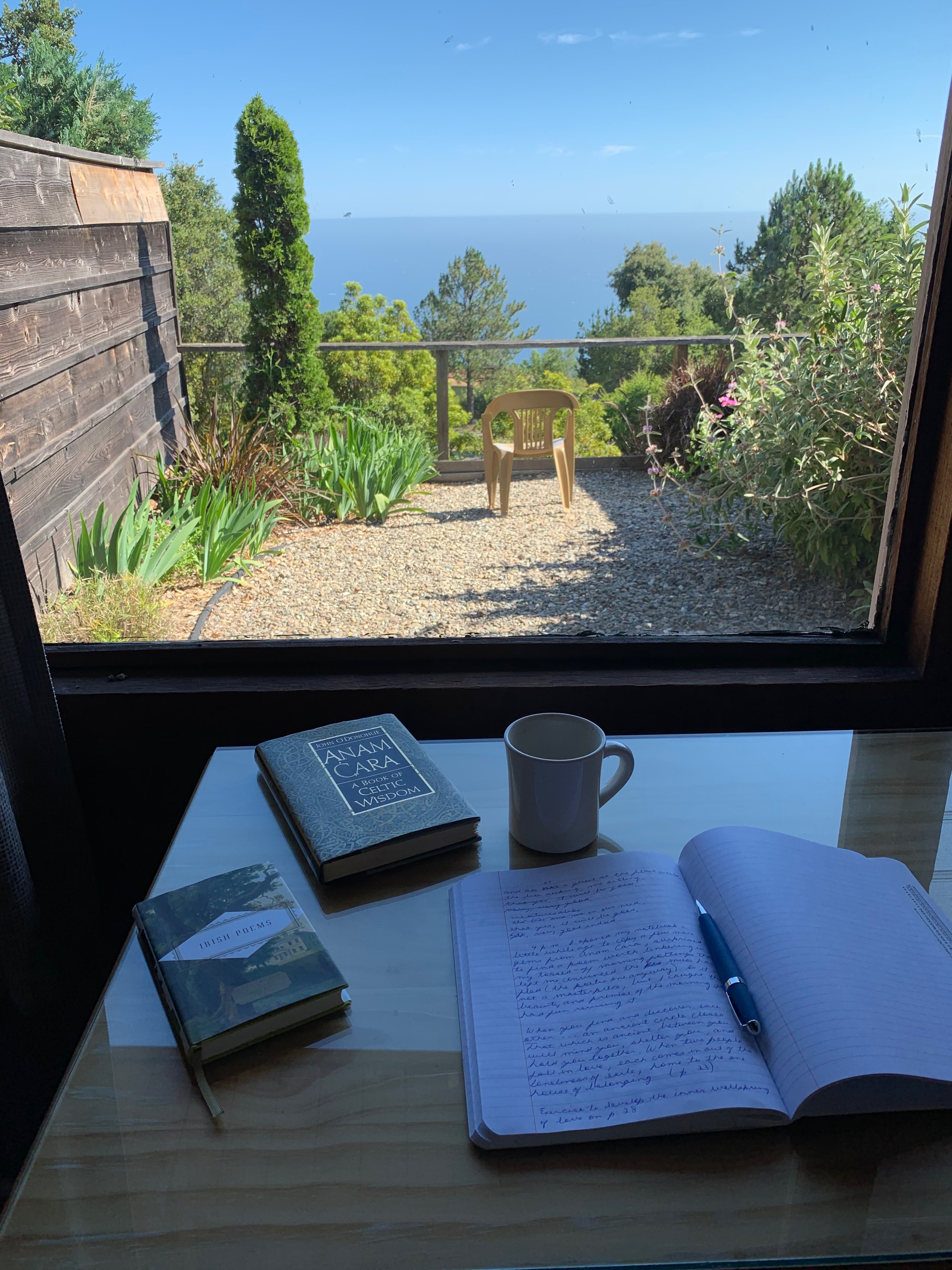
Author writing in a notebook in a garden

Ever since I was young, I have craved solitude. Growing up with two sisters and sharing a room with one of them, I inevitably tired of company and play and sought my own space, hiding out under the pine tree in our backyard or even in my bedroom closet. Eventually I learned the language to know myself: I’m an introvert. Not a misanthrope, which is how I might sometimes appear in a culture that prizes the extrovert ideal, but a person whose energy is drained by being with people even as much as I love them. Before the pandemic I sometimes thought of myself as a misplaced hermit; then, in those long months of isolation, I discovered how much I also thrive in community: the laughter and sharing at a convivial dinner party, gathering with my writing group, book club, sangha, church. Post-pandemic reunions brought profound joy, and I discovered a new pleasure: meeting a colleague or friend in person whom I’d only known on Zoom.

When I think about the job I retired from and what I miss most, two things come to mind. First, my colleagues and our students, the sense that we were engaged in a shared endeavor, that together we belonged to and made up Foothill College. But second is the pleasure of my usually solitary walk across campus early in the morning, letting myself into the silent, dimly lit library, the sanctuary of my office. At home, one of my favorite rituals with Tom is sharing our mochas in the morning — we sit together in a loveseat looking out at the garden, and he reads the news while I journal. Surprisingly, though, when he’s out of town and I have only my notebook for company, my morning mocha tastes just as good.

Solitude and community. Am I drawn by contradictory energies? Maybe not. One of my favorite places in the world is New Camaldoli Hermitage, a Benedictine community on a remote Big Sur mountaintop overlooking the wild Pacific. It pulls me with its incomparable beauty, a room of my own (or cell, to use the monastic term), and the chance to detach from the internet-connected world. Also vital, though, is the opportunity to pray with the monks each day and the presence of my fellow retreatants. Even though we don’t talk to each other, it’s comforting to know that they are there. We hold the kitchen door open for each other, smile at one another on the way to chapel. The monks manage to offer us gracious hospitality and the gift of silence. It’s built into their way of life, and they demonstrate that the question isn’t solitude or community; it’s both/and. Rather than contradicting, solitude and community feed each other.

If I were willing to stretch a metaphor, I’d say it’s like making a good mocha, perfectly blending the ingredients of coffee, chocolate, and milk, but you can’t really have solitude and community at the same time, can’t mix them together so they become an entirely new way of being. No, to balance these energies requires a daily braiding of together and alone. It’s more like my Breacadh an Lae pendant from Ireland. Breacadh an Lae means the “first light of the dawn” in Irish, and maybe the three-dimensional double spiral inspired by the winter solstice at Newgrange starts to capture the delicate, dynamic balance I’m talking about. It’s an art I’ve yet to master, but I keep practicing because at the end when I’ve drunk the last drop of this lifetime, I want to look back and say, wow, that was really good.

Spiral pendant

How Dry January Prepared Me for Lent

Roses in a vase, heart-shaped box, and book A Different Kind of Fast

In a collision of the secular and spiritual, Valentine’s Day happened to fall on Ash Wednesday this year, two days I treasure in seeming conflict. While a bouquet of red roses and pussy willows graced our dining table, a cross of ashes was traced on my forehead; in deference to the call to fast the heart-shaped box of chocolates remained unopened.

Lent calls Christians to pray, give alms, and fast. I’m good with the first two but struggle with fasting. Life brings enough loss and deprivation. Why add to it? Each year I wonder how I will answer the ubiquitous question, What are you giving up for Lent? In childhood it was usually candy or ice cream; as an adult I graduated to alcohol and chocolate and recently started using the season as a way to try new habits like using less plastic and being vegan before six. Whatever personal practice one chooses for Lent, on Ash Wednesday and Good Friday Catholics are supposed to eat less, specifically only one full meal and two smaller meals. Compared to Jews who eat and drink nothing at all on Yom Kippur or Muslims who refrain from food and drink from dawn to dusk for the entire month of Ramadan, this Catholic fast is not a big ask, but for a privileged American grazer like me it’s surprisingly hard. My relationship with fasting is complicated by my teenage experience of anorexia, two years of starving myself into a 93-pound scarecrow followed by a long recovery. I was saved by my caring family, a helpful therapist, and the slow gift of grace, but almost fifty years later the sensation of hunger takes me back to that fraught and troubled time. I tell myself that in those days I fasted enough for a lifetime of Lents.

And yet this venerable tradition attracts me. A religious act practiced in so many different faith traditions must have something going for it. What drew Jesus at the age of thirty to retreat to the desert and fast for forty days and forty nights? All scripture tells us is that he was led by the Spirit. I like to think of his time there as a kind of vision quest. His cousin John had just baptized the young carpenter in the River Jordan, and he would return from the desert to begin a public ministry, preaching and healing all over Galilee and Judea, burning with the good news that the Kingdom of God was at hand. 

Last month I tried Dry January for the first time. Although I usually only have one glass of wine or one cocktail with dinner, I drank pretty much every night, and I was curious what my body would feel like with no alcohol in my system for an extended period of time. The answer was “pretty good,” but nevertheless as dinner time approached each evening, I felt anxious and deprived; after the meal I was glad I’d abstained except for knowing I’d have to go through the same sacrifice again the next day. January felt like the longest month ever!

So what kept me going? First (and most crucial to start out with), accountability! I’d mentioned to my mom and sister that I was doing Dry January, and even if they didn’t care one way or another, I didn’t want to admit to them that I failed. Second, community. Dry January is a thing. My sister was also abstaining and cheered me on; my sweetheart committed to “Damp January,” so most nights he wasn’t drinking either. Articles and podcasts offered support, and when I was with friends, Dry January was the only explanation necessary for declining a drink. Third, I approached the experience with a spirit of curiosity. How would it feel? What would I learn about myself? What surprised me most were all my reasons for drinking. It was a reward for working hard, consolation for the blues, relief from anxiety, a celebration of romance. In fact, I only cheated one time — when I arrived home from a four-day retreat to find Ben Webster love songs playing on the stereo and Tom cooking my favorite dinner. How could I resist indulging in a glass of wine with him?

The thing is alcohol was only a temporary balm for depression or anxiety, and likewise my sense of deprivation each evening was also temporary. I liked the new feeling of clarity and energy after dinner. Although I obviously wasn’t getting drunk on one drink a night, even slight inebriation is different from sobriety, and ultimately the freshness of 100% sobriety is probably what helped me stick with my commitment. Now that the longest month ever has come to an end, I am drinking again, but it’s no longer the default.

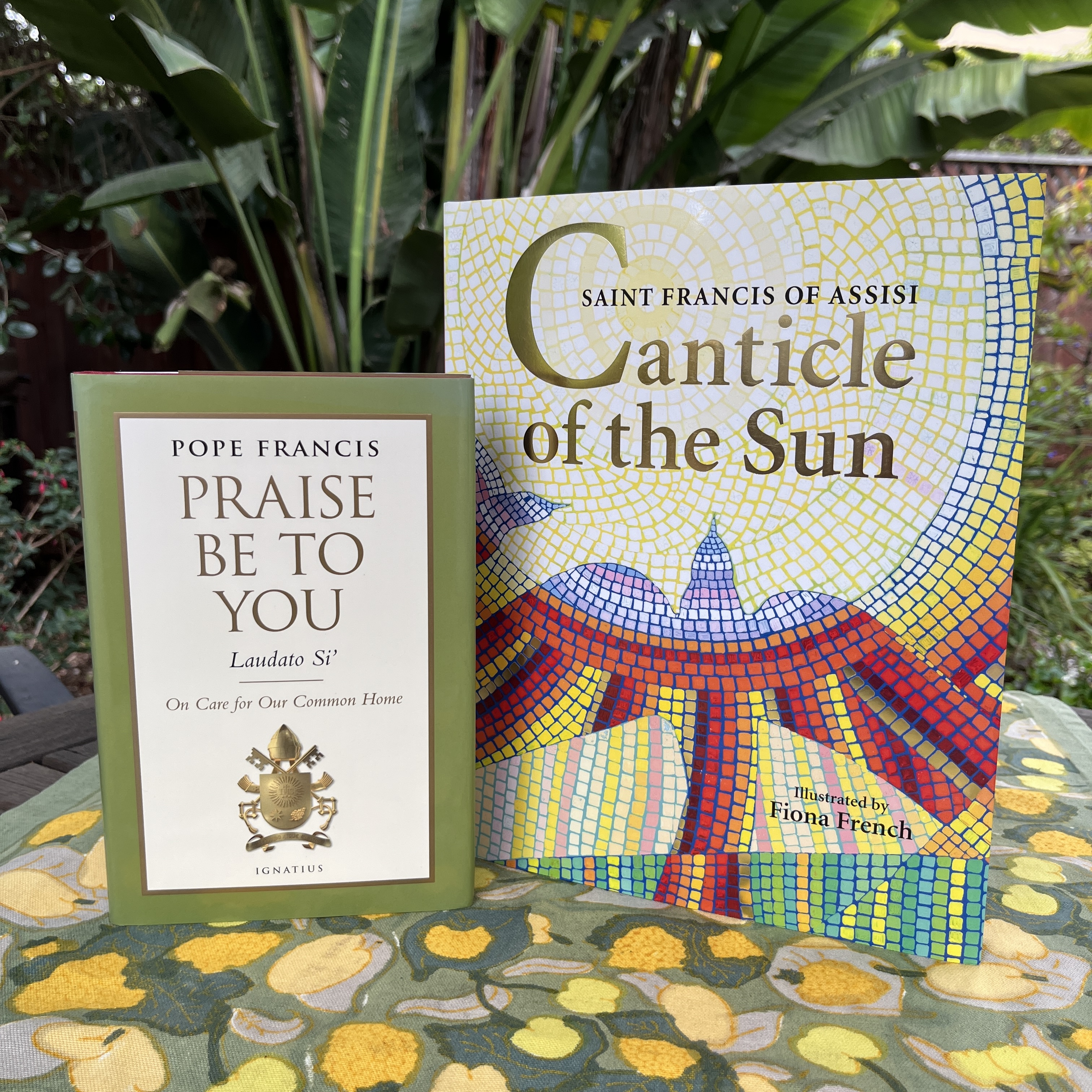
So what am I giving up for Lent this year? Inspired by Christine Valters Paintner, the online abbess at Abbey of the Arts, I’m trying A Different Kind of Fast. In this beautiful book, she suggests a different practice for each week of Lent, a pattern or way of thinking to give up and a corresponding new pattern to embrace, for example, fast from multitasking and inattention and embrace full presence to the moment. The intention is to feed our true hungers, which are obviously not for chocolate or alcohol (as much as I’m enjoying a mocha as I write this!) but for something deeper and lasting.

Each of us has unique desires, but I suspect we all share a common yearning for connection and a sense of purpose. In short, as trite as it might sound, we hunger for love. I imagine that for Jesus, fasting in the desert was a radical act of purification that not only opened the ears of his heart to the voice of the Divine but actually fired him with the energy of Divine Love. Maybe starting Lent on Valentine’s Day was not such a crazy collision after all.

Why Poetry?

author sitting in the garden writing in a notebok

When children go hungry and migrants have no refuge, when flooding kills thousands in Libya while smoke from Canadian wildfires makes it hard for people in Florida to breathe, when one friend is diagnosed with Parkinson’s and another with cancer, what entitles me to sit in my garden and write a poem? Why make art of any kind when the world is falling apart?

The refugee crisis and world hunger and climate change sometimes paralyze me. What can one ordinary person do after installing solar panels and donating to the food bank? I bake banana bread, read Keats’ “Ode to Autumn,” and drink coffee with my girlfriends— anything to drown out the creeping dread I’m often not even consciously aware of. It eventually finds me in my dreams though: the bus to nowhere, the oncoming wave the size of a mountain, no place to hide from whatever sinister figure is stalking me that night.

When it’s impossible to forget and hard to hope, what can one ordinary person do? 

Be curious.

Pay attention.

Resist numbness.

Writing a poem helps me do all three. Close observation and a spirit of exploration are solar power for art-making, and on the occasions when they float me into the zone where I lose all sense of time and place, when it’s just my pen and notebook and me, I get fired up with the exhilaration of the creative process as well as pride in making something. “Do poems make a difference?” poet Jane Hirshfield was asked after a reading at Bookshop Santa Cruz recently. The woman who wrote a book about how great poems transform the world answered, “Any action is an escape from paralysis.” Like signing a petition or composting my food scraps, writing a poem gives me a sense of agency. 

Books by Jane Hirshfield including Ten Windows: How Great Poems Transform the  World

But it’s not just about me. The poet lights a candle in the dark, both illumination and prayer. Whether I am reading a poem or writing one, it reminds me, in a world that wants saving, I am not alone. 

Hands on the Wheel

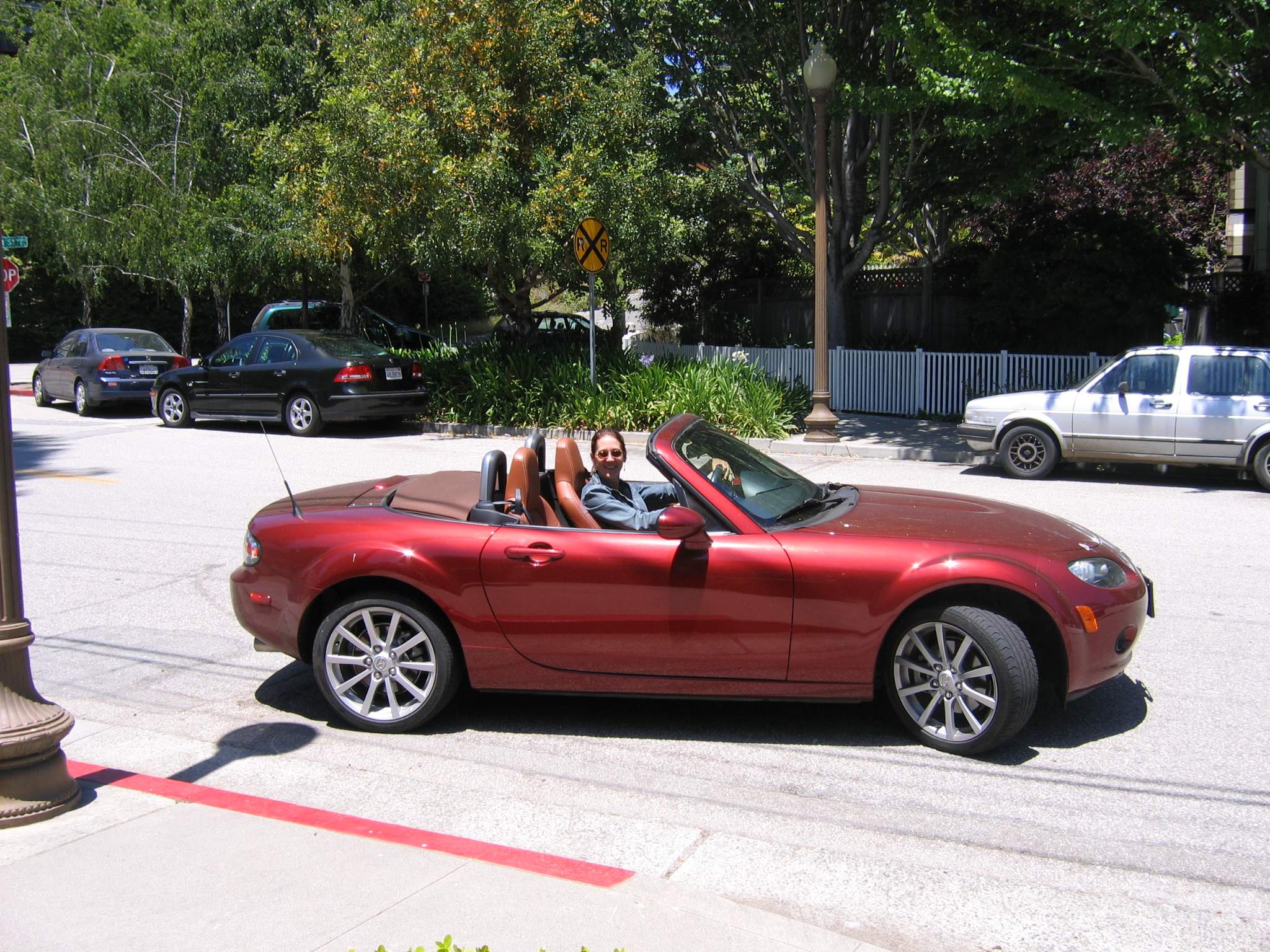
During the pandemic I was one of the privileged who could work from home, but for many years I commuted 38 miles from Santa Cruz to Foothill College in the heart of Silicon Valley, a drive that took me across the Santa Cruz Mountains on the toboggan run known as Highway 17. The summer before I started that job, I was helping another woman from Holy Cross Church organize the parish library when our pastor emeritus Father Mike Marini stopped in, and she told him that I would soon be working “over the hill.” With a sympathetic smile he gave me a blessing – which was comforting but at the same time added to my trepidation about the commute I was about to undertake. Although I’d always considered Catholics who kept a St. Christopher’s medal in their car sort of superstitious and old-fashioned, after Father Mike’s blessing I bought one for my Mazda Miata.

Generally, my drive over the hill and back took two hours of my day. During a storm, or if there was an accident or some other incident like a downed power line across the highway or an armed bank robber at large in the area, it could take twice as long. Near the summit of Highway 17, you lose the signal from whatever radio station you’re listening to when you started, and I soon set up my radio with separate pre-sets for the Santa Cruz side and the Silicon Valley side, so I could shift from KAZU to KQED or vice versa without missing a moment of my NPR show.

Except for the occasional jerk, commuters are competent and well mannered. I realized I’d truly become one of them when I drove Highway 17 on the weekend and noticed how erratic and disorganized it seemed. Drivers unaccustomed to the twists and poorly banked curves drove too slowly for my taste, while impatient or overly confident drivers went too fast, zigging and zagging in a way that put everyone in danger. This realization gave me a sense of camaraderie with my fellow commuters and filled me with a perverse pride.

Even in the best of situations, though, I often thought about how many assumptions any of us make when we set out in a car. For everything to go smoothly the way we expect to it – even on a short trip to the grocery store – every driver on the road must know the traffic laws and how to handle their cars; they must be sane and sober, attentive in a world filled with distractions. We hope no one has just had a fight or worse, is in the middle of one. It’s a lot to ask for. On the road, strangers isolated in our separate vehicles become a community utterly dependent on each other’s skill and good will.

I retired at the end of June, filled with profound gratitude for my career as a librarian — and for surviving my commute over the hill for more than twenty years. Thank you to St. Christopher and Father Mike, to my guardian angel, and to everyone who shared the road with me.

In Praise of Handshakes and Air Kisses

two hands shaking

When I was growing up, shaking hands seemed like a formal, old-fashioned custom to me, one I mostly saw in old movies. In real life it was reserved for introductions and making bets, rarely used by children or teenagers – until I moved to Germany during college for a junior year abroad. There a handshake was the customary greeting, and to my surprise I came to embrace it (pun intended).

Does this speak to a prudishness in me that I didn’t realize was there? No, I’m not a prude, but I do appreciate clear rules, and I liked not having to worry about what was appropriate. Are we familiar enough for a hug or a kiss? In Germany you didn’t have to wonder: the handshake was always right. It covered a broad spectrum of relationships from newly introduced strangers to good friends, including the gray area of acquaintances one might not feel comfortable hugging — polite and unobtrusive yet expressing friendly openness. 

Several years later I ended up in the Netherlands as an expat. While my knowledge of German helped me pick up Dutch, I had a new greeting etiquette to learn. Here, acquaintances quickly progressed from handshakes to air kisses, which I’d never encountered in real life and associated with superficial city socialites. I mastered the art about as well as I did speaking Dutch, which is to say, with an American accent. At first it felt awkward, but gradually I became comfortable with the three air kisses, left right left, the soft brush of cheeks. It made me feel sophisticated and continental. Even if I sometimes fell prey when kissing someone who was also wearing glasses to the nose-jarring bump of our eyeglass frames, at least I learned the Dutch phrase for this incident which assured me it wasn’t uncommon: brillen kussje, little kiss of the glasses.

I love the complement of ways our different cultures developed to express affection and connect through touch – from embracing to air kissing, from the handshake to its casual, hipper cousins the high five and fist bump. But what do we do now? In the same way that moving overseas dropped me into a dance of unfamiliar customs, Covid landed the whole world in a brand-new culture where none of us know the rules. We can’t learn by watching and doing the way I did in Germany and the Netherlands; we have to make it up as we go along. But just as we learned early in the pandemic to recognize the smile behind a mask from the crinkle in a person’s eyes, we are figuring this out too. 

Having grown up in a culture of hugging, I was surprised during my year in Germany by how much warmth and affection a clasping of hands could convey, so I hope Dr. Fauci was wrong when he famously suggested in April 2020 that Americans should never shake hands again. Sure, the way we make eye contact and our tone of voice when we say hello can reveal a lot of emotion, but I don’t think that’s enough for most of us in the long run. Human beings are mammals. We evolved to be in physical contact. As I emerged newly vaccinated from pandemic isolation, I quickly learned to ask friends when we met for the first time, “Are you hugging?” (Mostly the answer was yes.) Maybe our post-Covid etiquette will involve a more complicated ritual of asking How are you? and then waiting for a real answer. As much as I like a clear set of rules I don’t have to think about, sensitivity and mindfulness in the way we say hello is not a bad thing.

Brigid’s Cross on Saint Patrick’s Day

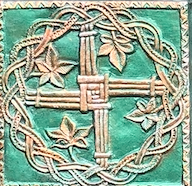
Green plaque with gold Brigit's cross

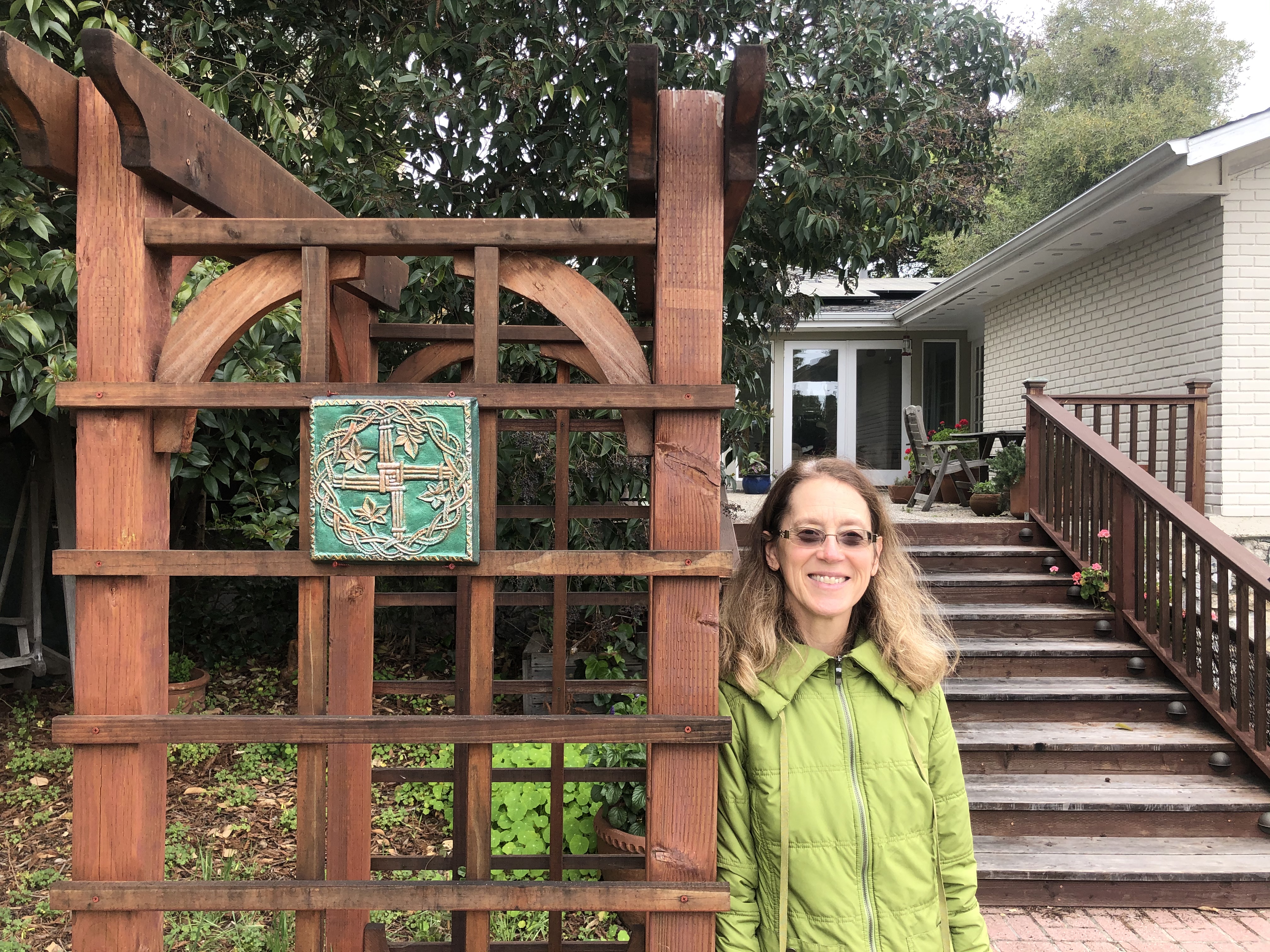
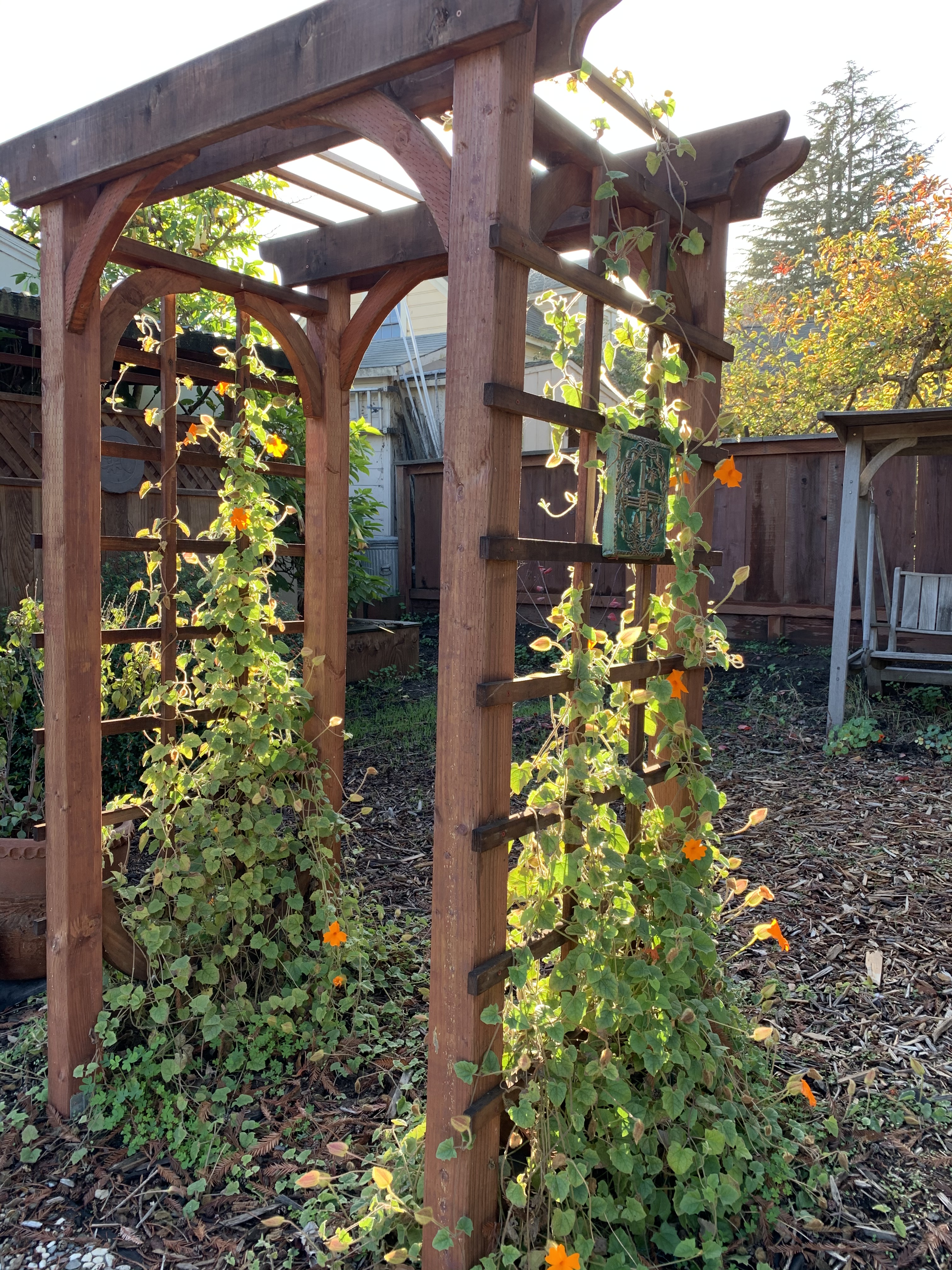
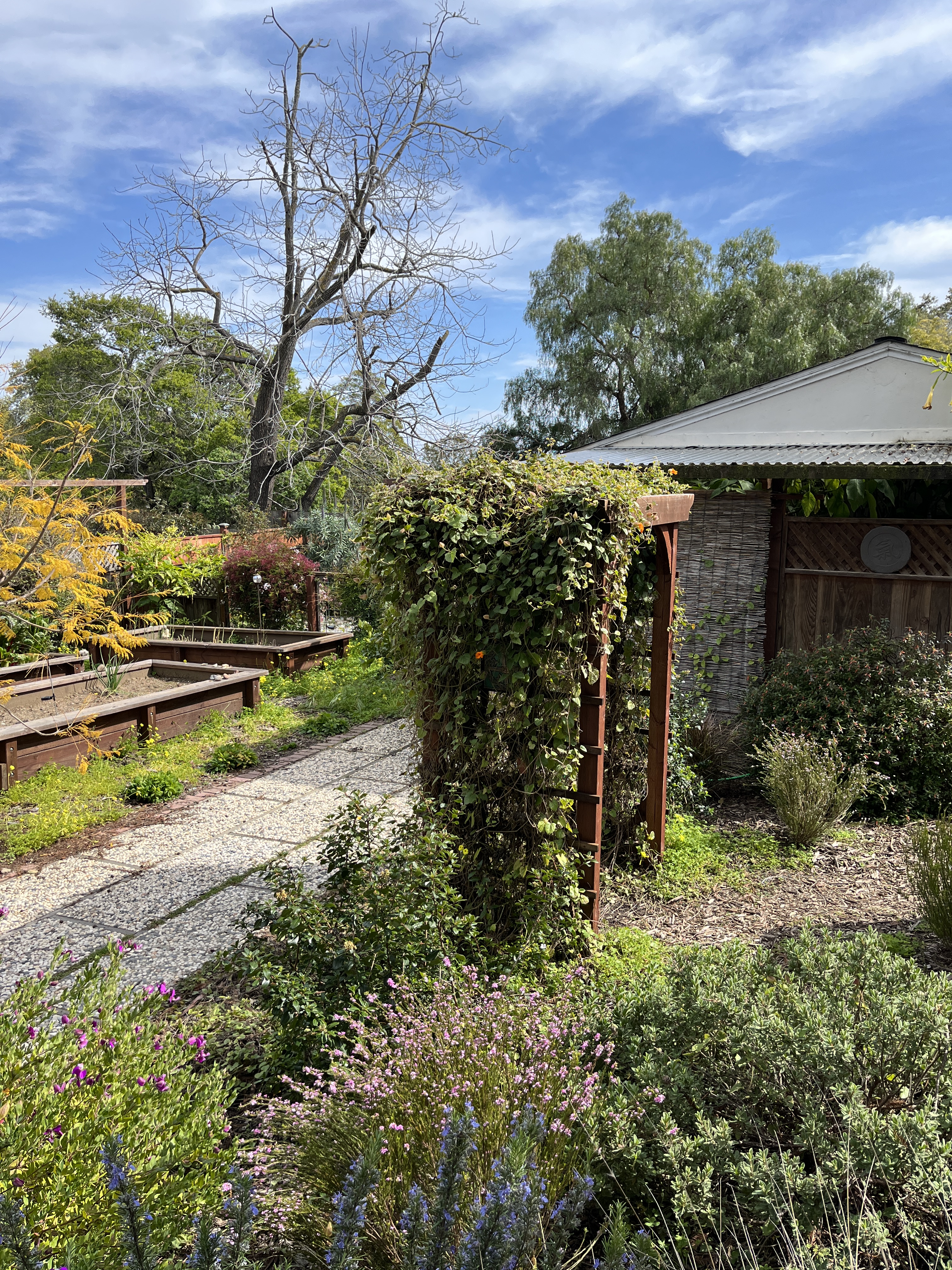
Clock vines cover the wooden arch my sweetheart built in our garden, and this March, on a sunny Saint Patrick’s Day following storms that flooded rivers and knocked down trees, a few orange blossoms peep bravely from the lush greenery. Back when this jungle was just two small starts from one-gallon pots, back in the early days of the pandemic, a friend sent me a green stone plaque with a golden Brigid’s cross to lift my spirits. We hung it on the arch, and at first, the plaque stood out in the wooden latticework, but within a year vines caressed the edges and leaves curled provocatively around its corners. Then leaf and vine went wild, and now the flamboyant growth almost hides the human-made artifact, but even if unseen, Brigid’s cross hangs there still.

Hallow this arch, ye Irish saints. Make it today a portal, more than a gateway from path to garden. Let it harbor the stone boat that will take me to my great-great-grandmother’s hearth, she who knew what it took to keep the fire stoked during a long winter and how to bake bread in a stone oven, who could milk a cow and churn butter.  She knew too the secrets of bog and well, flower and fern. Like her I want to practice lectio divina on what the cedar preaches to the sparrows and transcribe poems the sweet pea bush proclaims to the rock rose.

Come, let us walk through this Brigid-blest arch to the wedding of heaven and earth.

Written after listening to a passage from Dreamtime by John Moriarty

Look As Though with Your Arms Open

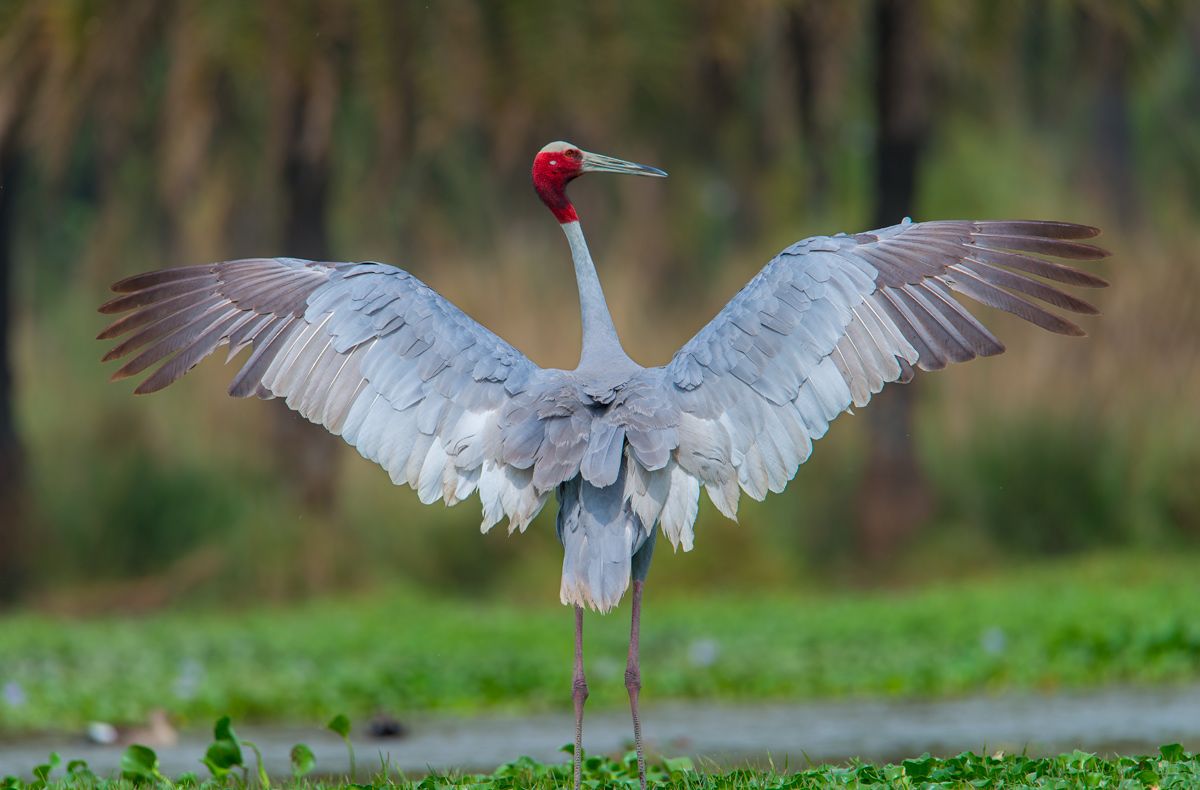
A sarus crane with its wings open

I sometimes wonder about Saint Paul’s admonition in his letter to the Thessalonians to pray without ceasing. Did he mean this literally? Surely not. Maybe he thought that by setting a ridiculously high standard, he was giving his readers a worthy if unattainable goal to aspire to, one that in real life only monastics can come close to. Or perhaps those early Christians who believed the end of the world was nigh could detach enough from the cares of daily life to devote every waking moment to prayer, but for me, caught up in all the demands of 21st-century life, it seems impossible. I feel impressed with myself when I find twenty minutes a day to meditate.

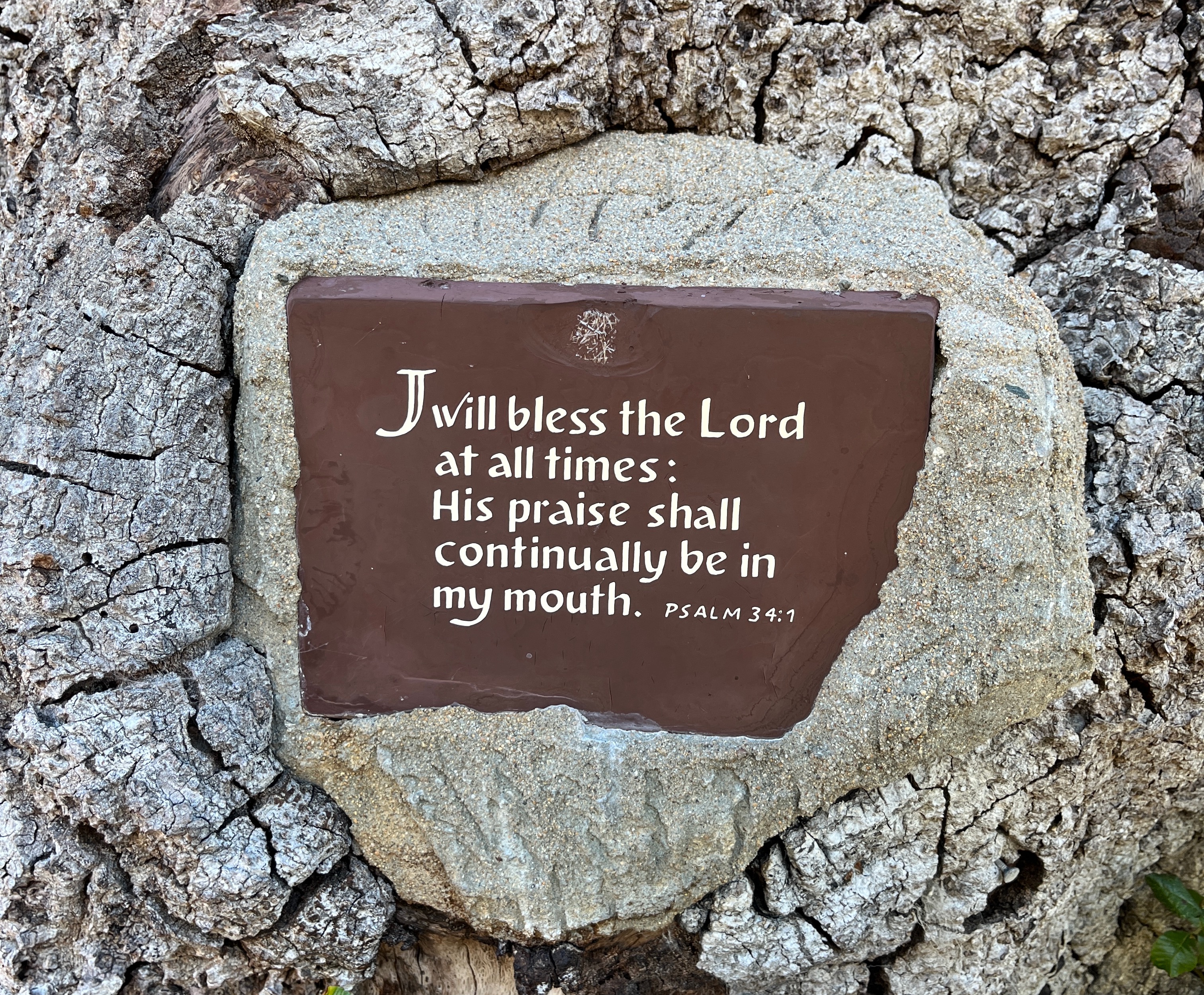
One foggy summer morning while on retreat at New Camaldoli in Big Sur, I took a walk as usual on the road that winds steeply down from the mountaintop monastery to Highway 1. This question of how to pray unceasingly lingered in the back of my mind as the mist and morning sun teased and flirted with each other up and down the mountainside. Along the way is a magnificent oak tree bearing a plaque with a verse from Psalm 34:

Here I was startled into stopping. A spider web hung between the oak’s branches, each silk festoon precisely limned with delicate droplets, and sunbeams pouring through the canopy above lit them up like jewels in a tapestry. This same glow highlighted each mote of mist wafting around the tree, and I stood transfixed, watching until the fog completely dissipated. With my mind empty of thought and my heart full of gratitude, an answer to my question came to me.

In her poem “Where Does the Temple Begin, Where Does It End?” Mary Oliver explains how she reaches for things, like the idea of God, that cannot be reached:

I look; morning to night I am never done with looking.

Looking I mean not just standing around, but standing around

   As though with your arms open.

In my moment of wordless wonder that foggy summer morning, it was as if I were embracing the scene with open arms, and I realized suddenly, this was prayer. My attention was my praise.

I wish I could say that ever since I’ve been a model of mindfulness, but no, I’m still working on this not-so-secret trick to blessing the Lord at all times, still aspiring to pay constant attention. As always, I’m grateful for Mary Oliver as a role model. Like her, may I morning to night never be done with looking as though with my arms wide open.

The Traveling Reader

One of my favorite things to do when I’m traveling is to find the coffeeshop with the best mocha in town. (Luckily, this is a priority and pleasure that my sweetheart shares.) Even if the mocha disappoints, absorbing the atmosphere of the coffeeshop, observing and eavesdropping on the people who hang out there gives us an entrée to the locale that sightseeing doesn’t. Likewise, the local independent bookstore.

Word After Word Books in Truckee, CA

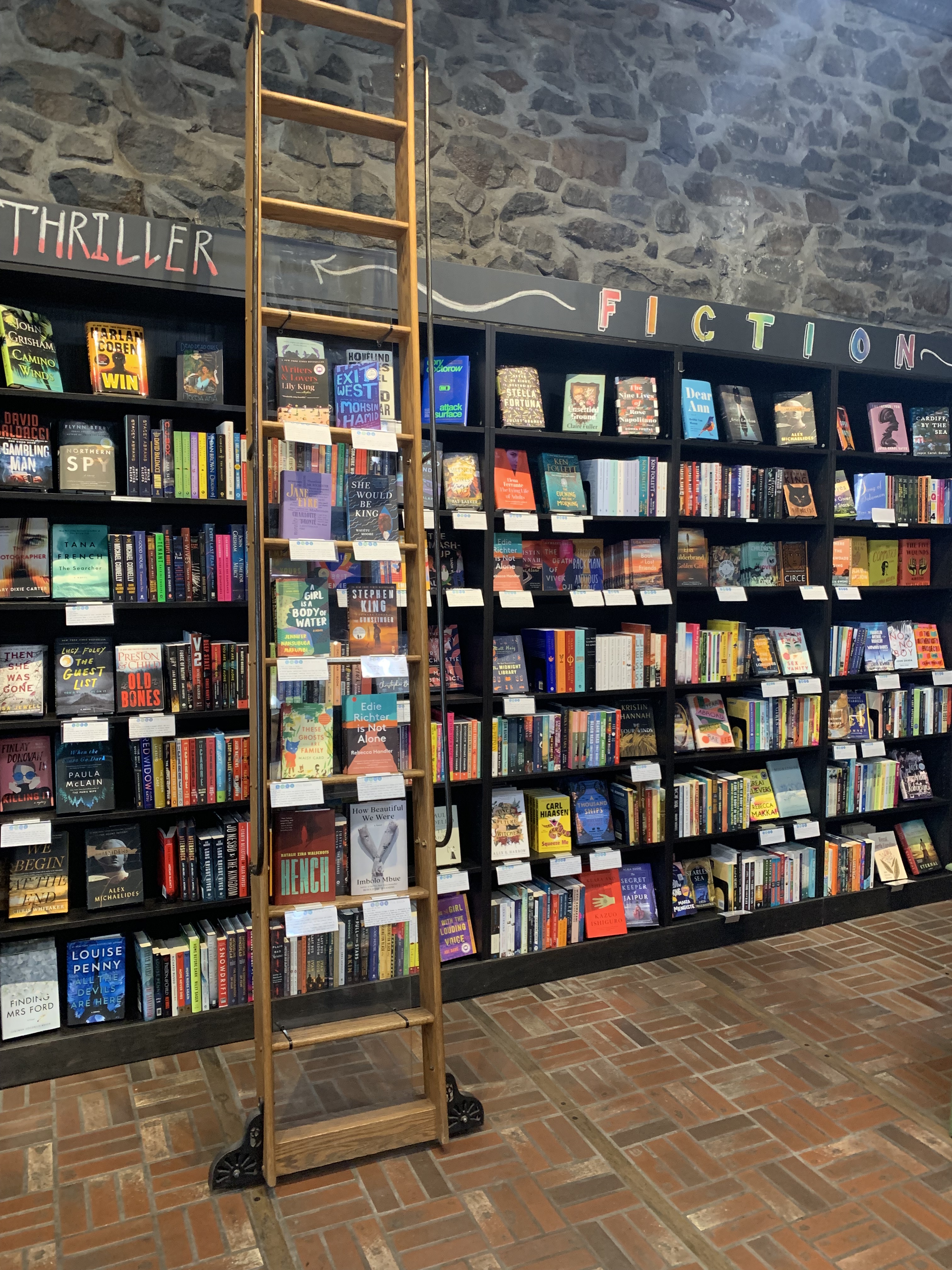
Yes, I am now going to out myself as a promiscuous book nerd. At home, browsing in Bookshop Santa Cruz or Bad Animal Books is a regular delight, but visiting a bookstore in another town offers a particular thrill. The differences are so alluring! Is the shop light and bright? Or dark, wood-paneled, and cozy? Busy or quiet? Are the shelves so high they need library ladders? Do books stacked up on the floor create a kind of biblio-maze? If I’m lucky, I discover a book I’ve never heard of but now can’t live without, or I come across a used copy in fine condition of a title I’ve been dreaming of. Even if this serendipity doesn’t occur, the quirky displays and books of local interest make browsing fun. Whether I’m roaming for hours in the multistory mecca of Powell’s Books in Portland, Oregon or breezing through Bookworks just down the road in Pacific Grove, the atmosphere of the local independent bookstore introduces me in a unique way to the place that hosts it.

And if, like Powell’s and Bookworks, it features an espresso bar where I can sip a mocha while reading a new book? Heaven!

Bart’s Books in Ojai, CA

Come Back to Still Water

The time has come

To stop allowing the clutter

To clutter my mind

Like dirty snow,

Shove it off and find

Clear time, clear water.

                        May Sarton in “New Year’s Resolve”

Let me start with a confession: the only way I can sustain a tech sabbath is by cheating.

I should have admitted this up front because I felt terrible when one reader told me she liked the idea of abstaining from technology once a week, but she didn’t want to give up Facetime with her grandchildren. Another admitted she likes to watch television in the evening so she couldn’t do it either. Here’s the deal. When I decided to do a tech sabbath for Lent this year, I allowed myself certain exceptions: I can text, make phone calls, watch TV after dinner with my sweetheart, and attend Zoom meetings with my spiritual community. The practice was meant to disengage me from devices, not from my loved ones. “The solution to mankind’s most vexing problems will not be found in renouncing technical civilization,” Rabbi Heschel writes in The Sabbath, “but in attaining some degree of independence from it.”

If you decide to try a tech sabbath, I invite you make Jesus your role model. One sabbath day He was walking through cornfields with His disciples, who began to pick ears of corn as they went. Judgmental Pharisees jumped all over them for doing forbidden work on the holy day, but Jesus admonished, “The sabbath was made for man, not man for the sabbath” (Mark 2:27). In other words, don’t let rules get in the way of a meaningful practice.

Here are some ideas for designing your own tech sabbath:

  1. Choose your time. I pick a 24-hour period over the weekend, usually 4 pm Saturday to 4 pm Sunday, but it’s okay to do a shorter amount of time, a different day of the week, or to change the day depending on your schedule.
  2. Set parameters that work for you. Facetime with your loved ones if you want to. Photograph flowers with your phone. You are constructing your own unique palace in time, and it can be as simple or elaborate as you like. What soulful activities are calling you?
  3. Create a ritual.  At the beginning of my sabbath I light a candle and make a tiny ceremony of shutting down my laptop and iPad. Then I put them away in the closet. For the next 24 hours I mostly leave my phone out of sight in another room. When the sabbath is over, I again light a candle and smudge all my devices before I turn them back on, praying to use them mindfully in the week to come.
  4. Reflect afterwards. As you dwell in your palace over the next weeks and months, think about what was hard, what surprised you, what you loved. You will notice the aspects of technology that are most deleterious for you — these are the ones to strictly avoid during your sabbath – but you will also become aware of surprising gifts. Keep and celebrate them!