Amidst last winter’s lettuce, henbit deadnettle flaunts
small purple velvet blooms
unfurling
yet smaller
speckled petals.
The beauty of what I call weeds
startles me into gratitude,
and I sing praise to the earth.
I name you, holy uninvited —
nettle and broom,
thistle and vinca –
and bow before your tenacious ingenuity,
for you glorify the Author of Life
in your surging greenness.
When I looked out my window,
you showed me your loveliness;
your bounty reminded me of our plenty.
All the fearful would surely recognize abundance
if they could see the unstoppable
flowering in this garden,
if they only breathed in the aromas of
sweet peas and angel’s trumpet.
Though the Beloved dwells in paradise,
She cares for the nettle and broom
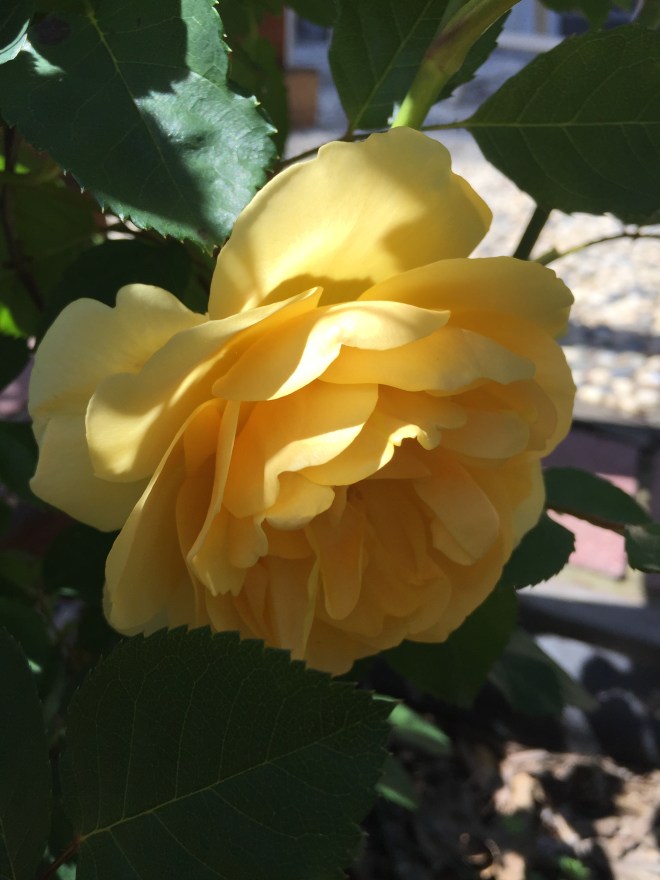
as much as the jasmine and rose;
both planted and uninvited
are holy in Her sight.
Though I fear scarcity,
you fill this plot with hurtling life.
You offer enough to feed us all,
more than enough to save us.
The earth will make good her purpose for me;
O Sacred Earth, your greening endures forever;
do not abandon the fruits of your flowering.
Audio version of The Holy Uninvited
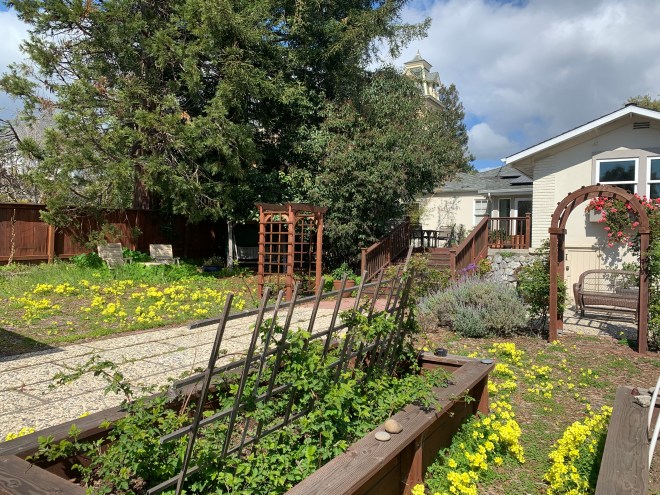
A note about this poem: In January I started reading the book Understorey: A Year Among Weeds by Anna Chapman Parker, and it inspired me to pay attention to the weeds in my garden. Although oxalis dominates with its neon yellow flowers, when I set out to explore the verdant greenery currently burgeoning in my backyard, I identified twenty other species— many of which I would have considered wildflowers if I’d discovered them on a hike. And now that I know another name for oxalis is Bermuda buttercup, how could I not want to make peace with it?
Then last week, for an online retreat through Abbey of the Arts called Earth Psalter: Writing Psalms for the Anthropocene, I was asked to “bring an object from an outdoor place that is meaningful to your experience of your ecosystem.” Minutes before I was supposed to show up on Zoom, I raced out to the still dewy backyard with my clippers and put together a small bouquet of weeds/wildflowers that inspired this song of praise and gratitude.
Thank you to Abbey of the Arts for this new approach to the psalms!
Sometimes, early in the morning when I’m making mochas for Tom and me, I wonder how much longer I’ll be able to scoop coffee beans from Brazil into my countertop grinder or cocoa from Cameroon into my frothing oat milk. As temperatures rise, will the high plateaus and island jungles where coffee plants thrive become too hot, too dry? How much longer will the world’s infrastructure sustain shipping these commodities across oceans and continents, and does it even make economic sense to do so? It’s not hard to imagine a time when my seemingly small daily luxury becomes an unaffordable delicacy.
Whether or not I can continue drinking mochas is obviously the least of our worries when it comes to climate change. Having breathed the smoke of wildfires and wiped the ashes from my car windows, I know this. But wondering about the future of coffee and cacao, these beans that bring delight to people all over the world, reminds me how precarious life as we know it is. It reminds me to take pleasure in the work of my hands while I can, brewing, frothing, blending, to appreciate the faraway farmers and their trees, and to savor each sip. In the quiet of early morning, these questions remind me to whisper, “Thank you for these precious ingredients. Thank you for the miracle of this moment.”
Although I was brought up to say grace before dinner, “Bless us, O Lord, and these Thy gifts,” I lost the habit when I went away to college, and I’m trying to get it back now, to say a silent thank you before a meal or even repeat aloud that old Catholic blessing from my childhood. Occasional nudges help. At potluck lunches with my writing group my friend who was a preschool teacher leads us in a song she used to teach her young students, and at family dinners my mom reminds us to bow our heads and offer thanks. A couple I know holds hands for a moment of silence before picking up their forks, a moment of private connection and blessing.
Too often, though, I forget. Even now, when gratitude has become a highly recommended mindfulness practice, I too often take it all for granted – the farmers, truck drivers, and cooks responsible for getting the food I eat from the earth to my plate and (not to get carried away, but let’s be blunt) the plants and animals that died so I might go on living. It’s an extraordinary transaction when you think about it.
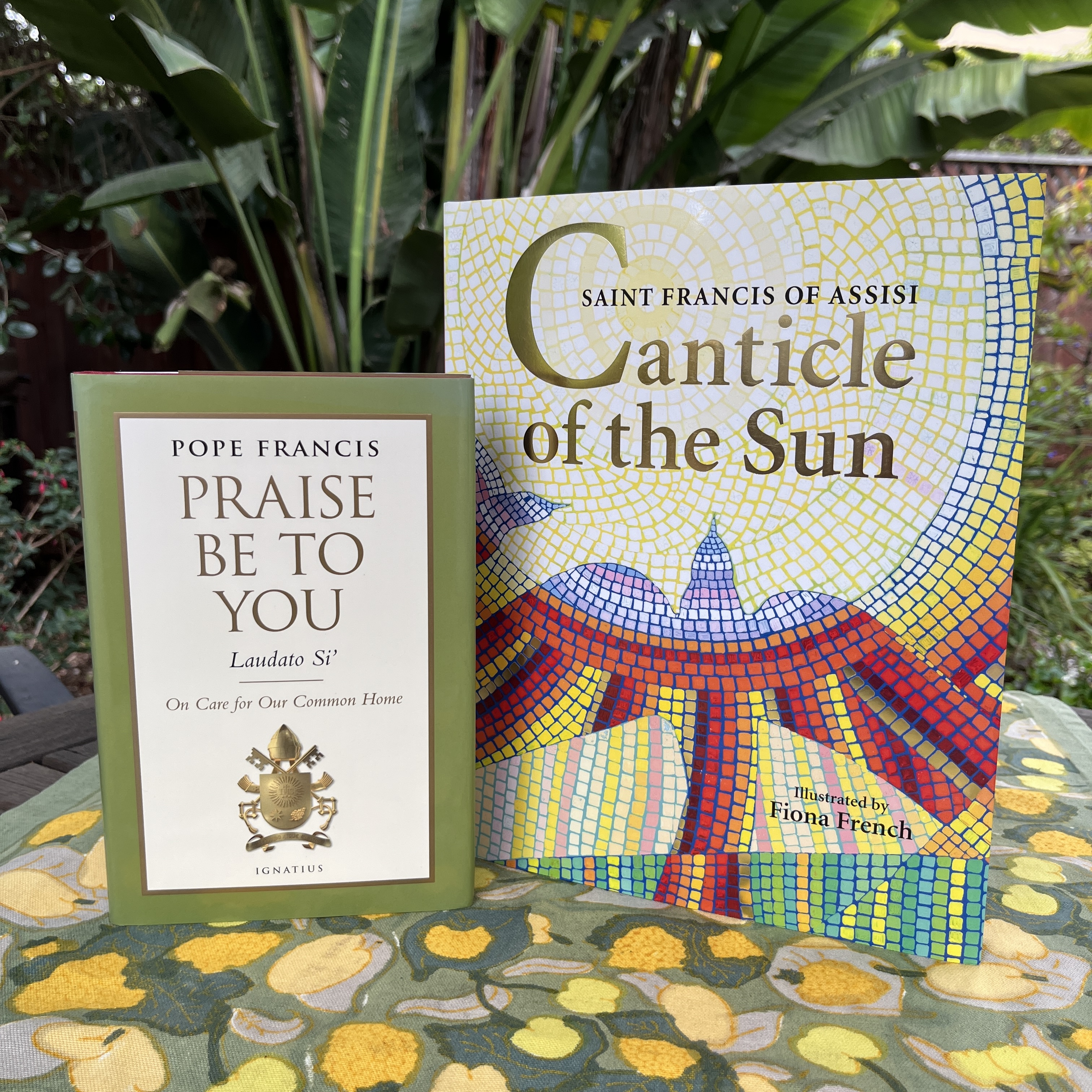
What can I do about climate change beyond what I’m already trying with my solar panels and plug-in hybrid car? It’s too much to hope that my personal gratitude could inspire global stewardship, which is what we need, but Pope Francis’ title for his 2015 encyclical on the environment, Laudato Si, inspires me. Echoing Saint Francis of Assisi’s “Canticle of the Sun,” laudato si means “praise be to you” in medieval Italian, and the encyclical opens with the saint’s reminder “that our common home is like a sister with whom we share our life and a beautiful mother who opens her arms to embrace us.” Even if you don’t believe in God, acknowledging Mother Earth with a moment of appreciation before consuming her fruits seems only polite.
Will gratitude save the world? Not by itself, nor does it absolve me of responsibility, but I like to think that the butterfly effect gives wings to any personal energy of appreciation. Maybe thank you can turn into action: signing a petition, planting a tree, using less and sharing more. For me, saying grace is one way to resist the apathy and despair that big problems paralyze me with, and one act of resistance can lead to another, awareness the beginning of caring for our common home.
Given the mocha in my cup and the food on my table, it’s the least I can do.
It’s true, the hush that has fallen over the world is wrought of disease and splintered by anguish, but with no competition from cars, the neighborhood birds take extravagant delight in their morning song, and the oxalis says thank you to the sun and late winter rain with a carpet of yellow blossoms.
Already vowed through their roots to this particular plot of earth, the roses and the redwood continue to shelter in place with equanimity, while the squirrels show flagrant disregard for the order of the public health officer, racing along their private highline. Of this I am privileged to know a small segment – the piece that runs along our roof, five feet through the air to the tips of the privet, through its leafy thicket, and onto a limb of the redwood, possibly with a quick game of chase around its trunk, before disappearing into the neighbor’s backyard.
Our neighborhood acrobat
Each day the persimmon tree takes another step in her dance with the seasons. The crone who presided through the winter now wreathes her bare limbs with maiden leaves and drinks her fill of sunlight and the mycorrhizal ambrosia twined round her roots, already dreaming of the bees she will seduce – but not yet of the luscious fruit she will birth. Those golden orbs, a feast for humans, squirrels, and crows, are seasons away in an uncertain future.
In this time of plague we knit our hearts to the sorrow and fear that now unite us, but let us join too with the humble psalm of the oxalis. Thank you for the rain, the sun, this greening. Thank you.



 The Kingdom of Enough
