The Holy Uninvited

After Psalm 138

henbit dead nettle

The weeds that withered and the ones I pulled

are risen in a flurry of flowers —

floods of maroon-tipped white ramping-fumitory

and meadows full of sunbright yellow oxalis.

Amidst last winter’s lettuce, henbit deadnettle flaunts

small purple velvet blooms

unfurling

yet smaller

speckled petals.

The beauty of what I call weeds

startles me into gratitude,

and I sing praise to the earth.

I name you, holy uninvited —

nettle and broom,

thistle and vinca –

and bow before your tenacious ingenuity,

for you glorify the Author of Life

in your surging greenness.

When I looked out my window, 

you showed me your loveliness;

your bounty reminded me of our plenty.

All the fearful would surely recognize abundance

if they could see the unstoppable

flowering in this garden,

if they only breathed in the aromas of 

sweet peas and angel’s trumpet.

Though the Beloved dwells in paradise,

She cares for the nettle and broom

as much as the jasmine and rose;

both planted and uninvited

are holy in Her sight.

Though I fear scarcity,

you fill this plot with hurtling life.

You offer enough to feed us all,

more than enough to save us. 

The earth will make good her purpose for me;

O Sacred Earth, your greening endures forever;

do not abandon the fruits of your flowering.


Audio version of The Holy Uninvited

a bouquet of weeds/wildflowers next to the book Psalms for Praying

A note about this poem: In January I started reading the book Understorey: A Year Among Weeds by Anna Chapman Parker, and it inspired me to pay attention to the weeds in my garden. Although oxalis dominates with its neon yellow flowers, when I set out to explore the verdant greenery currently burgeoning in my backyard, I identified twenty other species— many of which I would have considered wildflowers if I’d discovered them on a hike. And now that I know another name for oxalis is Bermuda buttercup, how could I not want to make peace with it?

Then last week, for an online retreat through Abbey of the Arts called Earth Psalter: Writing Psalms for the Anthropocene, I was asked to “bring an object from an outdoor place that is meaningful to your experience of your ecosystem.” Minutes before I was supposed to show up on Zoom, I raced out to the still dewy backyard with my clippers and put together a small bouquet of weeds/wildflowers that inspired this song of praise and gratitude.

Thank you to Abbey of the Arts for this new approach to the psalms!

The Beauty You Love

open notebook lying on a bench in dappled light

Dappled light on a blank page,

breeze sifting through pine boughs

faint as a whispered prayer

invite a spray of words

to fill these vacant lines —

an empty universe waiting

for stars and stones,

crustaceans and curlews,

waiting for the endless

bubbling up to begin

yet already longing

for a still point

within the hurtling.

When the Holy One commands us,

love me with your whole heart,

and with your whole being,

and with your whole strength,

doesn’t She also mean,

adore the pine tree whose shade you sit in

and worship the sun that feeds you?

Praise them worthily, She says,

and you will praise me.

Title from a poem by Rumi

Your Mirror

oak tree

From root to crown

the oak tree gives You glory,

in sap and leaf

on branches

where squirrels play

and the bluejay squawks his morning joy.

Light becomes food,

water and sugar into sap

and acorns,

autumn harvest for

crow, squirrel, human,

and a gift to the earth

that may sprout a seedling in the spring.


A pair of doves build a nest here,

make love, make eggs,

chicks hatch,

fledglings test their wings,

and seedlings grow

in the shade of their mother.


Leaf,

star,

woman

looking out her window at dawn –

what do we have in common?

When the body becomes Your mirror,

leaves drink light,

and I make it into a song of praise.


(Title from a poem by Mahadeviyakka)

As Best I Can I Write Your Praises Down

Written December 29, 2015 at New Camaldoli Hermitage

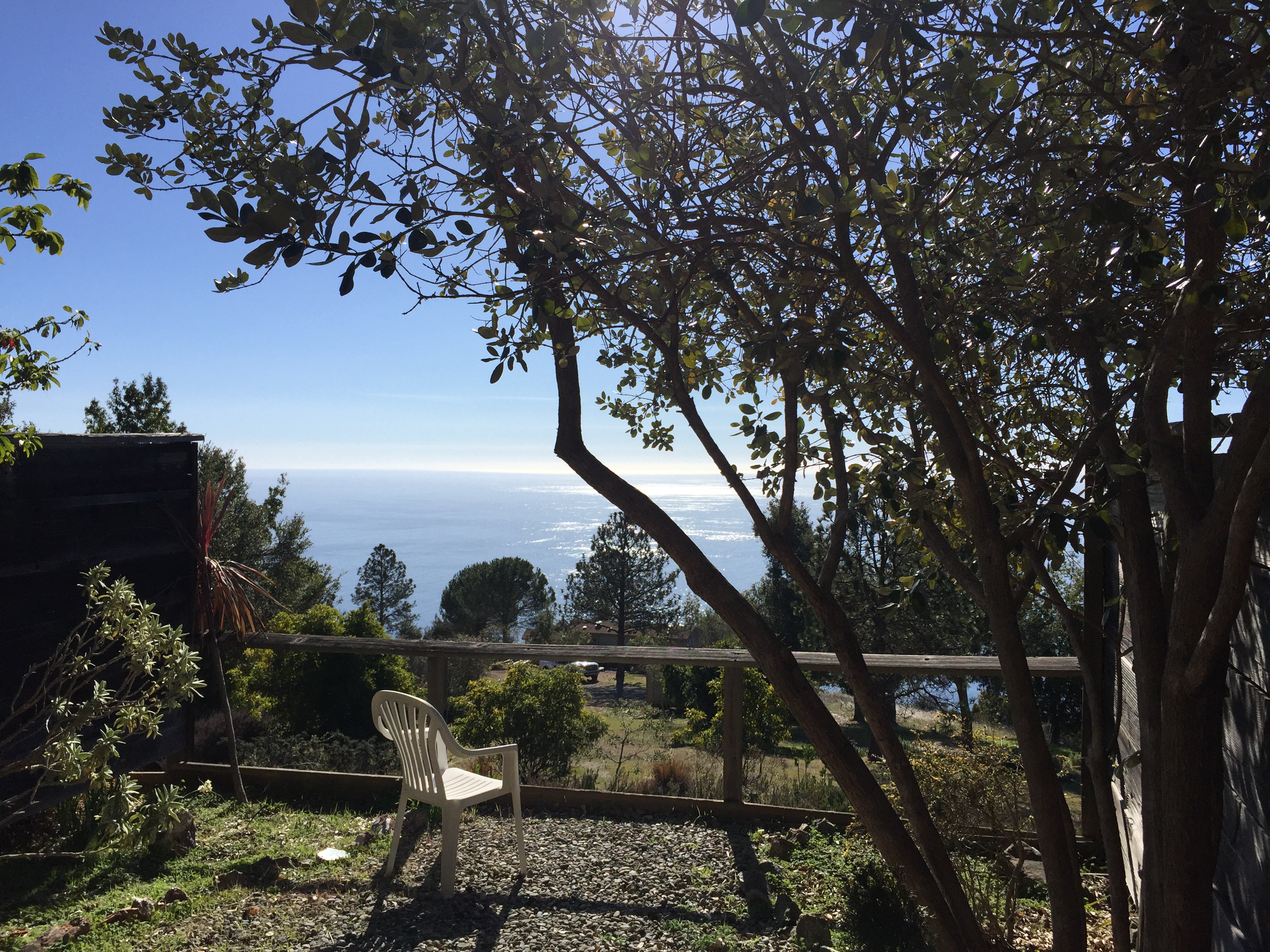
New Camaldoli view

It would be foolish to think that my humble Papermate pencil and I could offer up praise sufficient for the gifts of this morning. The waning gibbous moon was sailing into the west when I left my room, while in the east Venus glowed in the rose-rimmed azure sky that had already yielded her stars to the approaching dawn. In the chapel white-robed monks chanted ancient psalms by candlelight and sang of the old prophecy: “For us a child is born.” In the sanctuary bread was broken; together we ate, men and women, monastics vowed to this place and guests visiting from the world, together we drank from the common cup.

“Open your hearts to God’s tenderness,” the presider encouraged us in his thick Italian accent, he who dreamt during the night that an angel told him, “Keep it simple, Angelo. The more you speak, the less people hear.”

Let the garden outside my window speak, the bluejays and the little brown rabbit who come to breakfast here, the early narcissus blooming in the corner. The book of nature falls open to this spot on a mountain by the sea. Here in the day’s first rays of light is the praise sufficient to the gifts of this morning.

Title from a poem by 16th-century Italian poet Vittoria Colonna.