Can I let what isn’t essential or nourishing wither?
A portable convent —
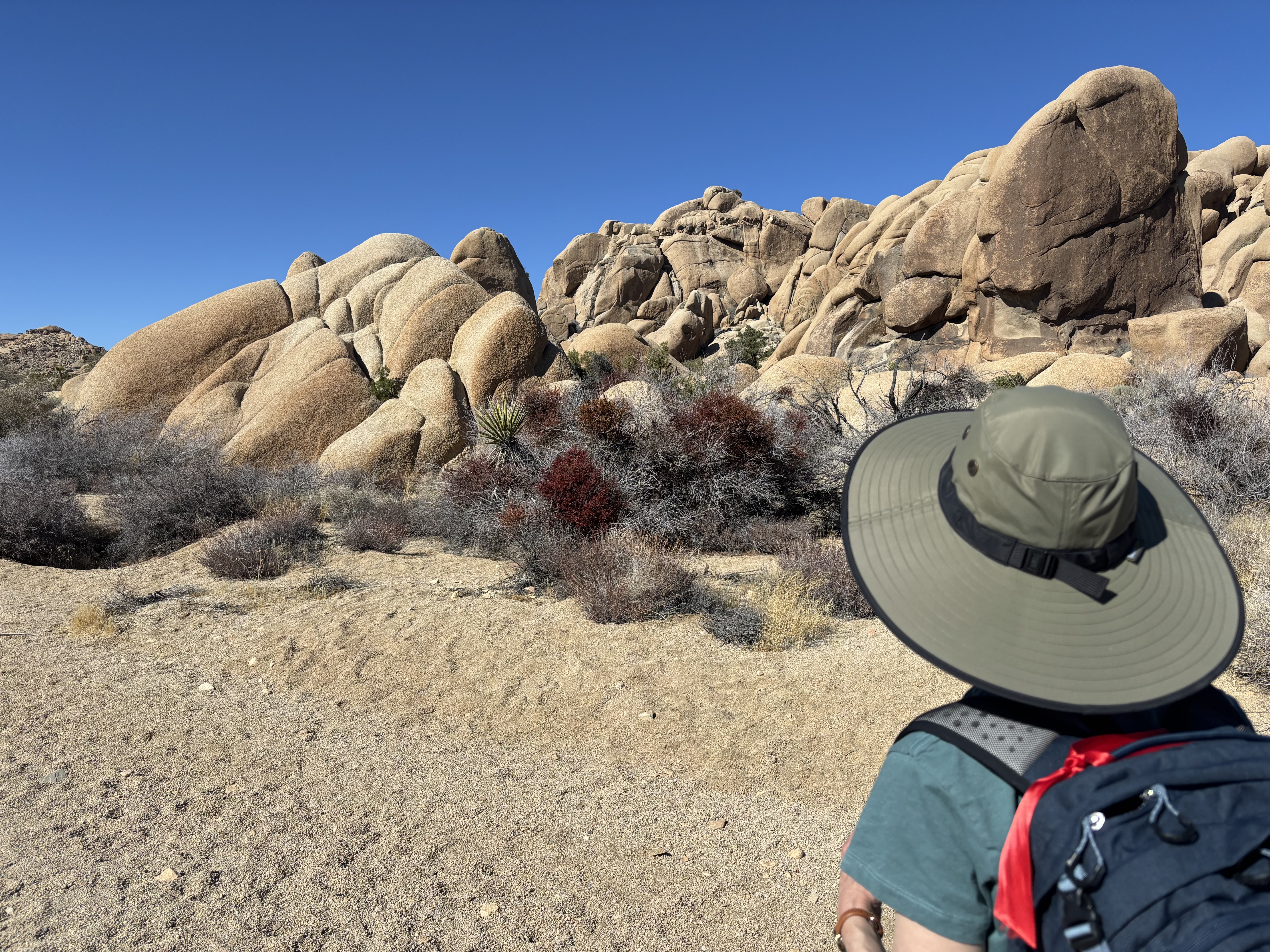
What if I were as quiet and spacious as the desert?
Let what isn’t essential or nourishing wither,
Honor the gifts.
What if I were as quiet and spacious as the desert?
In the desert what seems empty is actually full.
Honor the gifts.
Ask for one wild word.
This poem was inspired by an invitation to create a pantoum in the book Give Me a Word: The Promise of an Ancient Practice to Guide Your Year by Christine Valters Paintner. She explains that the “French pantoum is a poetic form with a circular structure that comes from the ordered repetition of lines.” Following her suggestion, I re-read my journal for the month of December and copied down lines that shimmered for me, then put them together according to her template, so this is in a way a found poem — like a mandala made of driftwood collected on the beach.
Amidst last winter’s lettuce, henbit deadnettle flaunts
small purple velvet blooms
unfurling
yet smaller
speckled petals.
The beauty of what I call weeds
startles me into gratitude,
and I sing praise to the earth.
I name you, holy uninvited —
nettle and broom,
thistle and vinca –
and bow before your tenacious ingenuity,
for you glorify the Author of Life
in your surging greenness.
When I looked out my window,
you showed me your loveliness;
your bounty reminded me of our plenty.
All the fearful would surely recognize abundance
if they could see the unstoppable
flowering in this garden,
if they only breathed in the aromas of
sweet peas and angel’s trumpet.
Though the Beloved dwells in paradise,
She cares for the nettle and broom
as much as the jasmine and rose;
both planted and uninvited
are holy in Her sight.
Though I fear scarcity,
you fill this plot with hurtling life.
You offer enough to feed us all,
more than enough to save us.
The earth will make good her purpose for me;
O Sacred Earth, your greening endures forever;
do not abandon the fruits of your flowering.
Audio version of The Holy Uninvited
A note about this poem: In January I started reading the book Understorey: A Year Among Weeds by Anna Chapman Parker, and it inspired me to pay attention to the weeds in my garden. Although oxalis dominates with its neon yellow flowers, when I set out to explore the verdant greenery currently burgeoning in my backyard, I identified twenty other species— many of which I would have considered wildflowers if I’d discovered them on a hike. And now that I know another name for oxalis is Bermuda buttercup, how could I not want to make peace with it?
Then last week, for an online retreat through Abbey of the Arts called Earth Psalter: Writing Psalms for the Anthropocene, I was asked to “bring an object from an outdoor place that is meaningful to your experience of your ecosystem.” Minutes before I was supposed to show up on Zoom, I raced out to the still dewy backyard with my clippers and put together a small bouquet of weeds/wildflowers that inspired this song of praise and gratitude.
Thank you to Abbey of the Arts for this new approach to the psalms!
I wrote this poem last October in a writing salon with Patrice Vecchione at Gabriella Café in Santa Cruz, where her art show Imagination Migration was on display, a flock of hand-colored birds carrying flowers, maps and pencils in their beaks. I didn’t guess then how much I would need imagination to move into my next chapter, our next chapter.
For me, today is a day for remembering the courage and wisdom of Martin Luther King, Jr. “We must forever conduct our struggle on the high plane of dignity and discipline,” he admonished in his “I Have a Dream” speech. “We must not allow our creative protests to degenerate into physical violence.” Although he was talking specifically about civil rights for black Americans, his sagacity transcends the March on Washington in 1963. Dignity, discipline, and nonviolence are his guidelines, and just as important, “We cannot walk alone.”
Today I’m also remembering the four freedoms Franklin Delano Roosevelt articulated in his State of the Union address on January 6, 1941: the freedom of speech, the freedom of worship, the freedom from want, and the freedom from fear. Today I call on our collective creative energy to imagine a future of freedom and justice for all.
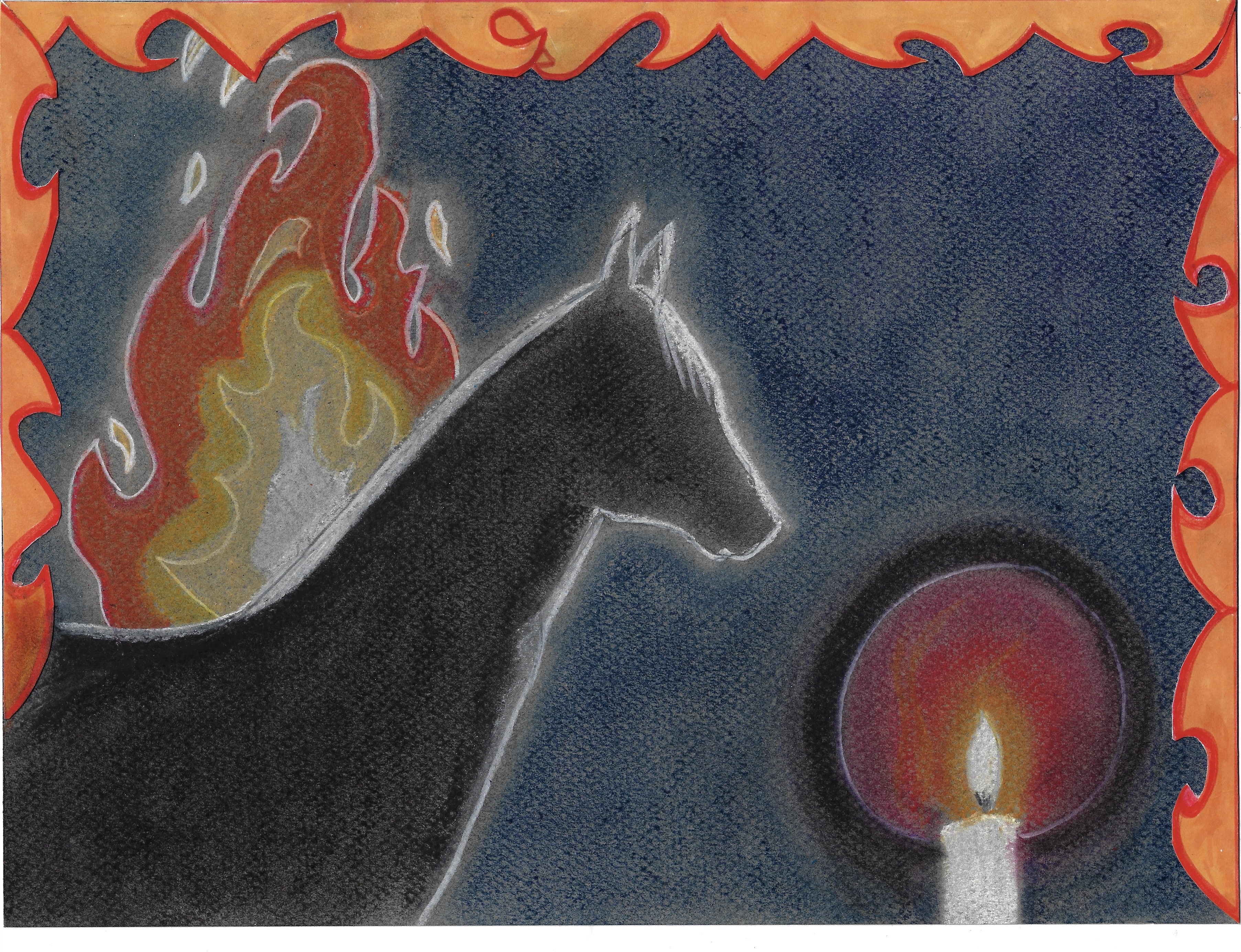
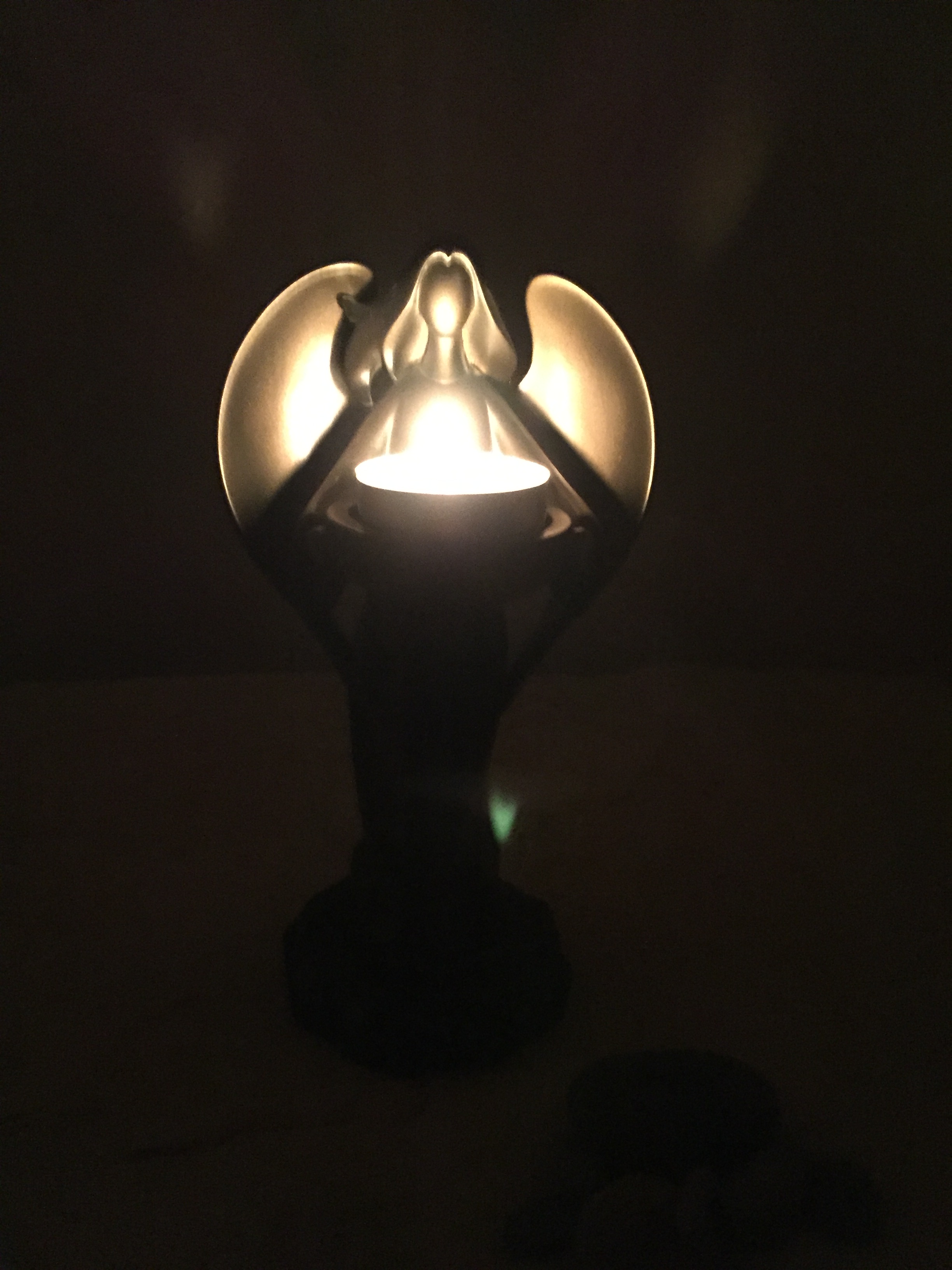
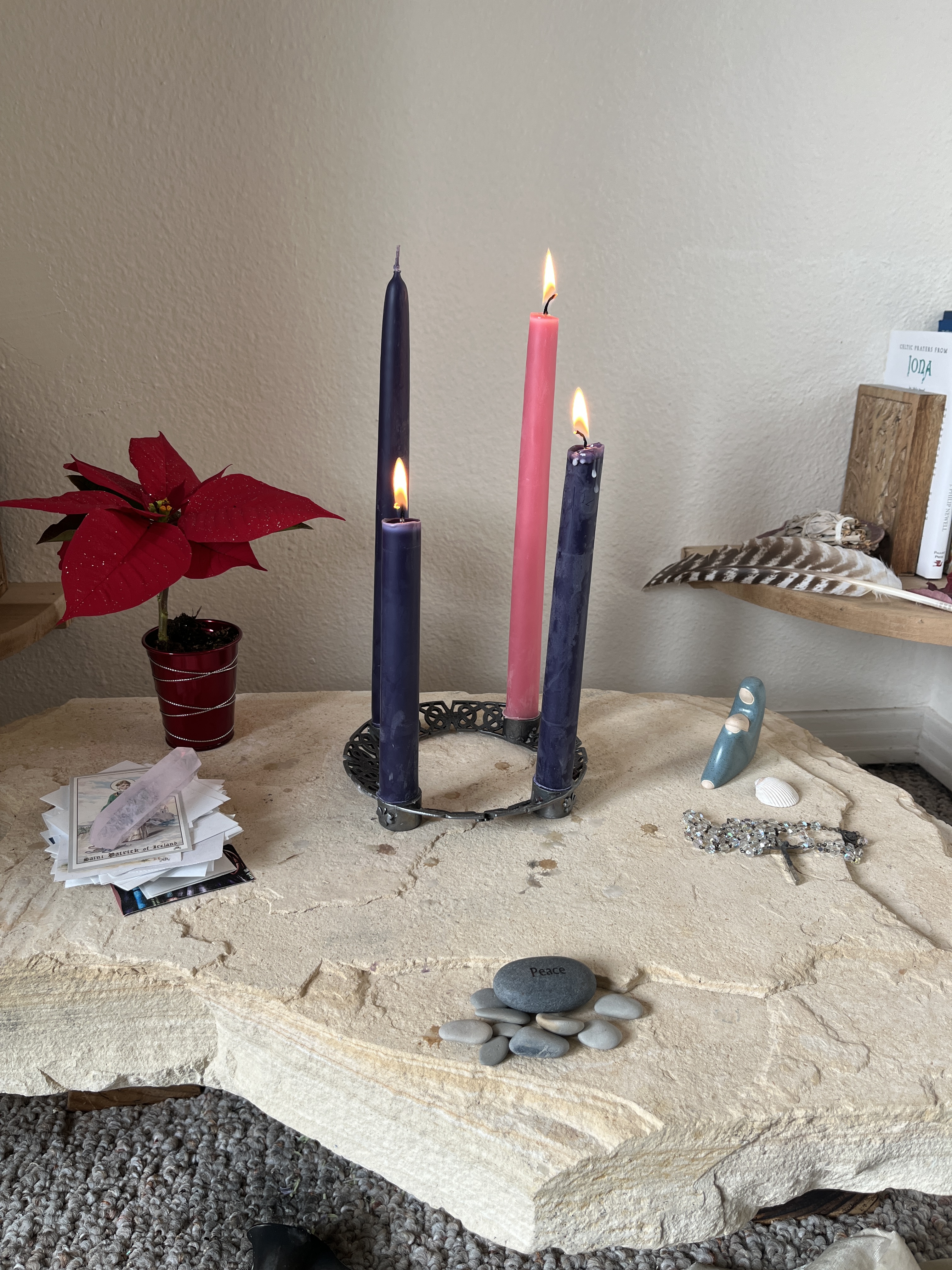
Dear reader, at this time of winter darkness, about to light the fourth candle on the Advent wreath, watching for the return of light heralded by the winter solstice, and admittedly overwhelmed by the consumerist frenzy that hijacks Christmas in our culture, I wish you sanctuary — your own pool of light in the labyrinth — and a pathway to hope in the New Year.


 The Kingdom of Enough