Dynamic Balance

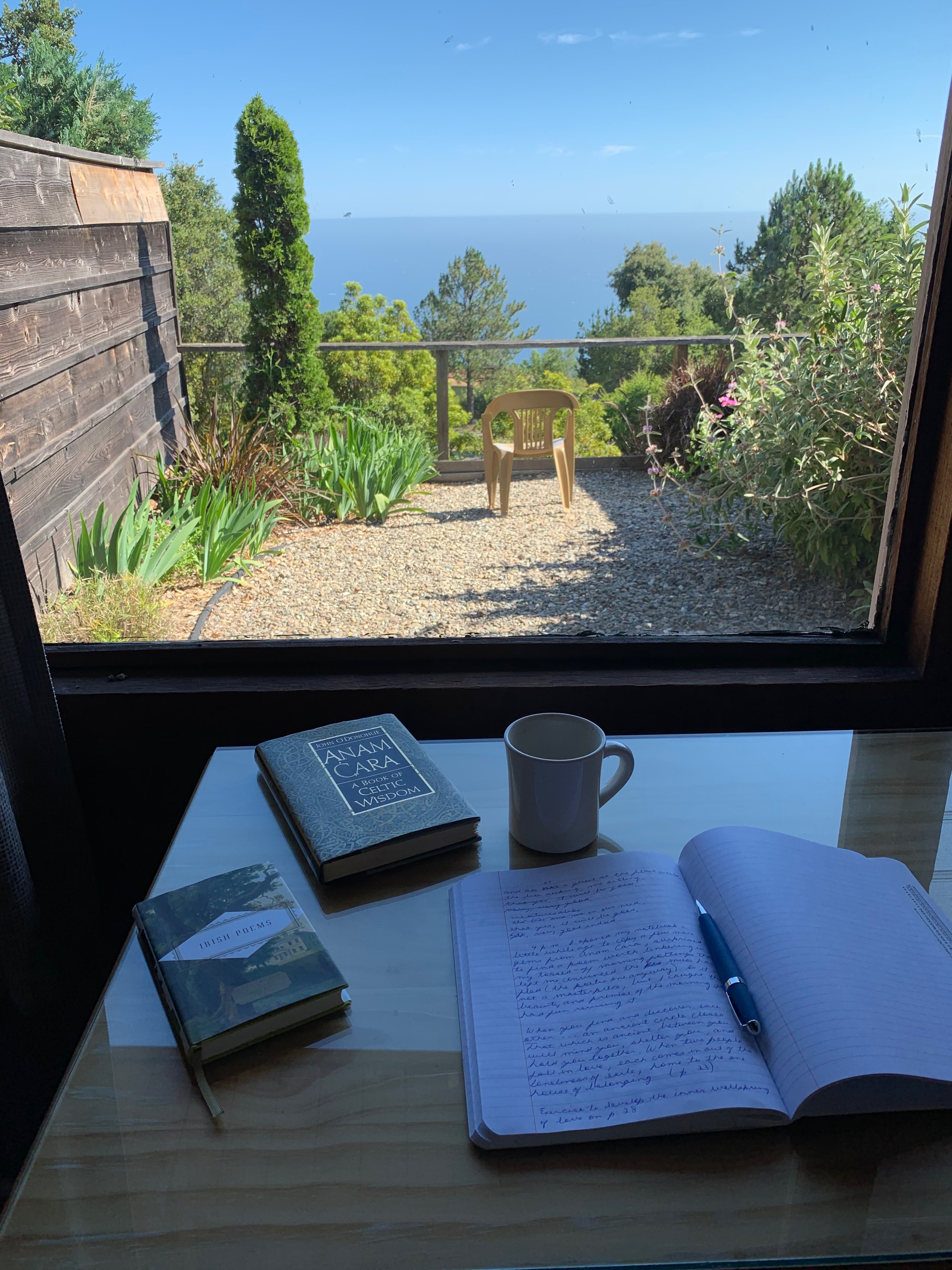
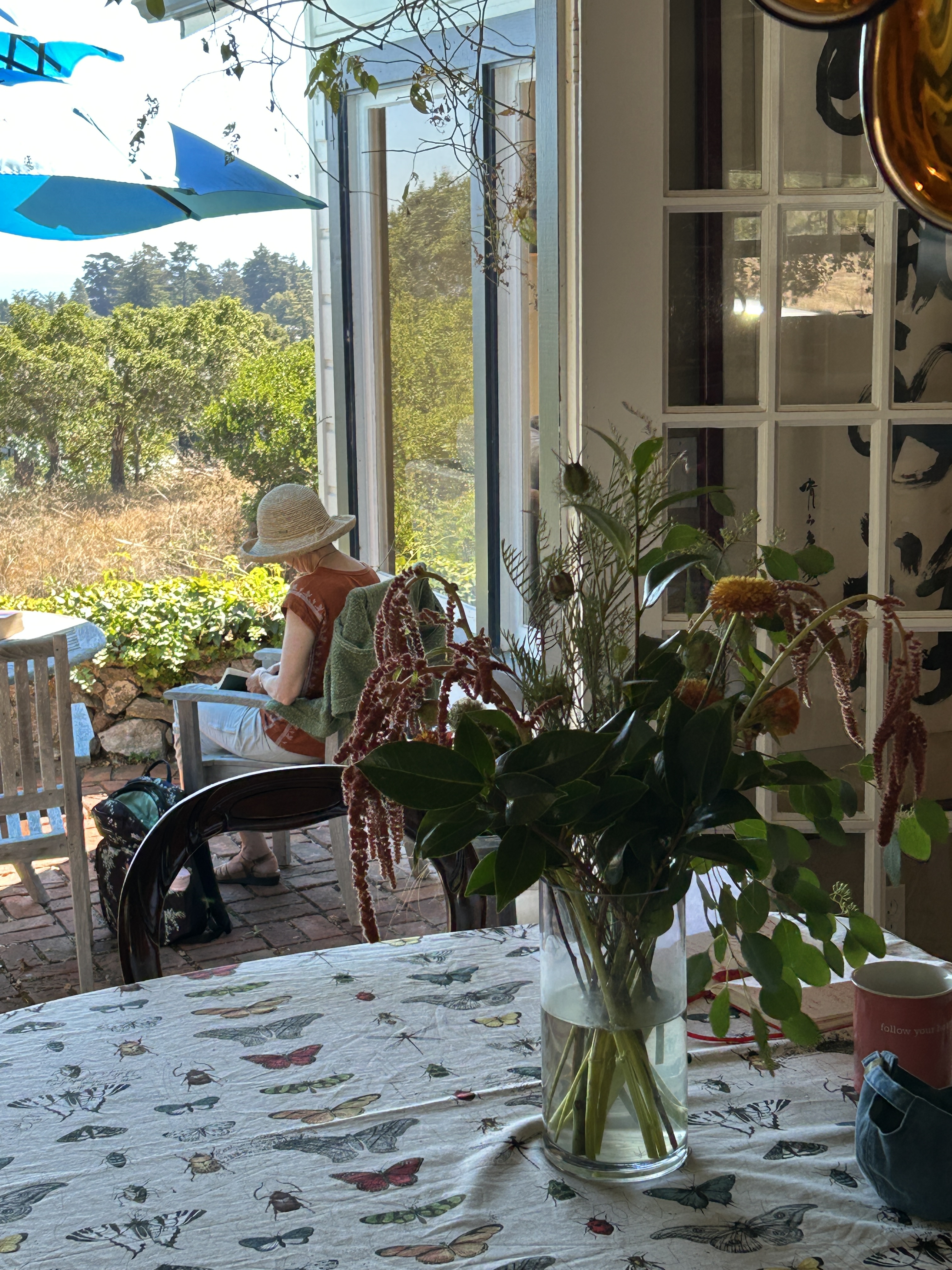
Author writing in a notebook in a garden

Ever since I was young, I have craved solitude. Growing up with two sisters and sharing a room with one of them, I inevitably tired of company and play and sought my own space, hiding out under the pine tree in our backyard or even in my bedroom closet. Eventually I learned the language to know myself: I’m an introvert. Not a misanthrope, which is how I might sometimes appear in a culture that prizes the extrovert ideal, but a person whose energy is drained by being with people even as much as I love them. Before the pandemic I sometimes thought of myself as a misplaced hermit; then, in those long months of isolation, I discovered how much I also thrive in community: the laughter and sharing at a convivial dinner party, gathering with my writing group, book club, sangha, church. Post-pandemic reunions brought profound joy, and I discovered a new pleasure: meeting a colleague or friend in person whom I’d only known on Zoom.

When I think about the job I retired from and what I miss most, two things come to mind. First, my colleagues and our students, the sense that we were engaged in a shared endeavor, that together we belonged to and made up Foothill College. But second is the pleasure of my usually solitary walk across campus early in the morning, letting myself into the silent, dimly lit library, the sanctuary of my office. At home, one of my favorite rituals with Tom is sharing our mochas in the morning — we sit together in a loveseat looking out at the garden, and he reads the news while I journal. Surprisingly, though, when he’s out of town and I have only my notebook for company, my morning mocha tastes just as good.

Solitude and community. Am I drawn by contradictory energies? Maybe not. One of my favorite places in the world is New Camaldoli Hermitage, a Benedictine community on a remote Big Sur mountaintop overlooking the wild Pacific. It pulls me with its incomparable beauty, a room of my own (or cell, to use the monastic term), and the chance to detach from the internet-connected world. Also vital, though, is the opportunity to pray with the monks each day and the presence of my fellow retreatants. Even though we don’t talk to each other, it’s comforting to know that they are there. We hold the kitchen door open for each other, smile at one another on the way to chapel. The monks manage to offer us gracious hospitality and the gift of silence. It’s built into their way of life, and they demonstrate that the question isn’t solitude or community; it’s both/and. Rather than contradicting, solitude and community feed each other.

If I were willing to stretch a metaphor, I’d say it’s like making a good mocha, perfectly blending the ingredients of coffee, chocolate, and milk, but you can’t really have solitude and community at the same time, can’t mix them together so they become an entirely new way of being. No, to balance these energies requires a daily braiding of together and alone. It’s more like my Breacadh an Lae pendant from Ireland. Breacadh an Lae means the “first light of the dawn” in Irish, and maybe the three-dimensional double spiral inspired by the winter solstice at Newgrange starts to capture the delicate, dynamic balance I’m talking about. It’s an art I’ve yet to master, but I keep practicing because at the end when I’ve drunk the last drop of this lifetime, I want to look back and say, wow, that was really good.

Spiral pendant

How Dry January Prepared Me for Lent

Roses in a vase, heart-shaped box, and book A Different Kind of Fast

In a collision of the secular and spiritual, Valentine’s Day happened to fall on Ash Wednesday this year, two days I treasure in seeming conflict. While a bouquet of red roses and pussy willows graced our dining table, a cross of ashes was traced on my forehead; in deference to the call to fast the heart-shaped box of chocolates remained unopened.

Lent calls Christians to pray, give alms, and fast. I’m good with the first two but struggle with fasting. Life brings enough loss and deprivation. Why add to it? Each year I wonder how I will answer the ubiquitous question, What are you giving up for Lent? In childhood it was usually candy or ice cream; as an adult I graduated to alcohol and chocolate and recently started using the season as a way to try new habits like using less plastic and being vegan before six. Whatever personal practice one chooses for Lent, on Ash Wednesday and Good Friday Catholics are supposed to eat less, specifically only one full meal and two smaller meals. Compared to Jews who eat and drink nothing at all on Yom Kippur or Muslims who refrain from food and drink from dawn to dusk for the entire month of Ramadan, this Catholic fast is not a big ask, but for a privileged American grazer like me it’s surprisingly hard. My relationship with fasting is complicated by my teenage experience of anorexia, two years of starving myself into a 93-pound scarecrow followed by a long recovery. I was saved by my caring family, a helpful therapist, and the slow gift of grace, but almost fifty years later the sensation of hunger takes me back to that fraught and troubled time. I tell myself that in those days I fasted enough for a lifetime of Lents.

And yet this venerable tradition attracts me. A religious act practiced in so many different faith traditions must have something going for it. What drew Jesus at the age of thirty to retreat to the desert and fast for forty days and forty nights? All scripture tells us is that he was led by the Spirit. I like to think of his time there as a kind of vision quest. His cousin John had just baptized the young carpenter in the River Jordan, and he would return from the desert to begin a public ministry, preaching and healing all over Galilee and Judea, burning with the good news that the Kingdom of God was at hand. 

Last month I tried Dry January for the first time. Although I usually only have one glass of wine or one cocktail with dinner, I drank pretty much every night, and I was curious what my body would feel like with no alcohol in my system for an extended period of time. The answer was “pretty good,” but nevertheless as dinner time approached each evening, I felt anxious and deprived; after the meal I was glad I’d abstained except for knowing I’d have to go through the same sacrifice again the next day. January felt like the longest month ever!

So what kept me going? First (and most crucial to start out with), accountability! I’d mentioned to my mom and sister that I was doing Dry January, and even if they didn’t care one way or another, I didn’t want to admit to them that I failed. Second, community. Dry January is a thing. My sister was also abstaining and cheered me on; my sweetheart committed to “Damp January,” so most nights he wasn’t drinking either. Articles and podcasts offered support, and when I was with friends, Dry January was the only explanation necessary for declining a drink. Third, I approached the experience with a spirit of curiosity. How would it feel? What would I learn about myself? What surprised me most were all my reasons for drinking. It was a reward for working hard, consolation for the blues, relief from anxiety, a celebration of romance. In fact, I only cheated one time — when I arrived home from a four-day retreat to find Ben Webster love songs playing on the stereo and Tom cooking my favorite dinner. How could I resist indulging in a glass of wine with him?

The thing is alcohol was only a temporary balm for depression or anxiety, and likewise my sense of deprivation each evening was also temporary. I liked the new feeling of clarity and energy after dinner. Although I obviously wasn’t getting drunk on one drink a night, even slight inebriation is different from sobriety, and ultimately the freshness of 100% sobriety is probably what helped me stick with my commitment. Now that the longest month ever has come to an end, I am drinking again, but it’s no longer the default.

So what am I giving up for Lent this year? Inspired by Christine Valters Paintner, the online abbess at Abbey of the Arts, I’m trying A Different Kind of Fast. In this beautiful book, she suggests a different practice for each week of Lent, a pattern or way of thinking to give up and a corresponding new pattern to embrace, for example, fast from multitasking and inattention and embrace full presence to the moment. The intention is to feed our true hungers, which are obviously not for chocolate or alcohol (as much as I’m enjoying a mocha as I write this!) but for something deeper and lasting.

Each of us has unique desires, but I suspect we all share a common yearning for connection and a sense of purpose. In short, as trite as it might sound, we hunger for love. I imagine that for Jesus, fasting in the desert was a radical act of purification that not only opened the ears of his heart to the voice of the Divine but actually fired him with the energy of Divine Love. Maybe starting Lent on Valentine’s Day was not such a crazy collision after all.

I Will Always Remember

man holding a mug of tea

A drizzly morning thirty years ago.

I rush along a path of dripping oaks

from coffeehouse to early morning class.

Across the quad (it seems so far away)

a man much older than I  rakes wet leaves.

My coffee steams as I stop now to sip

and in the distance see a girl approach

the gardener, holding out a cup of tea.

He shakes his head, polite but firm, no thanks.

The mist and space between us cloak the two,

a snow globe or a silent movie scene.

Again the girl entreats and lifts the cup.

It’s almost eight, I may be late for class,

but I remain. How will this story go?

At last the man accepts the cup, he nods,

she smiles, nothing left for them to say.

Who gave a gift to whom that winter day?

Let My Soul Sing

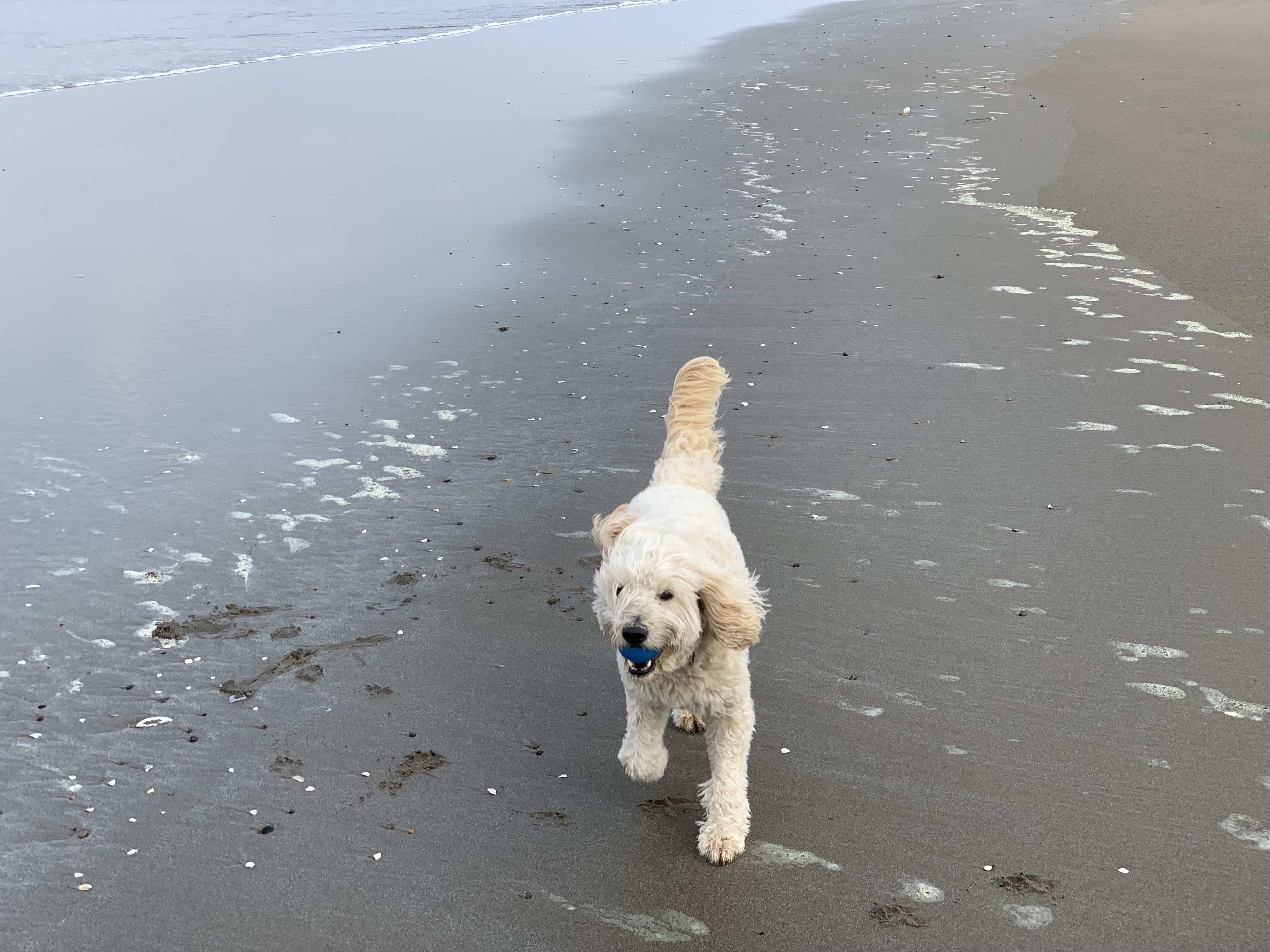
dog playing on the beach

I light a candle at dawn and invite

my soul to sing with the angels –

which means that I sit my body down

and repeat a mantra in my head to hush

the buzz of plans, desires, and worries.

The soul knows the secret

riffs and melodies

you forgot when you were born

and delights in her play among them

as a dog racing across the sand

to the scent of the sea delights

endlessly in the game of fetch.

The master-tossed ball

arcs across the sky

in a marriage of mass and motion,

and the dog chases and fetches,

chases and fetches.

So, I release my soul

to play on the beach

and beg the Holy One,

open my ears to hear the verses

You are singing to me.

Open my lips to join the chorus.

Why Poetry?

author sitting in the garden writing in a notebok

When children go hungry and migrants have no refuge, when flooding kills thousands in Libya while smoke from Canadian wildfires makes it hard for people in Florida to breathe, when one friend is diagnosed with Parkinson’s and another with cancer, what entitles me to sit in my garden and write a poem? Why make art of any kind when the world is falling apart?

The refugee crisis and world hunger and climate change sometimes paralyze me. What can one ordinary person do after installing solar panels and donating to the food bank? I bake banana bread, read Keats’ “Ode to Autumn,” and drink coffee with my girlfriends— anything to drown out the creeping dread I’m often not even consciously aware of. It eventually finds me in my dreams though: the bus to nowhere, the oncoming wave the size of a mountain, no place to hide from whatever sinister figure is stalking me that night.

When it’s impossible to forget and hard to hope, what can one ordinary person do? 

Be curious.

Pay attention.

Resist numbness.

Writing a poem helps me do all three. Close observation and a spirit of exploration are solar power for art-making, and on the occasions when they float me into the zone where I lose all sense of time and place, when it’s just my pen and notebook and me, I get fired up with the exhilaration of the creative process as well as pride in making something. “Do poems make a difference?” poet Jane Hirshfield was asked after a reading at Bookshop Santa Cruz recently. The woman who wrote a book about how great poems transform the world answered, “Any action is an escape from paralysis.” Like signing a petition or composting my food scraps, writing a poem gives me a sense of agency. 

Books by Jane Hirshfield including Ten Windows: How Great Poems Transform the  World

But it’s not just about me. The poet lights a candle in the dark, both illumination and prayer. Whether I am reading a poem or writing one, it reminds me, in a world that wants saving, I am not alone. 

Sleepytime Tea

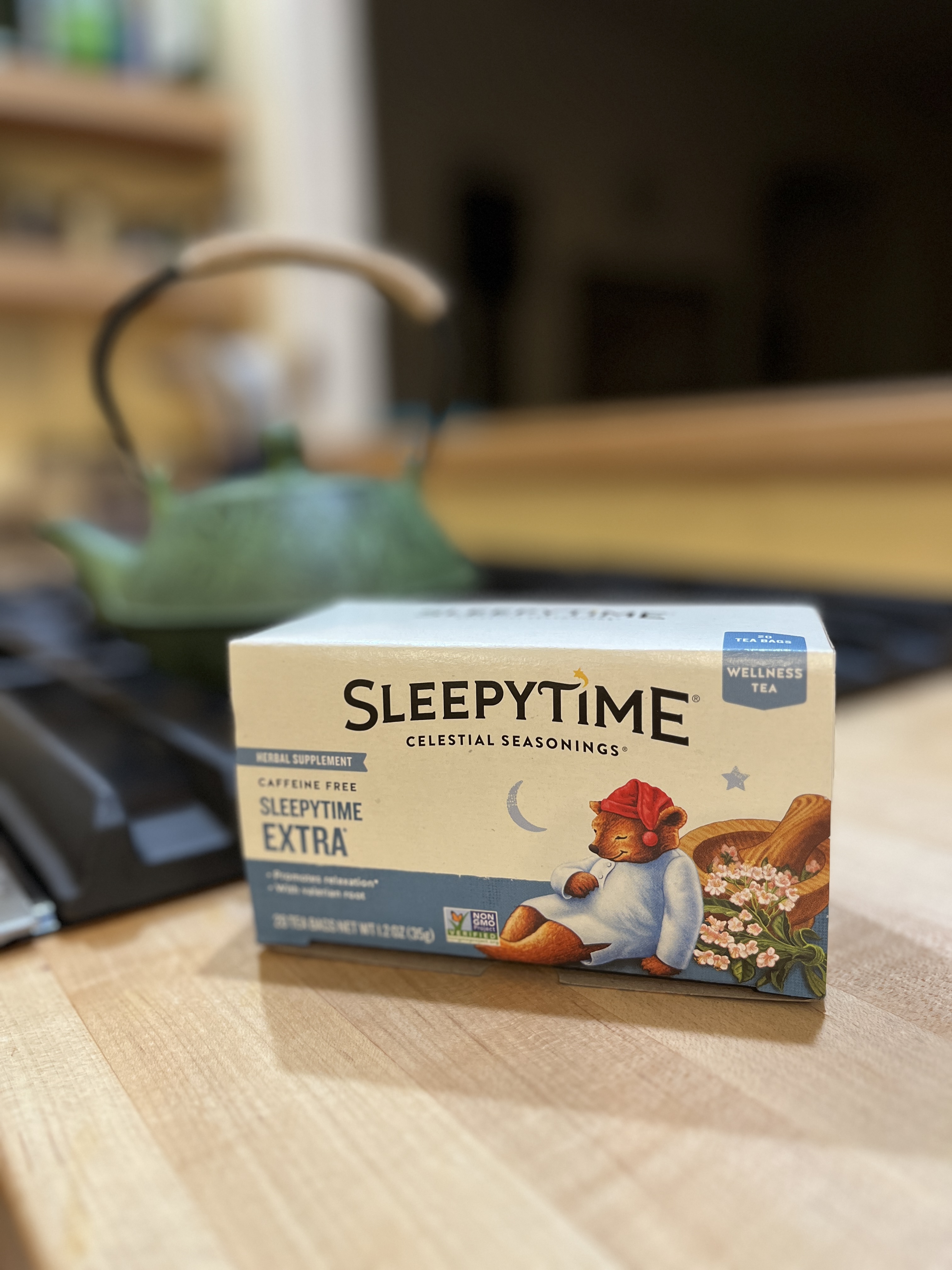
box of sleepytime tea next to a teapot on a stove

Seductive valerian and maidenly chamomile,

same herbs my great

great grandmother snipped and brewed,

summer garden wrapped in tissue,

insomniac’s aphrodisiac,

you promise I’ll wake in the morning

like wood sorrel opening

its neon yellow flowers

to the first

touch of the sun.

Come, blessed leaves,

soak in this boiling bath;

release slithers of scent

into steam if you must,

but save every single soporific cell

of sleep-inducing power

for me.

O liquid lullaby,

soother of worry

and dream enticer,

drift away with me

into a nightlong

river of rest.

Crossroads

Trail through the redwoods

The same breeze that sifts

through the redwood boughs 

and flutters the aspen leaves

also lifts a strand of hair from my face,

brushes my cheek and wrist.

What arboreal aerosols

has it lifted on its way

to trace on my skin?

We can’t see what happens underground,

roots and beetles, tinge and seep of water,

the faint white mycorrhizal threads

doing work beyond human imagining.

The power of the barely there

becomes visible in trunk and leaf,

honeysuckle nectar for the bumblebee.

Like the magnetic pulse that tells

wild geese where to fly,

something is calling you 

to the place

where your joy meets

your neighbor’s need. 

At this crossroads 

in the kingdom of enough,

listen to the gull’s cry,

the squawking of crows,

the warbling coo of mourning doves.

Here is the delight of the realm

singing your name.


With gratitude to Frederick Buechner, who wrote, “The place God calls you to is the place where your deep gladness and the world’s deep hunger meet.”

Hands on the Wheel

During the pandemic I was one of the privileged who could work from home, but for many years I commuted 38 miles from Santa Cruz to Foothill College in the heart of Silicon Valley, a drive that took me across the Santa Cruz Mountains on the toboggan run known as Highway 17. The summer before I started that job, I was helping another woman from Holy Cross Church organize the parish library when our pastor emeritus Father Mike Marini stopped in, and she told him that I would soon be working “over the hill.” With a sympathetic smile he gave me a blessing – which was comforting but at the same time added to my trepidation about the commute I was about to undertake. Although I’d always considered Catholics who kept a St. Christopher’s medal in their car sort of superstitious and old-fashioned, after Father Mike’s blessing I bought one for my Mazda Miata.

Generally, my drive over the hill and back took two hours of my day. During a storm, or if there was an accident or some other incident like a downed power line across the highway or an armed bank robber at large in the area, it could take twice as long. Near the summit of Highway 17, you lose the signal from whatever radio station you’re listening to when you started, and I soon set up my radio with separate pre-sets for the Santa Cruz side and the Silicon Valley side, so I could shift from KAZU to KQED or vice versa without missing a moment of my NPR show.

Except for the occasional jerk, commuters are competent and well mannered. I realized I’d truly become one of them when I drove Highway 17 on the weekend and noticed how erratic and disorganized it seemed. Drivers unaccustomed to the twists and poorly banked curves drove too slowly for my taste, while impatient or overly confident drivers went too fast, zigging and zagging in a way that put everyone in danger. This realization gave me a sense of camaraderie with my fellow commuters and filled me with a perverse pride.

Even in the best of situations, though, I often thought about how many assumptions any of us make when we set out in a car. For everything to go smoothly the way we expect to it – even on a short trip to the grocery store – every driver on the road must know the traffic laws and how to handle their cars; they must be sane and sober, attentive in a world filled with distractions. We hope no one has just had a fight or worse, is in the middle of one. It’s a lot to ask for. On the road, strangers isolated in our separate vehicles become a community utterly dependent on each other’s skill and good will.

I retired at the end of June, filled with profound gratitude for my career as a librarian — and for surviving my commute over the hill for more than twenty years. Thank you to St. Christopher and Father Mike, to my guardian angel, and to everyone who shared the road with me.

The Beauty You Love

open notebook lying on a bench in dappled light

Dappled light on a blank page,

breeze sifting through pine boughs

faint as a whispered prayer

invite a spray of words

to fill these vacant lines —

an empty universe waiting

for stars and stones,

crustaceans and curlews,

waiting for the endless

bubbling up to begin

yet already longing

for a still point

within the hurtling.

When the Holy One commands us,

love me with your whole heart,

and with your whole being,

and with your whole strength,

doesn’t She also mean,

adore the pine tree whose shade you sit in

and worship the sun that feeds you?

Praise them worthily, She says,

and you will praise me.

Title from a poem by Rumi