Praise the fog that bathes the earth,
balm for blistered land,
drink for redwoods,
relief for all who labor.
From a distance you look like eiderdown.
Close up you are but wisp and gauze,
yet you sweeten each breath
a sun-wearied creature draws.

Praise the fog that bathes the earth,
balm for blistered land,
drink for redwoods,
relief for all who labor.
From a distance you look like eiderdown.
Close up you are but wisp and gauze,
yet you sweeten each breath
a sun-wearied creature draws.
All we have is the heartbeat
played on the drum of this day.
We are the hands on the skin,
and this hollow space
that swells with the rising sun,
pregnant with possibility.
Here resonates the call
to work and play and —
thrumming within each beat —
the sun’s farewell,
the night into which we naked return.
(Title from a poem by Antal, an 8th-century poet and the only woman among the Twelve Alvars of South Indian Vishnu worship)

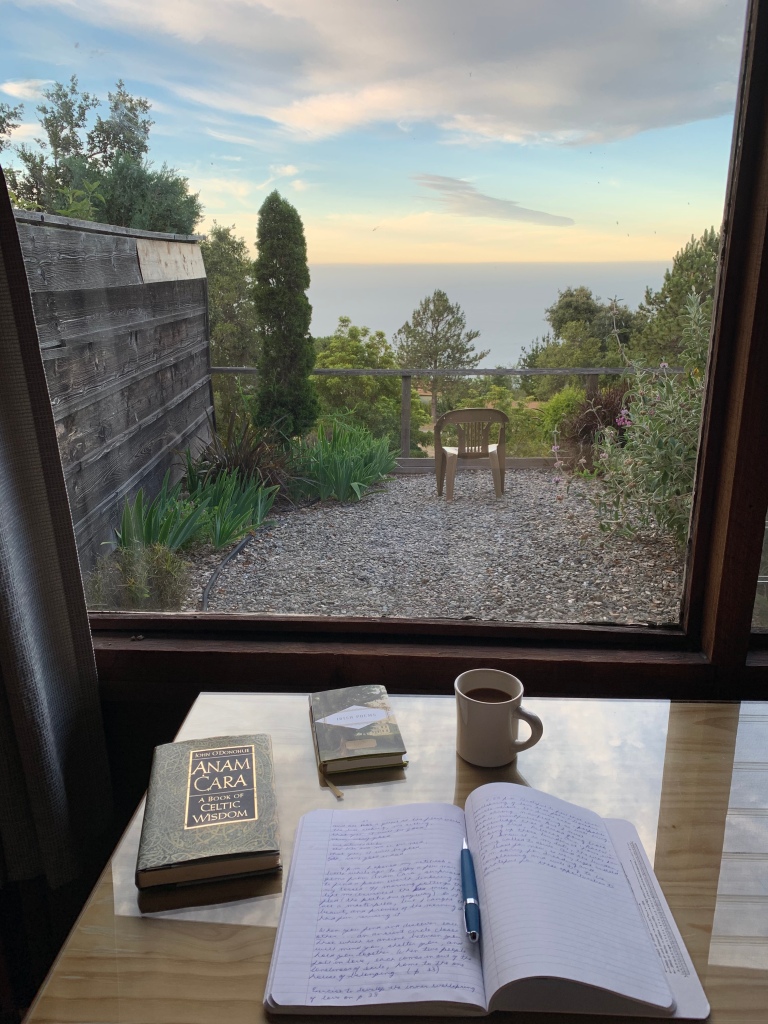
A bumblebee buzzes under the eave
as I take a sip from my coffee cup.
Though the sun has yet to peep
over the mountaintop,
light is seeping into the world.
All is still
except for the bee and me.
Jasmine and juniper,
salvia and fig tree,
even chipmunks and quail
wait in silence.
All is still
but the bee and me
and the rolling restless sea.
Soon, soon
stirrings will burst
into full-throated blessing,
the rest and prayer
of this longed-for retreat day,
but in this moment
we perch on the threshold
and see,
as guests at the feast would,
the bee and me seeking and sipping,
creatures alike in our need,
that this day will be good,
yes, very good indeed.


Long days and sultry nights
leach all reason
from my sleep-starved
flesh-enmeshed spirit
drunk on light and heat
then hungover
and with me a whole hemisphere
besotted and whirling.
Here at the edge of the sea
the fog will float in soon
and for all of us eventually
the soft quilt of darkness
but today and always
the cave of your heart
is lit with God-fire.
Feel it flow
through your veins.
Burn —
as only you know how.

Inspired by Linda Serrato’s poem “On This Morning” in Sacred Stone, Sacred Water: Women Writers & Artists Encounter Ireland.

“I can hardly wait to have a drink,” a fellow churchgoer told me with a grin as we walked out of the Easter Vigil a few years ago. Ah yes, the bliss when you finally partake of a delight you’ve abstained from for forty days. (Alcochol! Chocolate!) But that was the year I gave up social media, and I had no burning desire to rush home and check Facebook. In a relatively short time I’d gotten out of the habit of even thinking about it. Plastic, on the other hand, I have obsessed about like no other Lenten sacrifice of my life, yet there can be no blissful anticipation at returning to its use.
“How’s your plastic challenge going?” friends often asked me over the last six weeks, and the answer was always some variation of humbling – because I kept failing. Early on I imposed my own penance and promised to give 50¢ to charity for every piece of plastic I put in a trashcan and 25¢ for every piece I recycled. Any guesses on my donation to Save Our Shores? My transgressions add up to a shocking $25! The biggest culprits were trash bags, tamper-proof seals, and takeout containers. There’s not much I can do about those plastic seals, but I’m learning which restaurants use compostable containers and try to remember to take my own “doggie bag” with me when I go out for a meal. Despite my failure to completely eliminate single-use plastics, I have reduced, which means less garbage and fewer trash bags. If you’re contemplating reducing your plastic use, consider other side benefits. Eating less processed food is good for your body as well as the planet. By not shopping online, you will support local businesses and maybe even buy less stuff.
Which habits will stick now that Lent is over? To be honest, the ones that don’t require much of a sacrifice like using mesh produce bags and shopping bulk bins. Avoiding clamshell containers is much harder because I love fresh berries and those Trader Joe’s salads that are perfect to take for lunch at work, but I’m going to try. I’ll definitely keep relying on my Kleen Kanteen and Zojirushi coffee cup and plan to switch from liquid to bar soap, but I might not keep making my own yogurt. (At least yogurt tubs can be recycled though.)
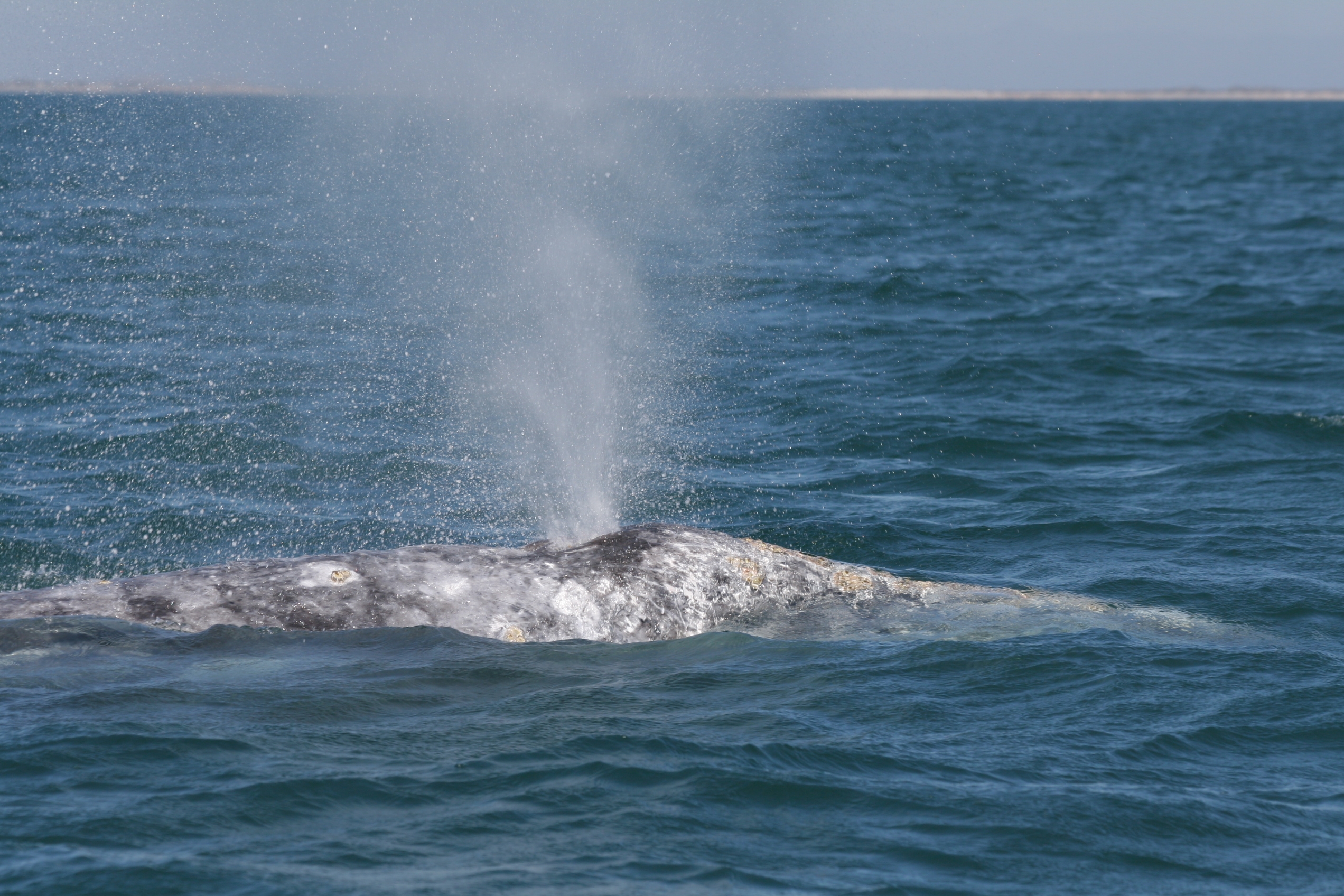
After forty days of considering environmental action as spiritual practice, I’m delighted that Easter and Earth Day almost coincide this year. At this double celebration of life and hope, I’d like to end with a poem in honor of the gray whale I wrote about last week.

Spring Migration
In the lagoon
I could hear my tribe breathing,
but in the billowing open sea
whale spray and ocean ferment
are all the same –
our spouts, her whitecaps.
We ride the tidal surges,
lost and found in her power
as we sing our way home.
When humans begin to play
in the workshop of the Mother,
we cheer at the fireworks
and admire our reflection
in the miracles we have wrought.
She welcomes her co-creators,
but how proud we are
to loosen the strings
and toddle away.
It’s easy then
to mistake a warning shot
for the starting gun
and take off in a carbon-fueled race to the stars.
Few notice when winter snows come late
and monarchs lose their way.
Hungry engines keep boring,
while tinkering fingers slide up the double helix.
What shape waits then in the milkweed seed,
and who will hear the cries
when caterpillars stop turning into butterflies?
Title from “What to Remember When Waking” by David Whyte
Written upon learning that monarch butterflies will likely be extinct in twenty years.
Image courtesy of Kenneth Dwain Harrelson
He could be Walt Whitman,
sitting here with a saw outside Bookshop Santa Cruz.
To the bashful but curious toddler in his father’s arms
he might look like a grandfather
the boy hasn’t met yet.
“How ‘bout I play you a song you know?”
Saw handle between his knees,
the old man bends the blade and guides a bow
across its flat edge.
Haunting tones float over us,
and the little boy recognizes the tune
at the same time I do.
“Twinkle, twinkle, little star …”
Played on a musical saw,
the humble notes are ethereal as starlight.
Does the old man know that
today is the Feast of Epiphany?
Or is he, like father and child,
an unwitting king,
the three magi
offering their gifts here on Pacific Avenue?

I’m thrilled to introduce the Kingdom of Enough’s first guest blogger: my friend Sarojani, a wise poet and member of the local Celtic band Innisfree.

There is a bend in the river.
Boat’s gotten too heavy.
Gotta keep what’s worth keeping.
Gotta let some things go.
I remember floating
weightless
only water and sky.
It was simple then.
I did not know
grief or climate change,
the ravages of war
or a young black man’s daily danger.
I believed in presidents being
good and smart leaders
with dignity and integrity:
true public servants who helped
make things better.
Never doubted there was enough
food or water for everyone.
But now I believe in the more immediate politics
of loving kindness,
the cast of burnished sunlight
in the late autumn afternoons
through the old growth redwoods,
the gift of longing for ongoing communion
with The Beloved.
I remember a day in the Irish landscape
at Croagh Patrick
the Holy Mountain
in the town of Murrisk, County Mayo
where for centuries
pilgrims have been making their way
up the rocky path
to leave their failings,
make their promises,
cry their fervent prayers.
I set out that day with the only plan
that I would go as far as I could.
I was older now, heavier, not very agile or confidant
in my uphill climbing abilities.
But I knew my heart was true.
Before very long and way after many
had passed me, I sat on a large rock overlooking the beauties of Clew Bay
and the surrounding landscape.
I had already reached my limit.
There I meditated for awhile
with the light of the swiftly moving clouds
and the full presence of the Irish wind.
I settled in to a deep stillness
and felt to be in a place of solace and guidance.
When I finally opened my eyes
I saw pilgrim after pilgrim passing me,
making their way up the steep slope
and I began to greet them and then
silently bless their journey.
It felt right.
I had been rightly placed.
I knew that I had my own special place on this mountain
and was doing what I had been prepared for
in this very moment;
that we all have a particular path,
places we are planted, people who seem to come randomly into our lives.
The medicine we all have for each other.
I thought of our dear fragile earth,
the fabric of our government that appears to be coming apart at the seams,
the potential for mass despair and feelings of hopelessness;
that somehow we are helpless in the face of our
daunting circumstances.
But then I remember the Holy Mountain;
the one we each are climbing every day
in the best and only way we know how,
climbing In the way we were made to climb.
I see step by step
each of us
being given pieces to hold to fight for
to help heal.
The Water Protectors.
The interpreters of whale songs.
The research scientists relentless in making their pleas with hard evidence
in giving voice to the earth’s cries.
Those striving for peace in thought, word and deed
choosing diets and lifestyles
that protect animals and ecosystems.
The poets, artists and musicians who stay true
to keeping beauty alive and well in the world.
There is a bend in the river
and I see boats
of every shape, size and color
making their way safely
through the tumultuous channels
and abiding the ever-changing currents.
“But where will we all land?” do you ask.
I guess that part is up to us.
By Sarojani Rohan
Leaves on the spent canes of the
boysenberry vine crinkle and fade,
while congregations of Concord grapes
swell with purple sweetness.
Into the green globes hanging from the persimmon tree
an orange stain begins to creep.
Slowly the garden is bending towards autumn.
Unlike me
it surrenders its greenness willingly.
In a long, languid season
of praise for the light
it consents to the coming darkness.
May I join my voice to this
thanksgiving song,
reach for candle and cup,
and trust in the secret gifts
the roots know
in the belly of the earth.
Title from “To Autumn” by John Keats
The waning moon has sunk into the sea,
and the leaves of the fig tree tremble
in the zephyr come to rustle
the darkness from this mild winter night.
All across this mountain,
through a sunny autumn
and into a dry December,
leaves cleaved to their life-sustaining branches
beyond all reason,
but now,
now a storm is coming.
Raindrops patter on the roof
like the footsteps of exiles,
but then retreat.
Not yet! Not yet!
For a moment the wind holds its breath.
Hills and coastal plains thirst in silence,
and fading leaves await the fateful tug.
All day long clouds flirt with the sun,
and sometimes their private laughter
spills showers from above,
but the deluge does not come.
Instead, across sky and sea,
past fig leaves fluttering in the afternoon breeze,
through the window of my cell at New Camaldoli,
a sunbeam finds my notebook and me.
Leaf shadows dance a mad jig on the wall,
but a poet’s in the spotlight:
the page aglow tells it all.
Title from the poem “Mindful” by Mary Oliver.